
轨道交通22号线

Search documents
通州设6站!平谷线今年基本具备开通条件
Bei Jing Ri Bao Ke Hu Duan· 2026-02-05 02:39
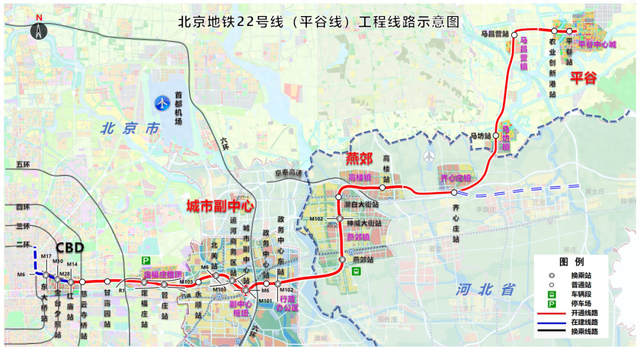
Group 1 - The core point of the article is the official release of the 2026 Beijing rail transit construction plan, highlighting the significant progress of the 22nd line and the overall enhancement of the suburban railway city sub-center line [1][5] - The 22nd line (Hongmiao-Pinggu) will be the first cross-provincial urban rail transit line in the Beijing-Tianjin-Hebei region, covering approximately 79.1 kilometers, with 20 stations, including 15 in Beijing and 5 in Hebei [1][4] - The line will connect key functional areas such as the CBD core area, urban sub-center, and new towns in Pinggu and Hebei, facilitating a one-hour transportation circle between the North Three Counties and the central urban area [4] Group 2 - The suburban railway city sub-center line enhancement project is the first collaboration between Beijing and the National Railway Group, focusing on integrated planning and project approval [5] - The project will add two new stations and upgrade three existing stations, significantly improving commuting capacity by optimizing the existing railway infrastructure [6] - In addition to the 22nd line, Beijing will continue to advance multiple rail projects, including the new airport line and several line enhancements, by 2026 [8]

北京将引入武清至通州进京公交
Xin Lang Cai Jing· 2026-02-02 23:10
Core Viewpoint - Beijing plans to implement a new round of transportation facilitation measures for the Beijing-Tianjin-Hebei region, aiming to enhance connectivity and optimize traffic flow in the area [1] Group 1: Transportation Initiatives - The opening of the 22nd subway line (Hongmiao-Pinggu) is scheduled as part of the transportation facilitation measures [1] - The second batch of inspection stations, including Yingsi and Yongle, will undergo optimization and enhancement [1] - Customized commuter bus routes will be extended to surrounding areas of Beijing, including routes from Gu'an to Daxing Airport and from Dachang to the subway line 6 Luyang Station [1] Group 2: Infrastructure Development - The construction of the Xiong'an R1 line will be promoted, with conditions for trial operations with the Daxing Airport line expected to be met this year [1] - The M101 subway line construction will be advanced to improve transportation in the urban sub-center [1] - Preliminary research will be conducted for the renovation of the Tongyan Expressway node in the Canal Business District [1] Group 3: Road Traffic Optimization - The construction of the Tongyan Expressway and the East Sixth Ring Road rapid connection line will commence [1] - The Liuhe Bridge will be widened, and the old Jingyu line under East Sixth Ring Road will be renovated [1] - Traffic organization will be optimized for several roads, including Yongcui East Road and Yongcui West Road, transitioning from one-way to two-way traffic [1]
2条轨道线路今年开通运营
Bei Jing Ri Bao Ke Hu Duan· 2026-02-02 22:16
Core Viewpoint - Beijing is set to advance the construction of 9 urban rail transit lines totaling 150.6 kilometers and 2 suburban railway lines spanning 90.5 kilometers in 2023, with significant developments in the 22nd line and the suburban railway city sub-center line [1][2] Group 1: 22nd Line Development - The 22nd line (Hongmiao-Pinggu) will be the first inter-provincial urban rail transit line connecting Beijing and Hebei, enhancing the "one-hour traffic circle" for the northern three counties and Pinggu District [2][6] - The line will connect key areas such as the CBD core area, urban sub-center, and major functional zones in Hebei, facilitating cross-province commuting and boosting economic collaboration [2][7] - The line will feature 20 stations, with 15 in Beijing and 5 in Hebei, and is expected to be operational by the end of the year [1][7] Group 2: Suburban Railway City Sub-center Line - The suburban railway city sub-center line will also be ready for initial operations by the end of the year, marking a collaborative project between Beijing and the National Railway Group [2][4] - This line will enhance commuting capacity by adding two new stations and upgrading three existing ones, significantly improving transit efficiency for the southwestern regions of Beijing [2][4] Group 3: Future Expansion Plans - By 2026, Beijing plans to continue expanding its rail network with additional lines and upgrades, including the new airport line and several other key projects aimed at improving urban connectivity [5] - The ongoing projects will focus on urban renewal and enhancing the coverage and functionality of the rail network, contributing to economic vitality and improved travel quality [5]
雄安R1线今年将具备与大兴机场线贯通运营调试条件
Xin Jing Bao· 2026-02-02 11:13
Core Insights - The 2026 Beijing Transportation Comprehensive Governance Action Plan emphasizes the integration of transportation in the Beijing-Tianjin-Hebei region, with specific projects aimed at enhancing connectivity and efficiency [1][2] Group 1: Transportation Projects - The plan includes the opening of the 22nd subway line (Hongmiao-Pinggu) in Beijing [1] - The construction and renovation of the Xiong'an R1 line, which connects Xiong'an New Area to Beijing Daxing International Airport, is a key project expected to facilitate a one-hour commute to major business districts in Beijing [1][2] - The Daxing Airport Line is undergoing an extension to Lize Business District, which will enhance connectivity to major transport hubs and business areas [2] Group 2: Connectivity Enhancements - The Daxing Airport Line will reduce travel time from Lize Financial Business District to Beijing Daxing International Airport to 25 minutes, improving access to key areas [2] - The plan includes new measures for convenient travel between Beijing and Tianjin, along with the introduction of customized bus routes extending to surrounding areas [2] - The integration of various subway lines and transport hubs will allow for seamless transfers to reach the airport and other significant locations in Beijing [2]
今年计划开通轨道交通22号线
Xin Lang Cai Jing· 2026-01-21 22:38
Core Points - Beijing's transportation services are set to improve significantly by 2026, with a focus on creating a comprehensive transportation system that is convenient, smooth, green, smart, and safe [2] - The city aims to increase the proportion of green travel in the central urban area to 76.8% this year [2] - The construction of the 22nd subway line is planned to be completed this year, along with the renovation of the Guomao transfer passage on Line 10 to enhance commuting efficiency [2] Group 1: Infrastructure Development - The Beijing-Tianjin-Hebei transportation integration will continue to deepen, with the opening of the 22nd subway line and the promotion of the Xiong'an R1 line and Daxing Airport line connectivity [2] - Key infrastructure projects include the construction of the Liangma River North Road, New National Exhibition Liaison Line, and the overall upgrade of the South Central Axis Road [3] - The city plans to enhance road traffic quality by expanding the Fourth Ring Road renovation model and improving the overall road network efficiency [3] Group 2: Public Transport Enhancements - The city will continue to deepen "multi-network integration," focusing on the core of rail transit to improve comprehensive transportation service efficiency [3] - Plans include the construction of the M101 line and the overall upgrade of the suburban railway city sub-center line from Beijing West to Liangxiang [3] - The city aims to add over 30 new bus routes outside the Fourth Ring Road and more than 20 "short, frequent, and fast" connecting routes [3] Group 3: Non-Motorized Transport and Parking Solutions - The city plans to build seven slow-moving demonstration streets and create urban greenways around the Second Ring Road [5] - An additional 100,000 non-motorized vehicle parking spaces will be added, along with the trial construction of multi-story parking facilities [5] - The city aims to address parking difficulties in central urban areas by adding 35,000 new and shared parking spaces [5] Group 4: Traffic Safety and Smart Transportation - The city will enhance traffic safety and emergency response capabilities, including improving the resilience of mountain roads against disasters [6] - A total of 8,000 traffic lights will be interconnected and controlled, with the establishment of 500 dynamic green wave roads to improve intelligent traffic management [6] - The city is focused on creating a closed-loop management system for traffic, enhancing the smart service capabilities of the transportation network [6] Group 5: Achievements and Future Goals - In 2025, the green travel proportion in the central urban area reached 76.5%, reflecting the effectiveness of the integrated transportation system [7] - The city has expanded its rail network, with the operational mileage reaching 909 kilometers and the opening of new stations to improve connectivity [7] - The transportation department is exploring comprehensive governance paths for super-large cities, with significant improvements in road accessibility and infrastructure [7]
地铁新线、增加车位、拥堵治理,今年北京交通将干这些“大事”
Xin Jing Bao· 2026-01-21 06:17
Core Viewpoint - Beijing's transportation development plan for 2026 aims to enhance public transport, improve traffic conditions, and increase green travel options, with specific projects and targets outlined for the year [1][2][3]. Group 1: Transportation Infrastructure Development - The city plans to open the 22nd subway line (Hongmiao to Pinggu) and advance the construction of several other lines, including the 1st line branch and the connection between Yizhuang Line and Lines 5 and 10 [1][4]. - A total of 3.5 million new car parking spaces and 100,000 non-motorized vehicle parking spaces will be added to address parking challenges in urban areas [6]. - The construction of major road projects, including the Liangma River North Road and the new National Exhibition connection line, will be accelerated [5]. Group 2: Public Transport Enhancements - The goal is to increase the proportion of green travel in the central urban area to 76.8% in 2026, building on a 76.5% rate in 2025 [2][3]. - The public transport network will be expanded with the addition of new subway lines and stations, aiming for a total operational mileage of 909 kilometers [2]. - Integration of ground public transport with rail systems will be enhanced, with 91% of subway stations achieving bus connections within 50 meters [2][5]. Group 3: Traffic Management and Improvement - A total of 53 key congestion points will be addressed, with 30 traffic alleviation projects and 24 congestion point improvements planned [3][6]. - The average travel time for vehicles during peak hours at the Doujiakan area has been reduced by 19 minutes following improvements [3]. - The city aims to implement 30 traffic alleviation projects and improve over 50 congestion points to enhance overall road network efficiency [6]. Group 4: Safety and Smart Transportation - The plan includes enhancing traffic safety measures and emergency response capabilities, particularly for mountainous roads [7]. - Smart traffic systems will be upgraded, with 8,000 traffic lights connected for coordinated control and the establishment of 500 dynamic green wave roads [7]. - The goal is to create a closed-loop management system for traffic operations, improving the overall intelligence of the road network [7].
轨道交通22号线将“客货两用”,平谷农副产品直抵市区
Xin Jing Bao· 2026-01-13 09:16
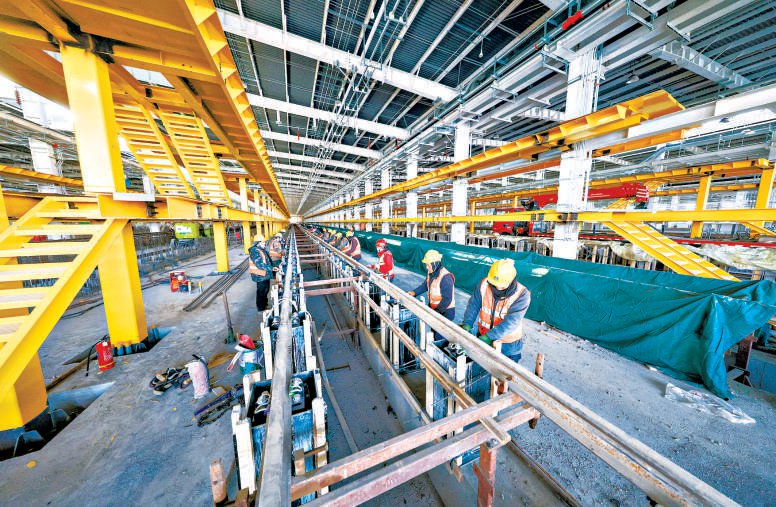
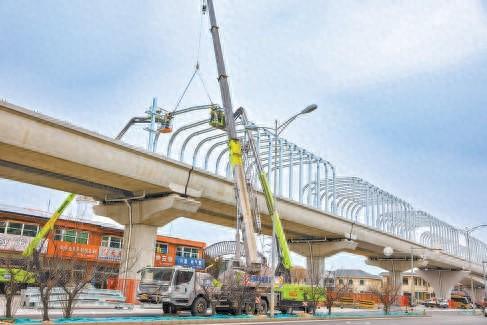
Group 1 - The construction of the Beijing Subway Line 22, which connects key areas including CBD and Pinggu New Town, is progressing, with all four stations in the Pinggu section already capped [1] - The line will explore a "passenger and freight dual-use" model, allowing dedicated freight trains to transport goods directly to urban logistics warehouses after the line opens in 2026 [1] - Pinggu District aims to establish a modern logistics backbone network, facilitating faster delivery of agricultural products like vegetables and fruits to urban areas [1] Group 2 - By 2025, the municipal government will hold a special meeting to study the "passenger and freight dual-use" operation of Subway Line 22, with significant preliminary work already conducted [2] - Pinggu District has constructed 3.1 million square meters of high-standard warehouses and is expanding the front warehouse network, including new sites like Wangjing West Transportation Hub [2] - The 2026 government work report emphasizes agriculture, logistics, and leisure, with plans to develop a "Future Agricultural Science City" and enhance agricultural innovation capabilities [2]