大小麦

Search documents
苏垦农发1.78亿元增持金太阳粮油 持股比例提高至80%
Zheng Quan Shi Bao Wang· 2025-06-04 11:35
Core Viewpoint - Su Keng Agricultural Development plans to acquire 23 million shares of Jin Tai Yang Grain and Oil Co., representing 28.75% of its total shares, for an investment of 178 million yuan, increasing its stake from 51.25% to 80% to strengthen its controlling position [1][2] Company Overview - Jin Tai Yang Grain and Oil was established in 1949 and is located in Nantong, producing various types of edible oils, including sunflower seed oil and corn oil, with an annual production capacity of 100,000 tons of sunflower oil [1] - The company has developed a digital, intelligent, and automated production system, with capabilities including 1,000 tons of small packaging oil per day and 900 tons of refining capacity per day [1] Financial Performance - In Q1 2023, Jin Tai Yang Grain and Oil reported revenue of 547 million yuan and a net profit of 5.72 million yuan [2] - Su Keng Agricultural Development's revenue for 2024 was 10.917 billion yuan, a decrease of 10.28% year-on-year, with a net profit of 730 million yuan, also down 10.56% [3] - In Q1 2025, Su Keng Agricultural Development's total revenue was 2.133 billion yuan, down 8.70% year-on-year, and net profit was 82.42 million yuan, down 36.18% [3] Strategic Intent - The acquisition is part of Su Keng Agricultural Development's strategic layout and business development needs, aimed at optimizing resource allocation and improving operational decision-making efficiency [2] - The company emphasizes the need for a robust market risk management system and diversified procurement channels to mitigate market fluctuations [3]


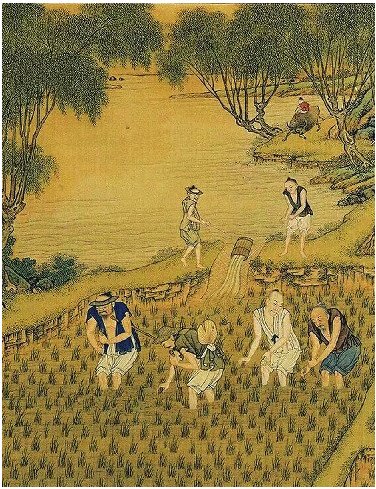
明清稻米背后的经济学
Qi Lu Wan Bao· 2025-05-15 21:39
Core Insights - The article discusses the historical significance of rice as a staple food and its role in socio-economic activities during the Ming and Qing dynasties in China, particularly focusing on the differences in rice cultivation methods in the Yangtze River basin [4][6][10] Group 1: Rice Cultivation and Consumption - Rice is not only a vital food source but also the core of socio-economic activities, with historical analysis exploring how much rice is sufficient for an individual and how to ensure adequate consumption [4][6] - The book "Want to Eat Well: Rice Cultivation and Consumption in Ming and Qing China" by historian Zhang Ruiwei examines the differences in rice cultivation methods in the lower and middle reaches of the Yangtze River, highlighting the commercialization of rice and the emergence of long-distance trade [4][10] - The cultivation techniques in the middle and lower reaches of the Yangtze River differ significantly, with the middle reaches utilizing oxen for plowing while the lower reaches predominantly use iron plows, influenced by economic considerations [7][8] Group 2: Market Dynamics and Agricultural Policies - The article emphasizes that market forces are the true drivers of rice cultivation, with decisions made based on quality and price comparisons, rather than solely on population pressure [9][10] - The Qing dynasty learned from the Ming dynasty's experiences and recognized the challenges posed by agricultural failures, leading to efforts to maintain a free market for rice to stabilize prices [11][12] - The establishment of the "Changping Cang" (Constant Peace Granary) system aimed to ensure food security and stabilize rice prices, reflecting the government's responsibility to prevent famine among its citizens [13][14]