
大棚蔬菜

Search documents
江苏绘就乡村振兴“三色”图
Xin Hua Ri Bao· 2025-12-22 06:32
Core Viewpoint - Jiangsu province is showcasing a vibrant picture of rural revitalization through the integration of agriculture, culture, tourism, and commerce, leading to economic growth and improved living standards for its residents [1][3]. Group 1: Industry "Gold" - The cross-industry integration of agriculture, culture, tourism, and commerce is driving development in Jiangsu, with over 14,000 leisure agricultural parks and scenic spots established [3]. - The flower and tree industry in Shuyang has transformed through digital economy initiatives, with live streaming sales often exceeding 2 million yuan in a single session, contributing to a 350 billion yuan annual sales industry [2]. - Jiangsu's agricultural processing sector achieved revenues of 1.2 trillion yuan in the first three quarters of the year, with 915 companies generating over 200 million yuan, marking a 3.6% increase in the number of such companies [3][4]. Group 2: Ecological "Green" - The transformation of polluted fish ponds into recreational water areas in Suqian has enhanced local aesthetics and environmental quality, with significant investments in infrastructure and landscaping [5][6]. - The development of Liang Tang Village in Xuzhou emphasizes ecological preservation and cultural heritage, integrating modern amenities like a colorful running track and unique accommodations [6][7]. - Jiangsu has recognized 2,280 villages as "beautiful and livable," with ongoing projects to enhance rural environments and promote sustainable living [7]. Group 3: Life "Red" - The average disposable income of farmers in Jiangsu has increased from 12,133 yuan in 2012 to 32,414 yuan in 2024, reflecting a significant rise in living standards [8]. - The "Linking Farmers" mechanism has been pivotal in ensuring stable income growth for farmers, with innovative models in silk production and crab farming enhancing earnings for local households [9]. - The establishment of entrepreneurial hubs and agricultural projects in villages has generated substantial income, with Dafu Village reporting an annual collective income of 352,000 yuan from various agricultural activities [8].
扎根乡土创新业 江西崇仁统战聚力促共富
Zhong Guo Xin Wen Wang· 2025-11-28 05:41
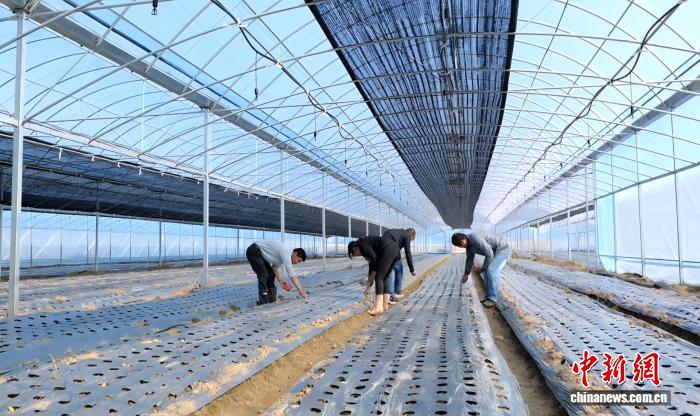
Core Insights - The article highlights the efforts of the Chongren County United Front Work Department in Jiangxi Province to promote rural revitalization through entrepreneurship and collective economic development [2][3]. Group 1: Entrepreneurship and Economic Development - Chen Shaohua, a returning entrepreneur, has initiated a greenhouse vegetable planting business in Tangxi Village, utilizing 110 acres of land for greenhouse vegetables and 500 acres for a traditional Chinese medicine base [2]. - The annual output value of the greenhouse vegetable business can reach up to 20 million yuan, with products primarily exported to South Korea and sold domestically [2]. - The multi-faceted business model of "planting + processing + domestic and foreign trade" has created over 150 job opportunities and increased collective economic income by more than 400,000 yuan annually [2][3]. Group 2: Agricultural Production and Statistics - Chongren County has a vegetable planting area of 162,300 acres, producing 247,000 tons of various fruits and vegetables annually [3]. - The local government is actively promoting the integration of intellectual resources into rural revitalization efforts, aiming to maximize the benefits of the United Front's service capabilities [3].

协力补好现代设施农业短板
Jing Ji Ri Bao· 2025-05-07 22:14
Core Viewpoint - Modern facility agriculture in China is experiencing significant growth, driven by technological advancements and supportive government policies, positioning it as a key component of agricultural modernization [1][2]. Group 1: Current State of Modern Facility Agriculture - Modern facility agriculture is characterized by controlled environments and engineering techniques for efficient production, becoming a representative of new agricultural productivity [1]. - The area of modern facility cultivation in China has reached over 40 million acres, accounting for more than 80% of the world's total facility agriculture area [1]. - Approximately 70% of meat, eggs, and milk, as well as 52% of aquaculture products, are provided by facility farming [1]. Group 2: Government Policies and Future Outlook - The "National Modern Facility Agriculture Construction Plan (2023-2030)" aims to expand the scale and improve the layout and technological conditions of modern facility agriculture by 2030 [2]. - By 2035, the goal is to achieve comprehensive upgrades in facility agriculture, meeting diverse and high-quality food consumption needs [2]. Group 3: Challenges and Solutions - Existing challenges include regional development imbalances, lack of policy coordination, weak resource guarantees, and slow green transformation [2][3]. - Proposed solutions involve enhancing top-level design, establishing a multi-faceted support system, and promoting green technology innovation [3]. Group 4: Standards and Innovation - Emphasis on standard and brand development to enhance agricultural product competitiveness, including the establishment of a technical standard system for the entire facility agriculture industry [4]. - Initiatives to improve the logistics service system and promote integrated models such as "facility farms + community group buying + e-commerce live streaming" [4].