大湾智通

Search documents
超20省区市抢滩万亿商业航天市场
21世纪经济报道· 2026-01-11 12:16
Core Viewpoint - The commercial aerospace industry in China is at a critical turning point, with increasing government support and investment leading to significant growth in related listed companies and the overall market [1][8]. Policy Support and Development Plans - The "14th Five-Year Plan" emphasizes the acceleration of strategic emerging industries, including commercial aerospace, as a key driver for national development [1]. - The National Space Administration's action plan for 2025-2027 integrates commercial aerospace into the national aerospace development framework, with over 40 supportive policies issued by more than 20 provinces [1][8]. - Beijing has established a 10 billion yuan investment fund to support successful commercial launches, offering rewards for successful missions [1]. Guangzhou's Strategic Initiatives - Guangzhou is focusing on the full industrial chain of commercial aerospace, particularly in three core areas: launch vehicles, satellite constellations, and BeiDou communication navigation [3][5]. - The city plans to develop major facilities for rocket assembly and testing, aiming to create low-cost, high-density launch capabilities [3]. - As of December 2025, Guangzhou has 4,921 commercial aerospace-related companies, the highest in Guangdong Province, with significant contributions from local firms like China Aerospace Science and Technology Corporation [5]. Competitive Landscape and Regional Development - The commercial aerospace sector is becoming a strategic task for national competitiveness, with various regions implementing differentiated policies to foster growth [8]. - Chengdu aims for a commercial aerospace industry scale of 50 billion yuan by 2027, while Shanghai targets 100 billion yuan [8][9]. - The Beijing-Tianjin-Hebei, Yangtze River Delta, and Pearl River Delta regions are forming key commercial aerospace clusters, with emerging hubs in central and coastal areas [9][10]. Market Growth Projections - The commercial aerospace market in China is projected to grow from 1.2 trillion yuan in 2024 to 4.8 trillion yuan by 2027, with expectations to exceed 7.8 trillion yuan by 2030 [10].

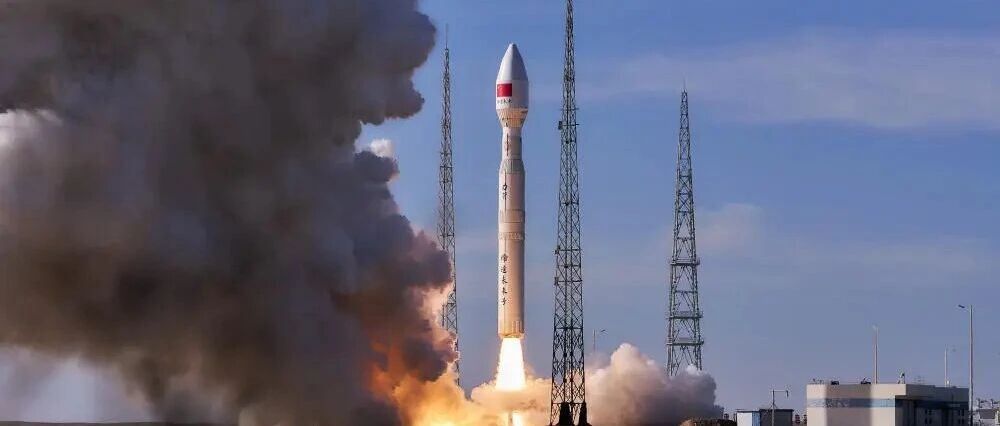
商业航天迎关键拐点:武汉、文昌、青岛、广州竞速新一极
2 1 Shi Ji Jing Ji Bao Dao· 2026-01-11 01:12
Core Viewpoint - The commercial aerospace industry in China is experiencing significant growth driven by government policies and investments, with a focus on developing a comprehensive industrial chain and enhancing competitiveness in the global market [1][5]. Policy and Government Support - Since 2025, policies have been increasingly supportive of the commercial aerospace sector, with over 40 related policies issued by more than 20 provinces and cities [1][5]. - The National Space Administration released an action plan for high-quality and safe development of commercial aerospace from 2025 to 2027, integrating it into the national aerospace development framework [1]. - Beijing has established a 10 billion yuan investment fund to support successful commercial launches, offering rewards of up to 5 million yuan per launch [1]. Regional Development Initiatives - Guangzhou is focusing on three key areas: launch vehicles, satellite constellations, and BeiDou communication navigation, with plans to enhance its aerospace manufacturing capabilities [2]. - The city aims to create a globally influential commercial aerospace hub by 2035, with significant investments in infrastructure and technology [2]. - Chengdu, Shanghai, and Shandong have also set ambitious targets for their commercial aerospace industries, aiming for substantial revenue growth and infrastructure development by 2027 [6][7]. Industry Growth and Market Potential - The commercial aerospace market in China is projected to grow from 1.2 trillion yuan in 2024 to 4.8 trillion yuan by 2027, with expectations to exceed 7.8 trillion yuan by 2030 [7]. - The industry is transitioning from a technology validation phase to a critical point of large-scale deployment, supported by both policy and market forces [7]. Company Highlights - China Aerospace Science and Technology Corporation (CASC) is a leading player in the launch vehicle sector, with its Li Jian-1 rocket series holding records for payload capacity and reliability [3]. - The company has successfully launched 84 satellites, demonstrating its strong market position in commercial launch services [3]. - Haige Communication is a key player in satellite communication systems, having established a comprehensive industrial layout that includes chips, terminals, and system operations [4].
广州,剑指中国商业航天新一极
财联社· 2026-01-08 11:45
Group 1 - The core viewpoint of the article emphasizes Guangzhou's plan to establish itself as a global hub for commercial aerospace by 2035, focusing on developing reusable rocket technology and fostering a complete commercial aerospace ecosystem [1][2] - The plan includes the construction of key facilities such as the liquid rocket assembly and testing base in Nansha and the Huangpu Xinghe Power Rocket Assembly Base, aimed at developing large thrust, reusable liquid rockets [1] - The article highlights the support for satellite constellation projects like the "Wuyang Series Constellation" and "Bay Area Intelligent Connectivity," which will drive the development of satellite manufacturing, rocket launches, and operations, thereby attracting talent and capital to Guangzhou [1] Group 2 - The national trend supports the development of commercial aerospace, elevating it to a pillar industry alongside new energy vehicles and integrated circuits, as outlined in the 14th Five-Year Plan [2] - A report from Guojin Securities indicates that the commercial rocket industry is entering a rapid development phase, with the supply chain comprising propulsion systems, rocket structures, and control systems benefiting from increased demand [2] - The investment strategy suggests a "barbell" approach, recommending investments in state-owned system integrators and private sector leaders in core components and supporting areas related to commercial rockets and satellite constellations [2]