
大疆Action 4

Search documents
大疆「摔跤」,影石「拱火」
3 6 Ke· 2025-10-15 10:43
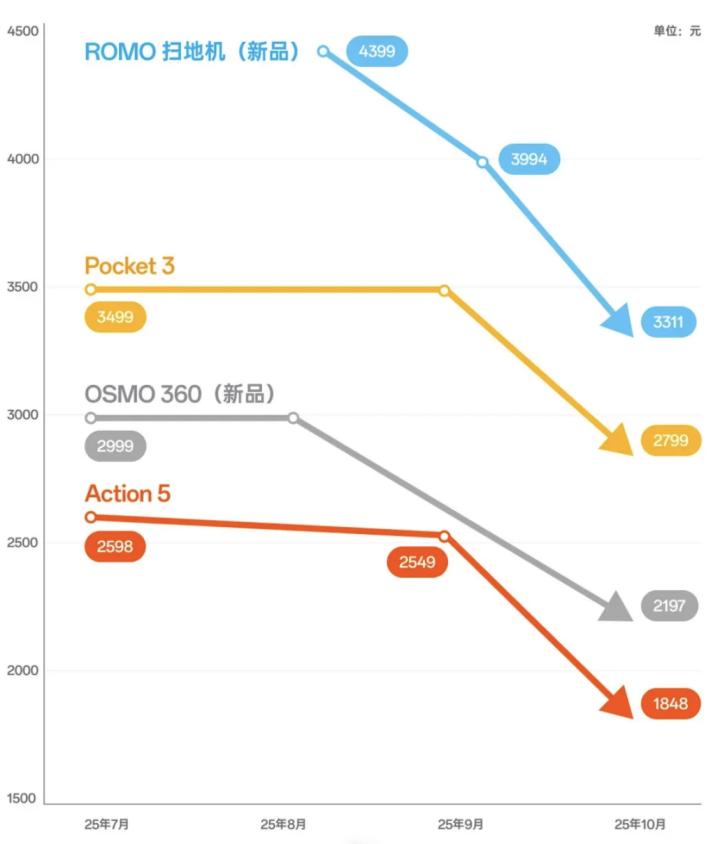
Core Insights - The article discusses the backlash faced by DJI after a sudden price drop of its popular product, the Pocket 3, leading to consumer dissatisfaction and complaints about pricing transparency [1][2][4][9] Group 1: Pricing Strategy and Consumer Reaction - DJI's Pocket 3 was originally priced at 3499 yuan but saw a price drop of 700 yuan shortly before the Double 11 shopping festival, causing frustration among consumers who had recently purchased the product at the higher price [2][4] - Many consumers reported confirming with customer service that there would be no price drop before making their purchases, only to be disappointed when the price was reduced shortly after [2][4] - Complaints related to DJI's price drop have surged, with nearly 1700 complaints registered on the Black Cat Complaints platform, indicating a significant consumer backlash [4] Group 2: Service Experience and Consumer Expectations - The disparity in service levels between online and offline channels has led to confusion and dissatisfaction among consumers, particularly regarding price protection policies [5][6] - Consumers have expressed frustration over the perceived double standards in DJI's pricing and refund policies, especially when purchasing through different channels [5][6] - The article highlights that as DJI transitions from a technology-driven company to a consumer brand, it faces systemic challenges in meeting rising consumer expectations for service and experience [9][10] Group 3: Competitive Landscape - The article notes that DJI is facing increased competition from emerging brands like Yingshi, which has adopted aggressive marketing strategies, including offering compensation to consumers affected by DJI's price drop [6][12] - Traditional smartphone manufacturers, such as Apple, Vivo, and OPPO, are also entering the imaging device market, leveraging their established service networks and consumer familiarity [12][14] - DJI's market share in the global smart imaging device sector is projected to decline from 19.1% in 2023 to 13.2% in 2024, reflecting a significant shift in the industry landscape [14][15] Group 4: Future Outlook - The article suggests that for companies like DJI, succeeding in the competitive landscape of smart imaging devices will require not only strong product offerings but also a focus on providing warm and responsive customer service [15]

“背刺”打工人 大疆也“无奈”?
Bei Jing Shang Bao· 2025-10-09 14:54
Core Viewpoint - DJI is facing backlash from consumers due to significant price reductions on its products shortly after purchase, leading to discussions about consumer rights and company practices [2][5][10]. Group 1: Price Reductions and Consumer Reactions - During the National Day holiday, DJI announced price cuts for several products, including the Pocket 3, which saw a reduction of 700 yuan for the standard version and 900 yuan for the all-in-one kit [2]. - Consumers who purchased products shortly before the price drop expressed feelings of being "betrayed," leading to discussions on social media about returning products and seeking compensation [2][5]. - The Pocket 3, despite its price cut, remains popular, indicating strong demand even after two years since its release, with sales reaching over 10 million units and revenue nearing 20 billion yuan [5][11]. Group 2: Competitive Landscape - DJI is under pressure from competitors, particularly from companies like Insta360, which has a dominant market share in the panoramic camera segment and is now entering the drone market [8][9]. - Other smartphone manufacturers, such as OPPO and vivo, are also developing products that compete directly with DJI's offerings, potentially impacting DJI's market share [9]. - The competitive dynamics are shifting, with traditional brands facing challenges from new entrants that leverage their supply chain advantages [9][12]. Group 3: Market Growth and Concentration - The handheld smart imaging device market is projected to grow at a compound annual growth rate of 12.9%, reaching a market size of 59.2 billion yuan by 2027 [11]. - The market is highly concentrated, with the top three companies expected to hold 78.9% of the market share by 2024, indicating intense competition among leading players [12]. - DJI's market share has declined from 19.1% to 13.2%, highlighting the increasing pressure from competitors and the need for strategic pricing and promotional activities [12][13].
“背刺”打工人,大疆也“无奈”?
Bei Jing Shang Bao· 2025-10-09 14:37
Core Viewpoint - DJI's recent price cuts on its products, particularly the OSMO Pocket 3, have led to significant consumer backlash, with many users feeling "betrayed" after purchasing at full price shortly before the discounts were announced [2][6]. Group 1: Price Cuts and Consumer Reaction - DJI announced substantial price reductions for several products ahead of the "Double 11" shopping festival, including a 700 yuan cut for the Pocket 3 and up to 1478 yuan for the Mini 4 PRO drone [1][2]. - Consumers who purchased products shortly before the price cuts have expressed dissatisfaction, leading to discussions about potential returns and consumer rights [2][5]. - The price cuts are seen as a necessary strategy for DJI to remain competitive in a rapidly changing market, despite the risk of alienating existing customers [2][10]. Group 2: Market Dynamics and Competition - The handheld smart imaging device market is projected to grow significantly, with a market size of 364.7 billion yuan in 2023 and an expected annual growth rate of 12.9% through 2027 [11][12]. - DJI faces increasing competition from both traditional rivals like Insta360, which has a dominant market share in the panoramic camera segment, and new entrants from smartphone manufacturers like OPPO and Xiaomi [7][9]. - The competitive landscape is shifting, with DJI's market share declining from 19.1% to 13.2% as competitors gain ground, highlighting the need for strategic pricing and promotional activities [12][13]. Group 3: Strategic Implications - DJI's price cuts may be a tactical response to both consumer demand and competitive pressures, as the company prepares for the potential launch of new products like the Pocket 4 [6][10]. - The company must balance short-term sales strategies with long-term brand loyalty and market positioning, as the industry undergoes significant changes in technology and consumer preferences [12][13]. - Effective communication and compensation strategies for consumers who feel "betrayed" by the price cuts are essential to mitigate negative sentiment and maintain brand reputation [5][6].
一生要出片的年轻人,买爆相机
36氪· 2025-05-14 14:26
Core Viewpoint - The article highlights the resurgence of the camera market in China, driven by the younger generation's desire for high-quality photography and self-expression, marking a shift from smartphones to dedicated cameras [4][18][23]. Group 1: Market Trends - In the first five months of 2024, China's camera shipment volume accounted for 23.4% of the global market, surpassing Europe and becoming the second-largest market after the Americas [4]. - The digital camera market in China is experiencing significant growth, with Nikon's sales revenue increasing by 14.2% and Canon's digital camera sales in China rising by over 30% year-on-year [23]. - The demand for cameras has led to instances of popular models selling out, with some requiring a lottery system for purchase [20][24]. Group 2: Consumer Behavior - Young consumers are increasingly investing in cameras, viewing them as a form of "emotional investment" rather than just a hobby, with individuals like Lin Yao and Qiao Shuai spending tens of thousands of yuan on equipment [10][13][41]. - Social media platforms, particularly Xiaohongshu, have seen a surge in content related to cameras, with over 17 million posts related to the topic, indicating a strong community interest [15][16]. - The perception of cameras has shifted from being seen as outdated to trendy, with younger consumers eager to share high-quality images on social media [18][28]. Group 3: Technological Advancements - Camera manufacturers are integrating AI technology to enhance user experience, with features like automatic editing and scene recognition becoming standard [31][32]. - The market is witnessing a trend towards high-end, professional-grade cameras, with younger consumers showing a preference for models priced between 5,000 to 10,000 yuan [26][27]. - The rise of action cameras, particularly those equipped with AI, is also notable, as they cater to the needs of younger consumers who prioritize portability and high-quality video recording [36][38]. Group 4: Industry Challenges - Despite the growth, the camera industry faces challenges such as competition from smartphones, supply chain risks, and the need to balance environmental concerns with commercial growth [42]. - The article suggests that the camera market's revival reflects broader trends in consumer behavior, cultural confidence, and technological innovation in China [41][42].


一年狂卖150亿,运动相机从社交货币到“吃灰神器”
凤凰网财经· 2025-03-10 11:02
文 | 任雪芸 以下文章来源于Tech星球 ,作者任雪芸 Tech星球 . Tech星球,聚焦互联网前沿科技和新商业。 来源|Tech星球(微信ID:tech618) 01 "手机拍不好"之后,运动相机开启 "吸金风暴" "以前用手机拍滑雪视频,画面抖得根本没法看,直到朋友推荐了运动相机。"北京的滑雪爱好者小飞在社交平台分享了他滑雪的视频。 这条视频因流畅的防抖效果和沉浸式视角,获得了不少点赞。而评论区里,"求同款相机"的呼声,成了平台流量之外的附加价值。 事实上,像小飞这样因体验到运动相机优势而 "路转粉" 的消费者不在少数。 在深圳工作的产品经理李然发现,过去两年间,身边同事的工位上陆续出现了各种形态的运动相机:有人用它拍摄通勤骑行的城市街景,有 人绑在宠物项圈上记录"狗视角"。这个曾经专属于极限运动玩家的运动相机,以"全民记录神器"的姿态闯入普通人的生活。 随着影石创新科创板IPO获批,运动相机市场热度再获印证。 据招股书披露,在2021年至2024年6月的报告期,影石创新的收入分别达到约13.28亿元、20.41亿元、36.36亿元和24.28亿元。其在报告期内 的净利润分别约为2.66亿元、4.07 ...