AI摄影

Search documents
摄影师为什么砸自己的饭碗
Xin Jing Bao· 2026-01-20 09:51
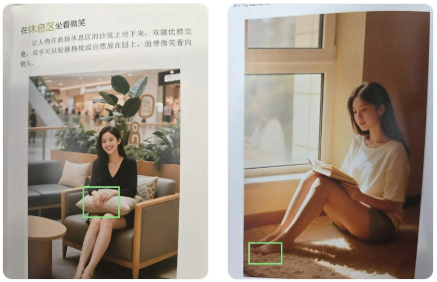
Core Viewpoint - The controversy surrounding the photography textbook "Portrait Photography Pocket Book" highlights the challenges and ethical dilemmas faced by the photography industry in the age of AI, particularly regarding the authenticity and professionalism of photographic work [1][3]. Group 1: Professionalism in Photography - The use of AI-generated images in a photography textbook raises questions about the integrity of the content, as nearly 50% of the images contained significant errors, such as characters with six fingers or toes [1][4]. - The incident reflects a broader issue within the photography industry, where the reliance on AI may undermine the core value of capturing reality, which is essential for professional photography [4][6]. - Critics argue that AI-generated images mislead readers and disrespect the art of photography, as they fail to convey real-world experiences and techniques [6]. Group 2: Exploring Boundaries - The issue of photo manipulation is not new, but the rise of AI-generated content presents new challenges to the authenticity of photography, transforming it from a tool for recording reality to a medium that connects reality with imagination [7][8]. - The lack of clear boundaries regarding the use of AI in photography necessitates the establishment of ethical guidelines and regulations to ensure transparency and protect the integrity of the art form [8][9]. - The implementation of the "Artificial Intelligence Generated Synthetic Content Identification Measures" in September 2025 aims to provide a framework for identifying AI-generated content, emphasizing the importance of public awareness [8][9]. Group 3: The Role of the Creator - The essence of photography should remain rooted in the creator's observation, thought, and emotional expression, rather than merely being a product of algorithmic output [9]. - The relationship between technology and humanity must be carefully considered, ensuring that AI serves as a tool to enhance creative expression rather than dominate it [9]. - Ultimately, the evaluation of a photograph should focus on its emotional depth and unique perspective, rather than its origin as AI-generated or human-created [9].

悦灵犀AI全新版本面世 底层技术架构全栈进化
Zheng Quan Ri Bao Wang· 2025-10-28 12:49
Core Insights - The core viewpoint of the news is the official launch of the new version 3.0 of the AI photography platform, Yuelingxi AI, by Yueshang Holdings, marking a significant advancement in AI photography and multi-modal content generation [1][2]. Group 1: Product Features - The new version introduces an AI photography function that enables users to generate high-quality 4K portraits through a streamlined process, including scene selection and style confirmation, with advanced features like expression adjustment and background rendering [1][2]. - The AI model, XingYue-3.0, enhances performance with a 38% increase in 4K portrait generation speed and achieves a 98.4% accuracy in matching poses and lighting [2][3]. - The platform now supports a library of 75 portrait styles and stable video output at 30 frames per second, simulating a real studio shooting process [2][3]. Group 2: Technological Advancements - The new version incorporates a distributed computing scheduling system that supports simultaneous image and video generation, expanding the training dataset to 450 million high-resolution portrait samples [3]. - The introduction of a cultural semantic enhancement dataset improves the model's understanding of Eastern aesthetics and cultural symbols [3]. - The platform utilizes a reinforcement learning framework to continuously optimize the model based on user feedback, enabling an iterative evolution of aesthetic capabilities [3]. Group 3: Market Implications - The release of Yuelingxi 3.0 signifies a transition from tool-based AI to a fully integrated AI-native ecosystem, aiming to create a closed-loop AI content production pipeline [2][3]. - The company plans to open the AI photography API to empower brands, photography studios, and creative organizations, fostering a new generation of AI imaging ecosystem [3].

努比亚Z80 Ultra发布:搭载第五代骁龙8至尊版,售价4999元起
Xin Lang Ke Ji· 2025-10-22 10:18
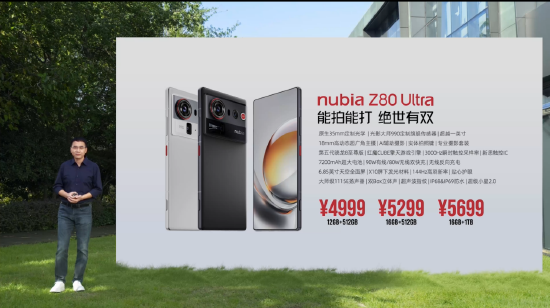
Core Insights - Nubia Z80 Ultra is positioned as a versatile flagship smartphone that combines professional imaging capabilities with gaming experiences, leveraging the Red Magic gaming engine for enhanced performance [1] Group 1: Camera Features - The Nubia Z80 Ultra features a triple-camera system with a custom "35mm + 18mm" dual focal length setup, including a 50MP main sensor and a 64MP periscope telephoto lens with optical image stabilization [1][3] - The device introduces the industry's first multi-modal AI-assisted photography, which intelligently recognizes shooting scenes and provides real-time guidance for photography [1][3] Group 2: Performance Specifications - The smartphone is powered by the fifth-generation Snapdragon 8 Gen 2 processor, with a CPU clock speed of up to 4.6GHz, and supports LPDDR5X memory and UFS 4.1 storage [3] - It includes the Red Magic CUBE gaming engine, which intelligently allocates computing resources based on gaming scenarios, supporting up to 2K resolution and 144Hz refresh rates with a 33% reduction in latency [3] Group 3: Display and Battery - The Nubia Z80 Ultra features a 6.85-inch full-screen display with a refresh rate of 144Hz and a touch sampling rate of 3000Hz, enhanced by a high-definition visual engine [3] - It is equipped with a 7200mAh battery, supporting long usage times and efficient power management [3] Group 4: Pricing and Variants - The Nubia Z80 Ultra is available in two classic colors, with various configurations priced between 4999 yuan and 5999 yuan, depending on RAM and storage options [4]
realme真我15系列发布:AI魔法双闪+7000毫安时电池,1699元起
Feng Huang Wang· 2025-09-17 06:51
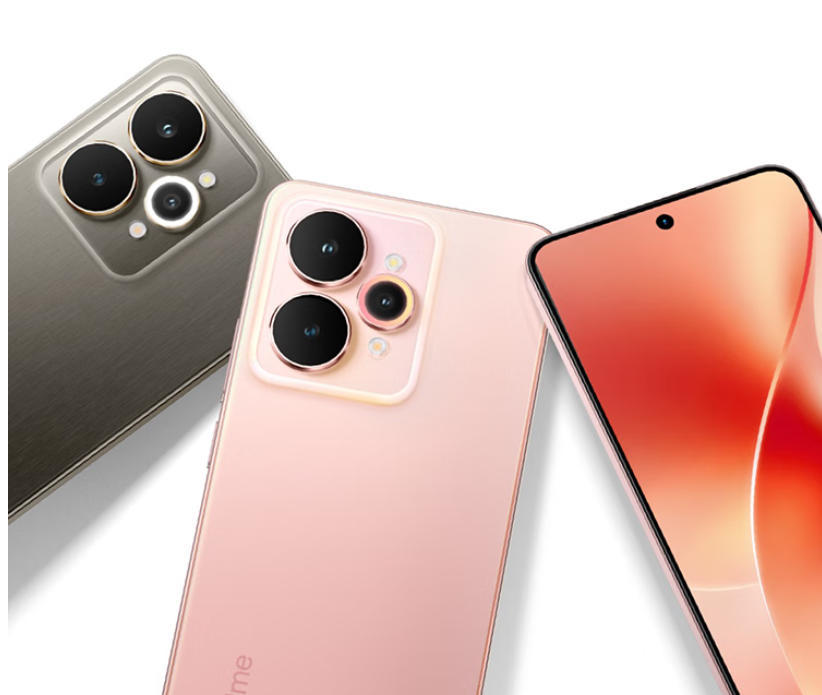
Core Viewpoint - Realme officially launched the Realme 15 series smartphones, featuring the Realme 15 and Realme 15 Pro models, with a starting price of 1699 yuan, emphasizing a new design language called "Night Color Inspiration" [1] Group 1: Product Specifications - The Realme 15 offers two color options: "Titanium Gray" and "Cherry Pink," with a thickness of 7.66 mm and a weight of 185 grams. It features a 6.77-inch 1.5K resolution display with a 144Hz refresh rate and a peak brightness of 4500 nits [3] - The Realme 15 Pro is positioned higher, available in "Flowing White" and "Twilight Green," with a thickness of 7.79 mm and a weight of 187 grams. It has a "Deep Curved Screen" with the same 1.5K resolution and 144Hz refresh rate, but a peak brightness of 6500 nits [5] Group 2: Camera and Imaging Features - The Realme 15 features a front 50MP selfie camera and a rear camera setup with a 50MP IMX882 main sensor and an 8MP secondary sensor. It includes an AI Magic Dual Flashlight with "Smart Dual Color Temperature" for improved low-light photography [3][7] - The Realme 15 Pro boasts a rear camera system with a 50MP IMX896 main sensor and a 50MP ultra-wide lens, supporting 4K 60fps video recording [5] Group 3: Performance and Battery - Both models are powered by a 7000 mAh battery with 80W fast charging capabilities. The Realme 15 is equipped with a Dimensity 7300 processor, while the Realme 15 Pro features the fourth-generation Qualcomm Snapdragon 7 processor, along with LPDDR4X RAM and UFS 3.1 storage [3][5] Group 4: Pricing - The Realme 15 is priced at 1699 yuan for the 8GB+256GB version and 1999 yuan for the 16GB+256GB version. The Realme 15 Pro starts at 1999 yuan for the 12GB+256GB version and goes up to 2699 yuan for the 16GB+512GB top version [3][5]
Pixel 10 被藏起来的这个功能,会告诉你照片有没有被 AI 碰过
3 6 Ke· 2025-08-25 00:21
Core Insights - The newly released Pixel 10 series introduces advanced AI photography features, including an AI photo editing tool called Gemini that allows users to verbally instruct the AI to enhance images [1][2][4] - The AI editing capabilities are designed to assist novice users who may struggle with traditional photo editing software, making it easier to correct issues like lighting and composition [2][4] - Google integrates these AI features directly into the Pixel 10's default photo application, streamlining the user experience [6][8] AI Photography Trends - AI photography is becoming a significant trend, with various companies exploring similar functionalities, although many existing AI assistants only handle basic editing tasks [4][6] - The Pixel 10's Gemini tool stands out by utilizing advanced models to reinterpret images based on user prompts, enhancing the editing process [6][8] Technical Advancements - The Pixel 10 features the new Tensor G5 chip, which improves the efficiency of AI processing, allowing for real-time enhancements and a notable 100x zoom capability called Pro Res Zoom [8][10] - The AI can generate clearer images from high-zoom shots that would typically be unusable due to pixelation, demonstrating significant advancements in image processing technology [10][24] User Experience and Functionality - The Pixel 10 includes a "Camera Coach" feature that provides real-time feedback and suggestions for better photo composition, enhancing user engagement [11] - However, some features may be perceived as unnecessary by experienced photographers who prefer manual adjustments [12][16] Ethical Considerations and Authenticity - The introduction of the C2PA content credentialing system aims to address concerns about photo authenticity by marking images that have undergone AI editing [18][20] - This raises questions about the definition of "AI-edited" photos and the potential impact on user perception of image authenticity [20][24] - The balance between expression and reality in photography is becoming increasingly complex as AI tools evolve [26][30]


谷歌“相机教练”来了,AI手把手辅助构图虽好,但可能毁灭摄影
3 6 Ke· 2025-08-08 00:50
Core Insights - Google is set to release the Pixel 10 series in August 2025, featuring a new Camera Coach function that provides real-time photography advice before taking a picture [1][3][4] - The Camera Coach aims to enhance user experience by offering suggestions on composition, angle, and lighting, moving beyond traditional post-photo AI editing [1][4][6] Group 1: Camera Coach Functionality - The Camera Coach will analyze the scene in real-time and guide users on how to take better photos, marking a shift from post-processing to pre-shoot assistance [4][6] - This function is similar to existing smart scene recognition features in other smartphones but aims for a more proactive role in the photography process [4][6][15] - The introduction of a conversational image editing feature based on Gemini AI will allow users to verbally request edits, enhancing the editing experience [3][4] Group 2: Technical Challenges - The implementation of the Camera Coach requires significant computational power, raising concerns about battery consumption and heat generation during operation [7][9][10] - The reliance on real-time image analysis may pose challenges for devices with less powerful chips, such as the Tensor G5, which could struggle with the demands of the Camera Coach [9][10] - Privacy concerns arise if the AI requires cloud processing, as this could involve uploading preview images for analysis, which may not be well-received by users [10][13] Group 3: Industry Implications - The Camera Coach represents a new direction for smartphone photography, emphasizing AI's role throughout the shooting process rather than just in post-editing [15][16] - Domestic brands may not need to replicate Google's approach but should recognize the trend towards AI involvement in photography [13][15] - The balance between AI guidance and user control will be crucial for brands looking to implement similar features, as excessive intervention could stifle creativity [16]

一生要出片的年轻人,买爆相机
36氪· 2025-05-14 14:26
Core Viewpoint - The article highlights the resurgence of the camera market in China, driven by the younger generation's desire for high-quality photography and self-expression, marking a shift from smartphones to dedicated cameras [4][18][23]. Group 1: Market Trends - In the first five months of 2024, China's camera shipment volume accounted for 23.4% of the global market, surpassing Europe and becoming the second-largest market after the Americas [4]. - The digital camera market in China is experiencing significant growth, with Nikon's sales revenue increasing by 14.2% and Canon's digital camera sales in China rising by over 30% year-on-year [23]. - The demand for cameras has led to instances of popular models selling out, with some requiring a lottery system for purchase [20][24]. Group 2: Consumer Behavior - Young consumers are increasingly investing in cameras, viewing them as a form of "emotional investment" rather than just a hobby, with individuals like Lin Yao and Qiao Shuai spending tens of thousands of yuan on equipment [10][13][41]. - Social media platforms, particularly Xiaohongshu, have seen a surge in content related to cameras, with over 17 million posts related to the topic, indicating a strong community interest [15][16]. - The perception of cameras has shifted from being seen as outdated to trendy, with younger consumers eager to share high-quality images on social media [18][28]. Group 3: Technological Advancements - Camera manufacturers are integrating AI technology to enhance user experience, with features like automatic editing and scene recognition becoming standard [31][32]. - The market is witnessing a trend towards high-end, professional-grade cameras, with younger consumers showing a preference for models priced between 5,000 to 10,000 yuan [26][27]. - The rise of action cameras, particularly those equipped with AI, is also notable, as they cater to the needs of younger consumers who prioritize portability and high-quality video recording [36][38]. Group 4: Industry Challenges - Despite the growth, the camera industry faces challenges such as competition from smartphones, supply chain risks, and the need to balance environmental concerns with commercial growth [42]. - The article suggests that the camera market's revival reflects broader trends in consumer behavior, cultural confidence, and technological innovation in China [41][42].