
大豆新品种

Search documents
扎根黑土育良种
Jing Ji Ri Bao· 2025-09-20 22:10
Core Viewpoint - The article emphasizes the importance of soybean breeding in ensuring China's food security and highlights the efforts of experts like Hu Xiping in developing high-yield, quality soybean varieties to reduce reliance on imports and enhance self-sufficiency in soybean production [1][3]. Group 1: Soybean Breeding and Food Security - Soybeans are crucial for human protein and oil supply, yet China's self-sufficiency rate is low, leading to high import dependence, which poses a risk to food security [1][3]. - Hu Xiping has dedicated 30 years to soybean breeding, resulting in the development of 68 high-yield and resilient soybean varieties, which have been promoted over 1.9 million hectares, significantly contributing to China's soybean self-sufficiency [1][3]. Group 2: Breeding Process and Challenges - The breeding process is labor-intensive and requires perseverance, with Hu Xiping traveling to 48 experimental sites annually to assess soybean varieties' adaptability across different ecological zones [2][3]. - The critical period for soybean breeding occurs in July, where manual pollination is performed under challenging conditions, highlighting the meticulous nature of the work [2][3]. Group 3: Technological Advancements and Future Goals - Hu Xiping's team has expanded from 6 to over 30 members, addressing production challenges in cold regions and enhancing soybean yield through collaboration with 18 research institutions and universities [3][4]. - Future goals include not only increasing soybean yield and quality but also improving economic benefits for farmers and innovating high-nutrition soybean varieties to meet public health demands [4].
奋进新征程 劳动最光荣——走近2025年“最美职工”
Bei Jing Ri Bao Ke Hu Duan· 2025-07-03 11:51
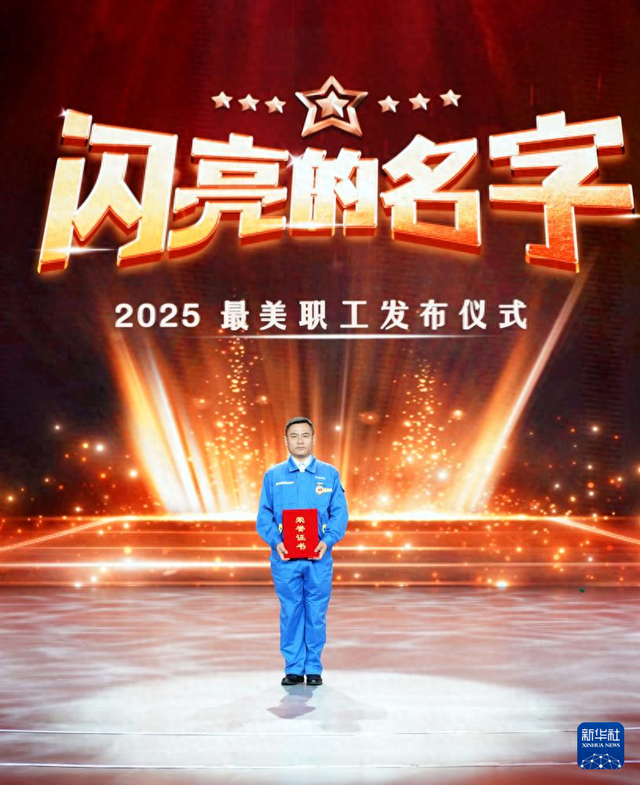
Group 1 - The article emphasizes the importance of labor and the spirit of hard work, highlighting the announcement of the "Most Beautiful Workers" for 2025 by the Central Propaganda Department and the All-China Federation of Trade Unions [1][4][25] - Zhang Tengjiao from ShenGu Group is recognized for his contributions in welding for major national projects, completing over 20 key projects without any quality accidents [4][10] - Hu Xiping, head of the soybean research institute at Beidahuang Seed Industry Co., has developed 68 new soybean varieties and promoted soybean cultivation over 1.9 million hectares [7][9] Group 2 - Luo Minghao, chief technician at Ningbo Jiangfeng Electronic Materials Co., has nearly 20 years of experience in semiconductor materials, contributing to the design of key equipment for China's first large-scale integrated circuit target material production line [9][10] - Yang Yanfeng, a bus driver in Yinchuan, has achieved a record of one million kilometers driven without accidents, implementing a "Five Heart Work Method" to enhance service quality [13][14] - Yang Jun, director of the Gannan Art Creation Research Institute, has dedicated decades to promoting traditional Gannan tea-picking opera and has established a fund to train young actors [17][19] Group 3 - Wang Rongrong, a trainer at Shaanxi Kangsao Home Service Co., transformed from a struggling worker to a "gold medal" maternity nurse, training over 800 home service talents and creating over 2000 job opportunities [20][22] - Bin Shoupeng, a firefighter in Tibet, participated in over 1000 rescue operations, including a significant response to a 6.8 magnitude earthquake, demonstrating commitment to public safety [22][23] - Liu Yuhui, an expert in aircraft systems at China Southern Airlines, developed a remote diagnosis system that saved approximately 1 billion yuan in maintenance costs [25][27] Group 4 - Wu Jianan, an engineer at State Grid Qinghai Electric Power Company, has independently identified 376 defects and conducted extensive equipment inspections, ensuring reliable power supply in high-altitude areas [27][28]

让科研成果在兴安大地生根发芽
Huan Qiu Wang Zi Xun· 2025-05-16 02:44
Core Viewpoint - The article highlights the significant contributions of Xu Xingjian and the Inner Mongolia Agricultural Science Research Institute in advancing rice cultivation and agricultural technology in the Xing'an League, emphasizing the integration of scientific research and practical application to enhance agricultural productivity and quality [1][2][4]. Group 1: Agricultural Research and Development - The Inner Mongolia Agricultural Science Research Institute is a key player in local agricultural innovation, undertaking numerous national and regional scientific projects aimed at improving rice quality and yield [1][2]. - Xu Xingjian has led the development of a technology model that increases rice yield by 100 kilograms per mu through the integration of good seeds and farming practices [1][2]. - The institute plans to implement 14 technology innovation projects in 2024, including the development of new rice and soybean varieties, which are expected to generate an economic benefit of 160 million yuan [2]. Group 2: Talent Development and Collaboration - Xu Xingjian actively mentors young scientists, enhancing the agricultural research talent pool and establishing multiple innovation platforms to support technological advancements in agriculture [3]. - The institute has built 24 technological innovation platforms, including experimental stations and research centers, to foster collaboration and knowledge transfer within the agricultural sector [3]. - Partnerships with local enterprises have led to significant improvements in rice production rates through the introduction of new varieties and technologies [3]. Group 3: Achievements and Recognition - Xu Xingjian has published over 40 SCI papers, obtained 5 patents, and approved 8 rice varieties, showcasing the institute's commitment to research and innovation [4]. - He has received multiple honors, including the title of "Advanced Worker of Inner Mongolia Autonomous Region," reflecting his dedication to agricultural science and community service [4]. - The focus remains on translating research outcomes into practical agricultural productivity, reinforcing the importance of agricultural technology in rural development [4][5].