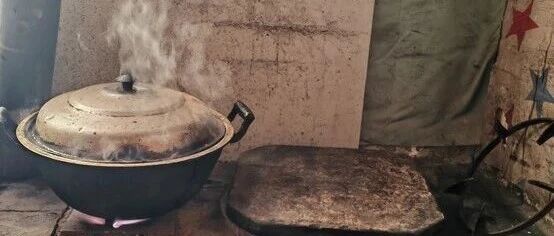
天然气壁挂炉

Search documents
多措并举破解部分农村“取暖贵”问题(金台视线)
Ren Min Ri Bao· 2026-01-18 23:47
Core Viewpoint - The transition from coal to gas heating in rural northern China has led to high heating costs, causing some villagers to forgo heating altogether to save money, highlighting governance issues and the need for effective solutions [1][3][4]. Current Situation - Villagers in Shanxi, Henan, and Shandong report that the cost of natural gas for heating is prohibitively high, with some families spending thousands of yuan during winter [1][2][3]. - In Shanxi's Dingxiang County, natural gas prices have increased from 2.26 yuan to 2.61 yuan per cubic meter, with costs exceeding 3 yuan for higher usage, leading to winter heating expenses of several thousand yuan [1]. - Villagers express frustration over the financial burden, with some stating that they only turn on heating when absolutely necessary due to costs [1][3]. Reasons for High Costs - The high cost of natural gas in rural areas is attributed to the expensive construction of gas pipelines, which are often built from scratch in sparsely populated areas, leading to high per-household costs [3][4]. - The lack of economies of scale in smaller gas supply companies further exacerbates the issue, as they have limited bargaining power [4]. Alternatives to Natural Gas - While the government promotes natural gas as a clean heating source, other renewable energy options like geothermal, biomass, and solar energy are available but not widely adopted due to infrastructure challenges and regulatory issues [4][5]. - The initial subsidies for transitioning to gas heating have decreased over time, increasing the financial strain on rural households [5][6]. Recommendations - Experts suggest establishing a long-term, precise financial subsidy mechanism to alleviate the burden on residents and consider cross-regional ecological compensation to support clean heating initiatives [10][11]. - There is a call for diversified clean energy solutions tailored to local resources and economic conditions, rather than a one-size-fits-all approach that relies solely on natural gas [11][12].

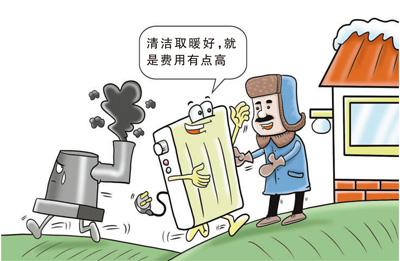
读者网友反映 一些北方地区“煤改气”后 天然气费用高——多措并举破解部分农村“取暖贵”问题(金台视线)
Ren Min Ri Bao· 2026-01-18 22:08
Core Viewpoint - The transition from coal to gas heating in rural northern China has led to high gas prices, causing some villagers to forgo heating to save money, resulting in discomfort during winter [1][2]. Current Situation - Villagers in Shanxi's Dingxiang County report that the cost of gas heating is prohibitively high, leading to some opting to endure cold temperatures instead [2][3]. - The price of natural gas in the region has increased from 2.26 yuan to 2.61 yuan per cubic meter, with higher usage leading to prices exceeding 3 yuan, resulting in heating costs of several thousand yuan for a winter [3][4]. - Residents in other provinces like Henan and Shandong also express similar concerns about the high costs associated with gas heating compared to previous coal heating expenses [4][5]. Reasons for High Costs - The construction of gas pipelines in rural areas is costly due to low population density and the need for extensive maintenance and service, leading to high logistical costs [5][6]. - The reduction of government subsidies over time has increased the financial burden on residents, with some areas seeing subsidies drop significantly [7][8]. - Poor insulation in rural homes exacerbates heating costs, as many houses lack adequate thermal protection, leading to energy waste [9][10]. Recommendations - Suggestions include establishing cross-regional ecological compensation mechanisms to support clean heating initiatives and improve air quality [11][12]. - Experts recommend diversifying clean energy sources and improving rural housing insulation to reduce heating costs and enhance energy efficiency [12][13]. - The need for a more sustainable and precise fiscal subsidy mechanism is emphasized to alleviate the financial strain on residents while promoting clean energy use [12][13].
直击河北农民取暖:“烧不起”的冬天
凤凰网财经· 2026-01-07 14:14
Core Viewpoint - The article highlights the struggles of rural residents in Hebei, particularly in terms of heating costs during winter, as many families cannot afford to use natural gas for heating, leading them to resort to alternative and often unsafe methods for warmth [6][22][41] Group 1: Heating Costs and Economic Strain - The cost of natural gas for heating in rural Hebei ranges from 3.15 to 3.4 yuan per cubic meter, significantly higher than in Beijing (2.61 yuan) and Tianjin (2.86 yuan), placing a financial burden on farmers with lower incomes [22][23] - Families like that of Kong Xuan face heating costs of 4,000 to 5,000 yuan for the winter, with estimates suggesting that continuous use of a gas boiler could exceed 15,000 yuan for the season, compared to only 2,000 yuan for coal in previous years [25][26][28] - Many elderly residents, who often rely on minimal agricultural income, find that heating costs can consume their entire annual earnings from farming, leading to severe financial distress [28][30] Group 2: Alternative Heating Methods - Due to the high costs of natural gas, many rural residents resort to burning tree roots or corn cobs for warmth, with some even secretly using coal despite regulations against it [11][39] - The article describes scenes of elderly villagers gathering around makeshift fires, highlighting the lengths to which they go to stay warm, often at the expense of safety and comfort [9][12][41] - Some elderly individuals have received special permissions to use clean coal for heating due to their financial hardships, indicating a gap in the implementation of the "coal-to-gas" policy [39][41] Group 3: Policy Impact and Community Response - The "coal-to-gas" initiative aimed at reducing air pollution has led to a significant shift in heating methods, but the lack of affordable alternatives has left many families in a precarious situation [34][39] - The withdrawal of government subsidies for natural gas has exacerbated the issue, making it increasingly difficult for rural families to afford heating [23][34] - The article notes that while some areas have seen a reduction in enforcement of coal-burning regulations, the fear of penalties still deters many from reverting to coal [39]