
天空地水工一体化监测感知系统

Search documents
江河保护治理进入新阶段
Jing Ji Ri Bao· 2026-01-21 22:25
Core Viewpoint - The articles highlight the significant progress in river and lake management in China, emphasizing the restoration of water flow and ecological health in key rivers like the Yongding River, as well as advancements in rural water supply and the implementation of smart monitoring systems for water management [1][2][3]. Group 1: River and Lake Restoration - The Yongding River has achieved continuous water flow for three consecutive years, transforming from a dry state to a flowing and clean river, thanks to coordinated water resource management [1] - The ecological restoration efforts have led to a 90% compliance rate for ecological flow standards in key rivers and lakes across the country [1] - The revival of several historically dry rivers and lakes, including the Grand Canal and Baiyangdian, showcases the effectiveness of the ecological protection and governance strategies [1] Group 2: Smart Water Management - The integration of technology in water management, such as satellite monitoring and automated waste collection, has improved the efficiency and effectiveness of river and lake protection efforts [2] - The "electronic river chief" system enhances monitoring capabilities, allowing for quicker identification and resolution of water-related issues [2] - The systematic approach to managing flood control and preventing human encroachment on water bodies has been reinforced through strict regulations and monitoring [2] Group 3: Rural Water Supply Improvements - The rural water supply in Hunan Province has seen significant enhancements, with 40 projects aimed at improving access to clean drinking water for 120,000 residents [3] - The transition from merely having water to ensuring the quality of drinking water reflects a broader commitment to improving rural living conditions [3] - The nationwide rural tap water coverage has reached 96%, indicating substantial progress in water supply infrastructure [3] Group 4: Governance and Management Systems - The establishment of a comprehensive river and lake management system, involving over 1.2 million river chiefs at various levels, has strengthened accountability and governance [4] - Groundwater levels in key areas have improved, with shallow and deep groundwater levels rising by 3.76 meters and 7.65 meters, respectively, compared to the end of the 13th Five-Year Plan [4] - The area undergoing soil erosion control has exceeded 340,000 square kilometers, with a soil conservation rate surpassing 73% [4] Group 5: Future Initiatives - The upcoming "15th Five-Year Plan" will focus on enhancing river health, ensuring drinking water safety, and continuing the comprehensive management of groundwater over-extraction [5] - New initiatives will include the management of ecological flow releases from water projects and the stabilization of ecological water levels in restored rivers [5] - The plan aims to further integrate advanced technologies in water management and enhance soil conservation efforts [6]
“十四五”江河保护治理 绘就人水和谐画卷
Zhong Guo Xin Wen Wang· 2026-01-19 23:10
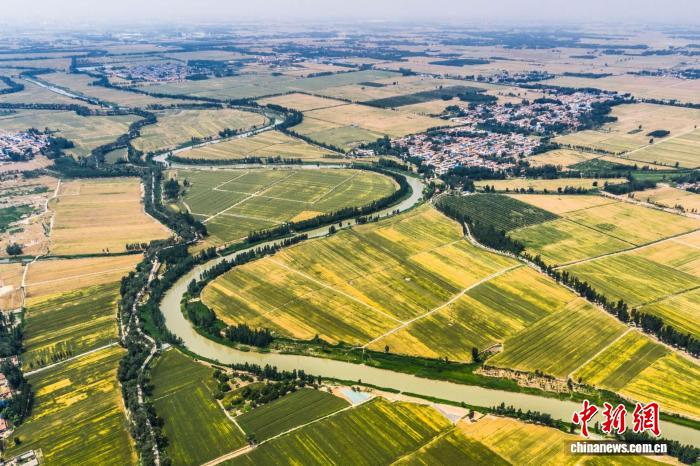
Core Viewpoint - The article highlights the significant progress in China's river protection and governance during the "14th Five-Year Plan" period, emphasizing ecological restoration, water safety, and the harmonious coexistence of humans and water. Group 1: River Protection and Governance - The "Anlan River" initiative is seen as a foundational task for water management, with a focus on flood prevention and water supply security [3] - Since the beginning of the "14th Five-Year Plan," 149,000 cases of river and lake management issues have been addressed, with approximately 1.7 million kilometers of river and over 3,000 lakes designated for management [3] - The implementation of a comprehensive monitoring system using drones, underwater robots, and satellite technology has improved the efficiency of river management [3] Group 2: Ecological Restoration - The revival of the Xiliao River, which had been dry for 27 years, marks a significant ecological achievement, with water flow restored through unified management and ecological replenishment [5] - The "Mother River Revival Action" has successfully revitalized 88 rivers and lakes, showcasing the effectiveness of unified planning and management [5] - The ecological environment of Baiyangdian has improved, leading to an increase in bird species, including the critically endangered Baikal teal [5] Group 3: Economic and Social Benefits - The transformation of the Yucun Creek in Zhejiang province from a polluted waterway to a thriving ecosystem has boosted local tourism and increased household incomes, with an average income surpassing 70,000 yuan [7] - Nationwide, 340,000 square kilometers of soil erosion have been managed, achieving a soil conservation rate of 73% [7] - The "River-Lake+" integration model is contributing to high-quality development, turning water ecology into water economy [8] Group 4: Future Outlook - The Ministry of Water Resources emphasizes the commitment to continue promoting river protection and governance, aiming for every river to benefit the people [9] - The ongoing efforts in river and lake restoration are expected to contribute to a more sustainable ecological civilization in China [9]

人民网:水利部:“十四五”期间 数字孪生三峡等11个重点工程投入应用
Shui Li Bu Wang Zhan· 2025-12-22 01:08
Core Viewpoint - The Ministry of Water Resources of China is advancing the construction of a digital twin water conservancy system during the 14th Five-Year Plan period, focusing on enhancing water security and promoting high-quality development in water management [1][2]. Group 1: Digital Twin Water Conservancy System - During the 14th Five-Year Plan, 11 key projects, including the Three Gorges and South-to-North Water Diversion, have been implemented, with 49 digital twin irrigation areas and 230 rural water supply projects achieving significant progress [1] - The digital twin water conservancy system aims to integrate forecasting, early warning, simulation, and planning functions, enhancing overall water management capabilities [1][2]. Group 2: Monitoring and Disaster Management - The "Sky-Earth-Water Engineering" integrated monitoring system utilizes various technologies to achieve intelligent monitoring of all water management elements, covering 34 satellites, over 180 rain radars, and 136,000 hydrological stations [2] - The system has effectively supported flood disaster prevention, optimizing scheduling plans and ensuring successful management during significant flood events, including the 23.7 flood in the Haihe River basin [2]. Group 3: Water Resource Management - The digital twin South-to-North Water Diversion project has ensured safety in engineering, water supply, and water quality, contributing to sustainable water delivery [2] - The digital twin irrigation areas have improved water resource allocation and precision irrigation, enhancing water use efficiency [2].
