江河保护治理

Search documents
江河保护治理进入新阶段
Jing Ji Ri Bao· 2026-01-21 22:25
Core Viewpoint - The articles highlight the significant progress in river and lake management in China, emphasizing the restoration of water flow and ecological health in key rivers like the Yongding River, as well as advancements in rural water supply and the implementation of smart monitoring systems for water management [1][2][3]. Group 1: River and Lake Restoration - The Yongding River has achieved continuous water flow for three consecutive years, transforming from a dry state to a flowing and clean river, thanks to coordinated water resource management [1] - The ecological restoration efforts have led to a 90% compliance rate for ecological flow standards in key rivers and lakes across the country [1] - The revival of several historically dry rivers and lakes, including the Grand Canal and Baiyangdian, showcases the effectiveness of the ecological protection and governance strategies [1] Group 2: Smart Water Management - The integration of technology in water management, such as satellite monitoring and automated waste collection, has improved the efficiency and effectiveness of river and lake protection efforts [2] - The "electronic river chief" system enhances monitoring capabilities, allowing for quicker identification and resolution of water-related issues [2] - The systematic approach to managing flood control and preventing human encroachment on water bodies has been reinforced through strict regulations and monitoring [2] Group 3: Rural Water Supply Improvements - The rural water supply in Hunan Province has seen significant enhancements, with 40 projects aimed at improving access to clean drinking water for 120,000 residents [3] - The transition from merely having water to ensuring the quality of drinking water reflects a broader commitment to improving rural living conditions [3] - The nationwide rural tap water coverage has reached 96%, indicating substantial progress in water supply infrastructure [3] Group 4: Governance and Management Systems - The establishment of a comprehensive river and lake management system, involving over 1.2 million river chiefs at various levels, has strengthened accountability and governance [4] - Groundwater levels in key areas have improved, with shallow and deep groundwater levels rising by 3.76 meters and 7.65 meters, respectively, compared to the end of the 13th Five-Year Plan [4] - The area undergoing soil erosion control has exceeded 340,000 square kilometers, with a soil conservation rate surpassing 73% [4] Group 5: Future Initiatives - The upcoming "15th Five-Year Plan" will focus on enhancing river health, ensuring drinking water safety, and continuing the comprehensive management of groundwater over-extraction [5] - New initiatives will include the management of ecological flow releases from water projects and the stabilization of ecological water levels in restored rivers [5] - The plan aims to further integrate advanced technologies in water management and enhance soil conservation efforts [6]
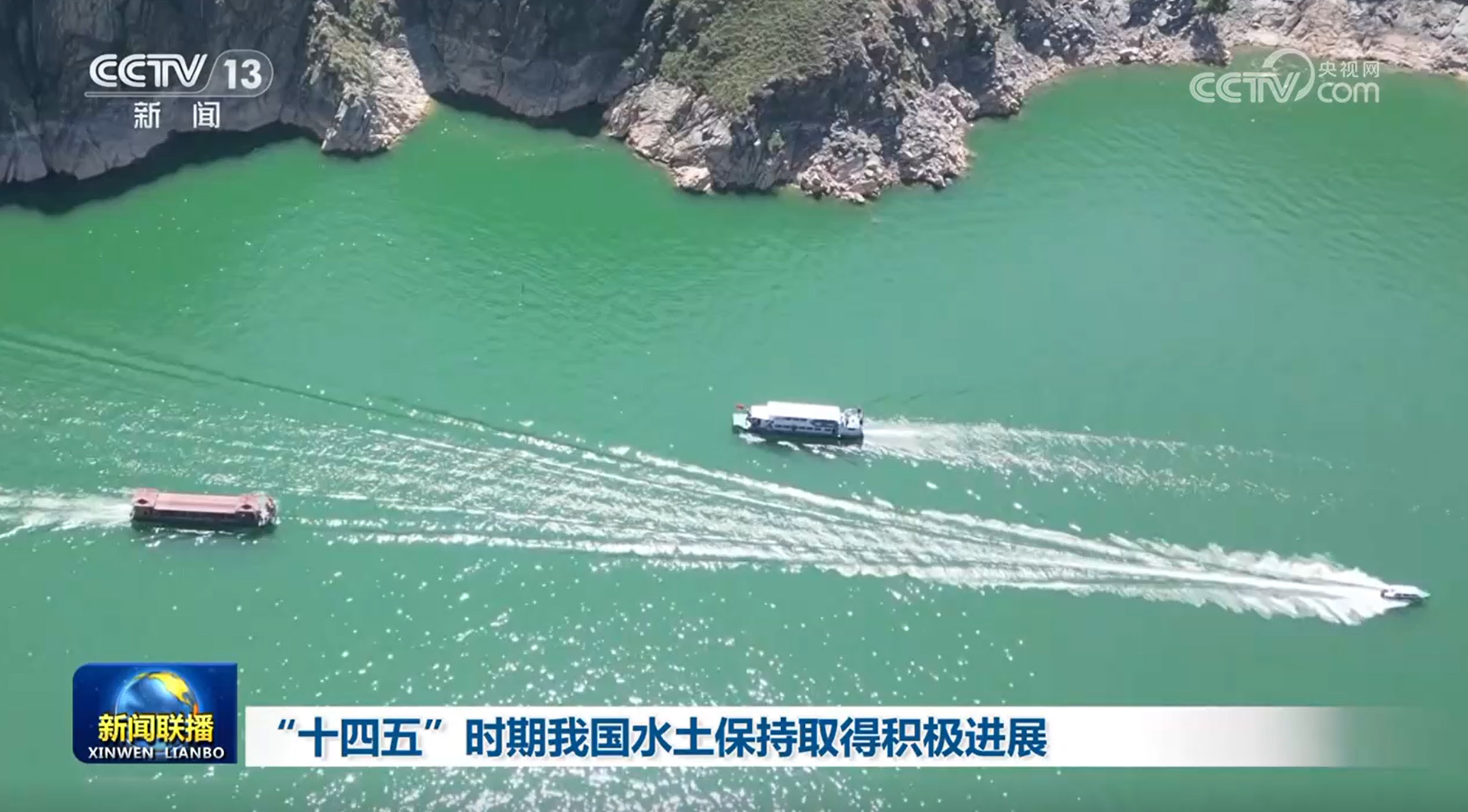
“十四五”时期我国水土保持取得积极进展
Yang Shi Wang· 2025-12-24 12:19
Core Viewpoint - The Chinese government is actively promoting river protection and soil conservation during the "14th Five-Year Plan" period, achieving significant improvements in soil erosion management and water conservation efforts [1][3]. Group 1: Soil Erosion Management - A total of over 340,000 square kilometers of new soil erosion management areas have been established, resulting in a net reduction of approximately 116,000 square kilometers of soil erosion [1]. - The soil conservation rate has reached over 73% [1]. Group 2: Key Regional Efforts - Focused efforts in key areas, such as the middle and upper reaches of major rivers, have led to the management of 67,000 square kilometers of soil erosion, with soil erosion intensity reduced by 15 to 20 percentage points [3]. - Nearly 7,000 sediment retention dams have been newly constructed or renovated in the Loess Plateau region, effectively reducing sediment entering the Yellow River [3]. - Comprehensive management of sloped farmland has been conducted over 4 million acres, and 38,000 erosion gullies have been treated in the Northeast black soil region [3]. - In the Danjiangkou Reservoir area and its upstream, ecological clean small watersheds have been built to ensure sustainable water supply [3].

长江水利委员会召开2025年第6次主任办公会议
Shui Li Bu Wang Zhan· 2025-12-16 12:31
Core Viewpoint - The meeting emphasizes the importance of implementing the guidelines from the Central Committee of the Communist Party of China and the State Council regarding comprehensive river protection and governance, aligning with Xi Jinping's water management philosophy and the national "river strategy" [1] Group 1 - The meeting is chaired by Liao Zhiwei, the Secretary of the Party Leadership Group and Director of the Yangtze River Water Resources Commission, focusing on the 2025 work plan [1] - The implementation of the guidelines is seen as a political requirement for enhancing water security and promoting the protection and governance of the Yangtze River Basin [1] - The meeting highlights the need to integrate water disaster management, water resource allocation, ecological protection, and environmental governance in the Yangtze River Basin [1]
幸福河湖,家门口的“诗与远方”
Ren Min Ri Bao· 2025-10-21 06:53
Core Points - The article emphasizes the importance of rivers and lakes as vital resources for life and civilization, highlighting the need for ecological protection alongside development [1][2] - Since 2022, the Ministry of Water Resources and the Ministry of Finance have implemented the "Happy Rivers and Lakes" project, aiming to establish several happy rivers and lakes by 2030, focusing on local "mother rivers" [1] - The initiative has been positively received by the public, addressing their desire for a beautiful ecological environment and supporting the goal of "harmony between people and water" in river and lake protection [1] Summary by Sections Project Implementation - The "Happy Rivers and Lakes" project has been deployed across 31 provinces, utilizing provincial river chief orders to promote construction efforts [1] - Significant changes have been observed in river and lake conditions during the "14th Five-Year Plan" period, with a focus on preserving and restoring natural shorelines [1] Achievements - Comprehensive plans for the protection and utilization of major rivers and lakes, including the Yangtze, Yellow, Huai, and Taihu, have been issued and implemented [1] - Over 1,300 square kilometers of lake area have been restored through initiatives like returning farmland to lakes and rectifying illegal encroachments [1] - Dynamic management of foundational data for 140,000 rivers, over 3,000 lakes, and various river segments has been largely achieved [1] Policy Framework - In June, the Central Committee and the State Council issued guidelines to comprehensively advance river protection and governance, reinforcing the "Happy Rivers and Lakes" initiative [2] - The guidelines emphasize policy leadership, institutional development, and a systematic approach to governance, aiming for a harmonious coexistence between humans and nature [2]
幸福河湖,家门口的“诗与远方”(专家点评)
Ren Min Ri Bao· 2025-10-20 22:10
Core Insights - The article emphasizes the importance of rivers and lakes as vital resources for life and civilization, highlighting the need for a balance between development and ecological protection [1][2] - The "Happy Rivers and Lakes" initiative aims to enhance ecological protection and management of water bodies across China by 2030, responding to public demand for a better environment [1][2] Group 1: Policy and Initiatives - Since 2022, the Ministry of Water Resources and the Ministry of Finance have implemented the "Happy Rivers and Lakes" project nationwide, focusing on major rivers as key areas for development and protection [1] - In June, the Central Committee and the State Council issued guidelines to comprehensively advance river protection and management, reinforcing the "Happy Rivers and Lakes" initiative [2] Group 2: Achievements and Goals - Significant improvements in river and lake conditions have been observed during the "14th Five-Year Plan" period, with a focus on preserving natural shorelines and restoring water areas [1] - Over 1,300 square kilometers of lake area have been restored through various initiatives, including the removal of illegal structures and the reconnection of lakes [1]
连续4年全线水流贯通 京杭大运河水清岸绿业态新
Ren Min Ri Bao· 2025-07-14 00:38
Core Viewpoint - The article discusses the successful implementation of water replenishment in the Grand Canal, highlighting the ecological and economic benefits resulting from the restoration of water flow and the development of new industries along the canal [1][5]. Group 1: Water Replenishment and Management - The Grand Canal has achieved continuous water flow for four consecutive years since 2022, with the replenishment task for 2025 starting in February and completed by July [1][2]. - The replenishment focuses on the northern sections of the Grand Canal, utilizing multiple water sources including the Yangtze River, Yellow River, and local rainwater, with a total of 7.88 billion cubic meters of water supplied, exceeding the planned amount by 142% [3][4]. - Advanced monitoring technologies, including drones and real-time water flow measurement, are employed to ensure effective water management and distribution along the canal [4][8]. Group 2: Ecological and Economic Impact - The restoration of water flow has led to improved water quality and increased water surface area in the northern sections of the Grand Canal, with a total infiltration of 5.31 billion cubic meters from 2022 to 2024 [6][7]. - The revitalization of the canal has spurred new economic activities, such as rural tourism and outdoor sports, enhancing local livelihoods and promoting cultural heritage [6][7]. - The initiative aims to create a sustainable water management system that balances irrigation needs and ecological restoration, with a focus on long-term benefits for the surrounding communities [8][9].
在更高水平上保障供水安全
Jing Ji Ri Bao· 2025-07-11 22:12
Core Viewpoint - The recent document issued by the Central Committee and the State Council emphasizes the need for enhanced river protection and governance, aiming to significantly improve urban and rural water supply security by 2035, indicating a stronger commitment to national water safety [1] Group 1: Water Resource Management - China faces significant challenges in water resource management due to uneven distribution, with summer floods and winter droughts leading to ecological issues such as river channel disconnection and groundwater over-extraction [2] - The document outlines a systematic approach to enhance water supply security, including maximizing the potential of existing water storage projects and accelerating the construction of key water source projects [2] Group 2: Agricultural and Rural Water Supply - Water resource shortages threaten regional development, food security, and drinking safety, making irrigation systems crucial for ensuring stable agricultural production [3] - The development of rural water supply requires tailored approaches, promoting integrated urban-rural water supply systems to ensure safe drinking water for rural residents [3]
提升水安全保障能力
Jing Ji Ri Bao· 2025-07-09 21:44
Core Viewpoint - The Chinese government has issued a comprehensive plan to enhance river protection and management, emphasizing the integration of ecological preservation and economic development, with specific targets and tasks outlined in 24 arrangements [1][4]. Group 1: River Protection and Management - The plan aims to implement integrated protection and systematic governance of rivers, focusing on the entire river basin from source to estuary, while enhancing ecological quality and stability [1]. - The "People's River" concept is promoted, highlighting the relationship between water resources, ecological environment, and socio-economic development [4]. Group 2: National Water Network Construction - The successful trial operation of the "Yin Chuo Ji Liao" project marks a significant step in the national water network, improving irrigation conditions and addressing water supply issues in the region [2]. - Major water diversion projects have been completed, with the South-to-North Water Diversion Project transferring over 800 billion cubic meters of water, benefiting approximately 185 million people [2]. Group 3: Rural Water Supply and Irrigation - Recent efforts have led to the construction of 72 large and medium-sized irrigation areas and modernization of over 1,900 irrigation projects, increasing irrigated area by 1.91 million acres [3]. - Rural water supply projects have improved drinking water safety for 340 million rural residents, achieving a national tap water coverage rate of 94% [3]. Group 4: Groundwater Protection - Groundwater over-extraction has decreased by 31.9% since 2015, with significant reductions in over-extraction areas, particularly in North China [5]. - The government plans to set specific targets for groundwater management, including reduction of over-extraction and restoration of river and lake areas [6]. Group 5: Flood Control and Disaster Management - The plan emphasizes the need for a comprehensive flood control system to enhance resilience against extreme weather events, with specific measures for monitoring and managing flood risks [7][8]. - The government is focusing on improving flood control capabilities and emergency response mechanisms to effectively manage flood disasters [7].
经济日报金观平:强化水资源刚性约束刻不容缓
Jing Ji Ri Bao· 2025-07-06 21:39
Core Viewpoint - The article emphasizes the importance of river protection and governance as a long-term strategy for sustainable development in China, highlighting the need for strict water resource management and utilization efficiency due to the country's water scarcity and uneven distribution of water resources [1][2]. Group 1: Water Resource Management - The concept of "rigid constraints" is introduced, which mandates strict adherence to water usage limits for regions and industries, aiming to control water consumption within set quotas [2]. - Recent measures include establishing upper limits for water resource development, enforcing total water usage controls, and implementing legal frameworks to enhance water resource management [2][3]. - Despite these efforts, violations such as illegal water extraction and pollution continue to exacerbate water resource tensions, indicating a need for stronger enforcement and accountability [2][3]. Group 2: Policy Implementation - The government is urged to take a proactive role in water resource management, including strict project approvals, water usage permits, and capacity evaluations to prevent over-extraction in water-scarce areas [3]. - The article discusses the necessity of integrating water resource management with urban planning and industrial development, ensuring that population and economic growth align with available water resources [3][4]. - New policies, such as the "Ecological Flow Management Measures," have been introduced to regulate ecological water flows, with the aim of enhancing the effectiveness of water resource constraints and supporting high-quality development [4].
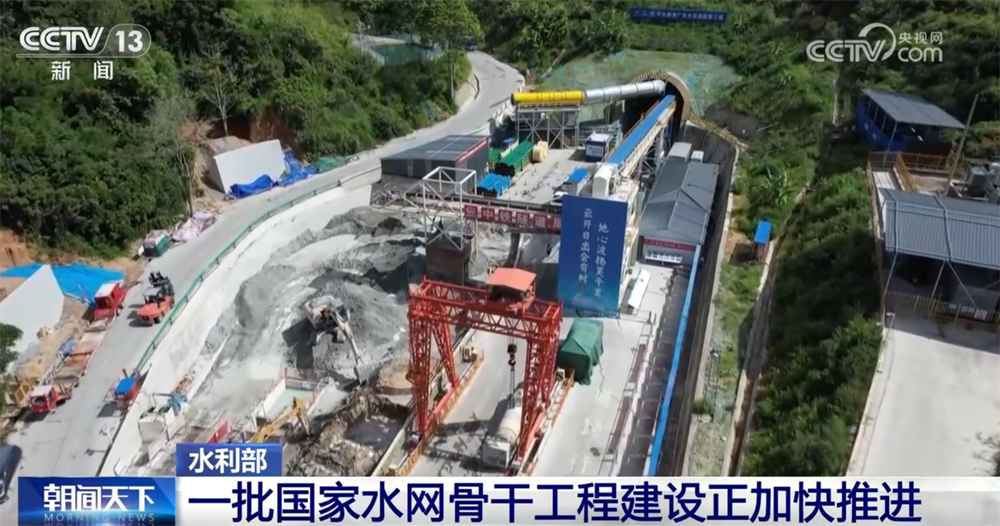
一批国家水网骨干工程建设“进度条”持续刷新 重大水利工程加速推进
Yang Shi Wang· 2025-07-05 04:02
Core Viewpoint - The Chinese government is accelerating the construction of major water conservancy projects to enhance water resource allocation and supply security, as outlined in the recent policy document on river protection and governance. Group 1: Major Water Projects - Since 2022, 12 major water diversion projects, including those in the Pearl River Delta and the Yangtze River, have been completed, adding an annual water diversion capacity of 124.8 billion cubic meters [1] - New projects, such as the North Bay Water Resource Allocation and the Jilin Water Network, are expected to add another 142.3 billion cubic meters of annual water diversion capacity upon completion [1] Group 2: Reservoir and Flood Control - 24 large reservoirs, including the Xijiang Datiangxia and Xinjiang Dashimen, have been completed, increasing water supply capacity by 34.6 billion cubic meters and flood control capacity by 26.6 billion cubic meters [3] - New flood control and key water source projects, including the Yellow River Guxian, are projected to add 49 billion cubic meters of water supply capacity and 36.7 billion cubic meters of flood control capacity [3] Group 3: Policy and Funding Support - The South-to-North Water Diversion Project has delivered over 800 billion cubic meters of water, benefiting 185 million people, and is crucial for optimizing water resource allocation and ensuring drinking water safety [5] - The National Development and Reform Commission (NDRC) is increasing support for major water projects, with an average increase of 20 percentage points in central investment support for new medium-sized irrigation and water diversion projects [7] Group 4: Integrated Infrastructure Development - The NDRC and the Ministry of Water Resources are focusing on the integration of flood control projects with irrigation and high-standard farmland construction to maximize comprehensive benefits [9]