奥兰素红茶酵母精华面膜

Search documents
创下掉粉纪录后,美妆顶流“复播”
3 6 Ke· 2025-12-10 09:39
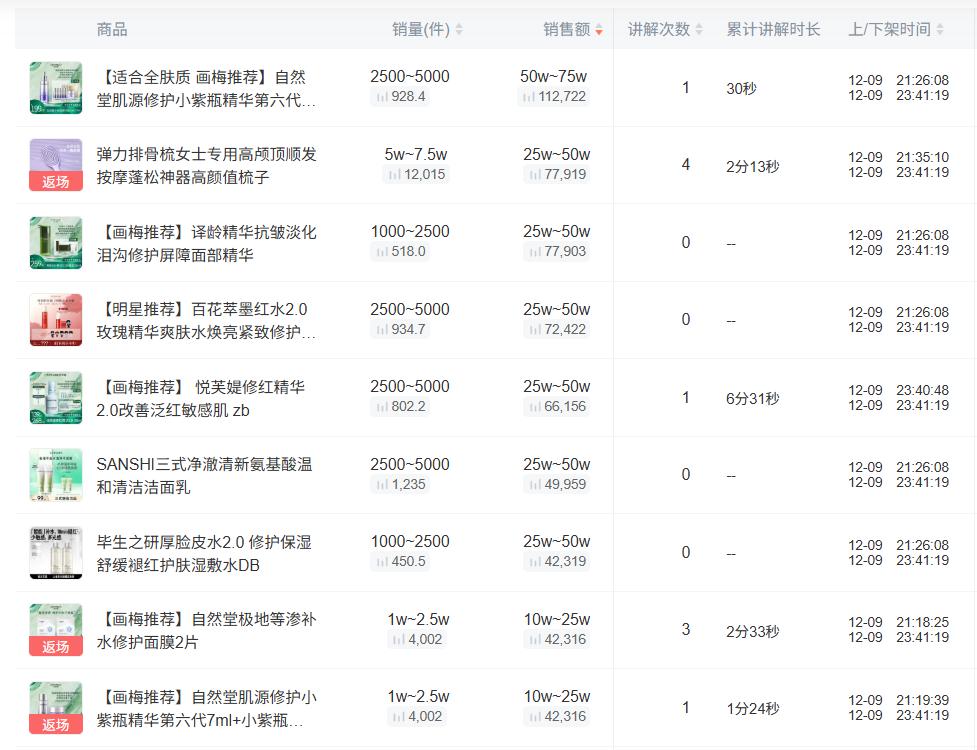
Core Insights - The beauty influencer @HuaMei announced a temporary departure from the beauty sector, citing exhaustion rather than issues related to taxes or counterfeit products, which sparked widespread media coverage and speculation about the reasons behind this decision [1][7][10] - Following the announcement, @HuaMei's return to streaming on Douyin was marked by impressive sales projections of 7.5 to 10 million yuan and a peak viewership of 186,000, indicating strong fan loyalty and market influence [1][2] Group 1: @HuaMei's Background and Standards - @HuaMei shared his journey from dropping out of school to becoming a makeup artist and eventually a beauty influencer, emphasizing his commitment to ethical practices and rigorous product selection standards [3][10] - He highlighted two significant controversies in his career, where he took full responsibility for product issues, showcasing his dedication to consumer trust and product integrity [3][10] Group 2: Industry Context and Trends - The beauty sector has seen a trend of top influencers announcing their departures, with @ChengShiAn and @LuoWangYu also having left the scene for various reasons, indicating potential underlying issues within the influencer ecosystem [11][12] - The overall performance of top beauty influencers has declined, with a noticeable drop in average sales per live stream despite an increase in the number of live streaming sessions [20][22] Group 3: Market Dynamics and Future Directions - The Douyin e-commerce market is projected to reach a total transaction volume of approximately 3.5 trillion yuan in 2024, with 30% of this volume coming from influencer live streams, highlighting the ongoing importance of influencers in driving sales [20] - There is a growing emphasis on transparency and professionalism in the beauty sector, with platforms like Douyin implementing initiatives to promote sustainable content evaluation and support emerging creators [22][23]

画梅退网、朱瓜瓜惹争议,美妆主播又到“至暗时刻”?
3 6 Ke· 2025-12-03 08:47
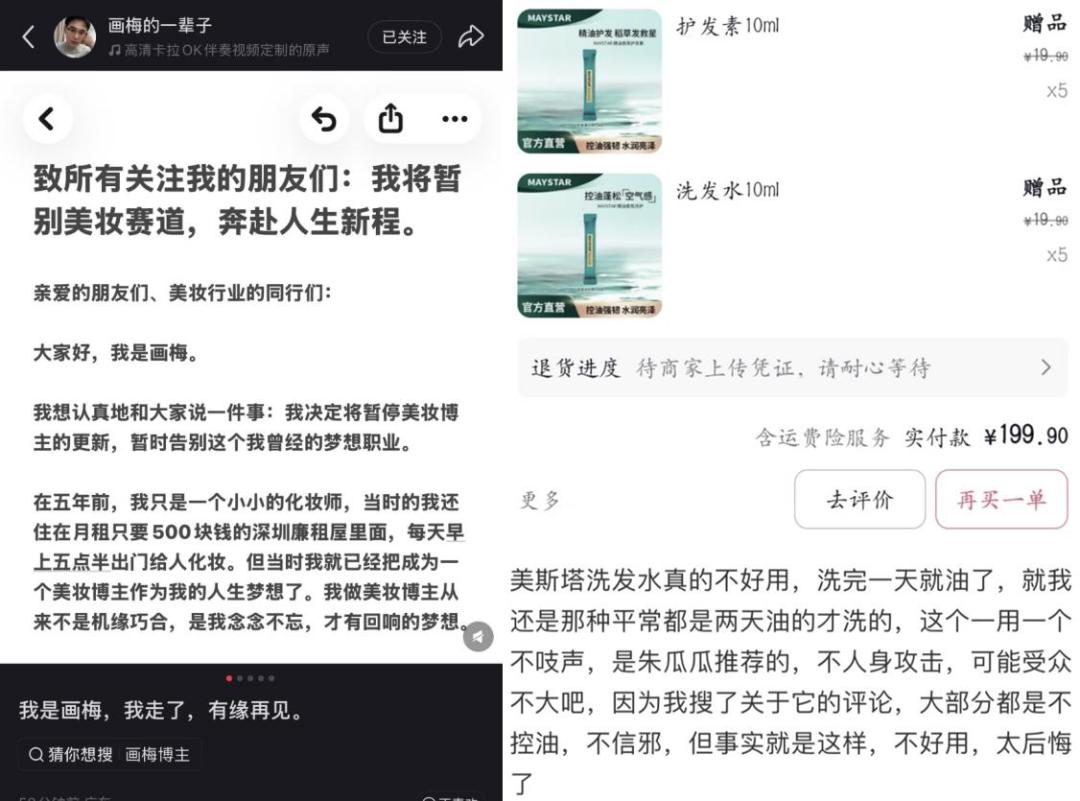
Core Insights - The beauty live-streaming industry is facing a significant trust crisis, with issues related to product quality and exaggerated claims becoming increasingly prominent [3][4][8] - The recent controversies surrounding popular beauty influencers highlight the urgent need for rebuilding trust within the industry [3][4][22] Group 1: Trust Crisis in Beauty Live-Streaming - Influencer Zhu Guogua's promotion of Maystar shampoo has led to numerous consumer complaints regarding product effectiveness, with users reporting issues such as scalp irritation and oiliness [4][6] - Discrepancies between the claimed benefits of products and their actual registered effects have raised consumer skepticism, as seen with both Maystar shampoo and Aolansu mask [6][8] - The lack of response from Zhu Guogua regarding these complaints has further eroded consumer trust, despite her maintaining a significant following of 9.05 million on Douyin [7][8] Group 2: Consumer Sentiment and Influencer Credibility - Consumers are increasingly frustrated with the perceived inauthenticity of influencer marketing tactics, leading to a backlash against established personas and promotional strategies [9][12] - The industry has seen a rise in complaints about exaggerated claims and poor product quality, with past incidents involving significant financial repercussions for influencers [8][9] - The shift in consumer perception indicates a growing demand for transparency and accountability from beauty influencers [21][22] Group 3: Industry Dynamics and Future Trends - The beauty live-streaming market has experienced explosive growth, but recent data shows a slowdown in growth rates, indicating a potential market saturation [18][21] - Influencers are adapting to a more competitive landscape by diversifying their product offerings and focusing on niche markets, as seen with Zhu Guogua's shift to smaller brands [15][22] - The emergence of new influencers and the increasing importance of brand-owned live-streaming accounts suggest a potential shift in the market dynamics, with brands seeking to reduce reliance on individual influencers [14][15]
画梅退网、朱瓜瓜惹争议,美妆主播又到“至暗时刻”?
FBeauty未来迹· 2025-12-02 13:26
Core Viewpoint - The beauty live-streaming industry is undergoing a significant trust crisis, with issues related to product quality and exaggerated claims becoming increasingly prominent, leading to a need for rebuilding consumer trust [5][20][21] Group 1: Industry Challenges - Recent controversies involving beauty influencers, such as Huamei pausing beauty content updates and Zhu Guagua facing backlash over product quality, highlight the industry's struggles [3][5] - The beauty live-streaming sector is entering a deep adjustment period, marked by a decline in consumer trust and increasing scrutiny over product claims [5][20] - Zhu Guagua's promotion of Maystar shampoo has led to numerous consumer complaints regarding its effectiveness, with users reporting issues like scalp irritation and oiliness [7][9] Group 2: Consumer Concerns - Consumers have raised two main concerns: the poor quality of products and the potential exaggeration of product efficacy claims, revealing flaws in the influencer's product selection process [10][11] - There is a growing skepticism towards influencers' narratives, particularly when discrepancies arise between their claims and the actual product information [10][11] - The backlash against Zhu Guagua's promotional tactics reflects a broader consumer fatigue with scripted and exaggerated marketing strategies [12][20] Group 3: Market Dynamics - The beauty live-streaming market has seen a significant increase in scale, growing from 19.64 billion to 491.68 billion from 2017 to 2023, but the growth rate has slowed to 8.31% last year [18] - The competitive landscape is shifting, with major brands like Han Shu and Estée Lauder increasing their self-broadcasting efforts, thereby squeezing the space for individual influencers [14][22] - New influencers continue to emerge, indicating opportunities for differentiation in a crowded market, but many struggle to maintain consistent rankings in sales [13][14] Group 4: Future Trends - The industry is moving towards a phase where professional expertise and transparent communication will be more valued than emotional manipulation and scripted narratives [21][22] - Innovative approaches, such as emphasizing scientific skincare and transparent pricing, are being adopted to enhance consumer trust and engagement [22][23] - The need for a more rigorous and systematic product selection process, along with clear communication of product efficacy, is becoming essential for influencers to maintain credibility [23]