宇树H1全尺寸人形机器人

Search documents
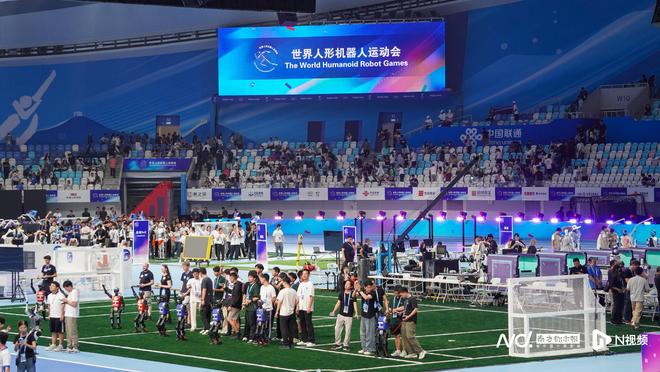
人形机器人运动会启幕,宇树与“天工”对决成最大看点之一
Nan Fang Du Shi Bao· 2025-08-15 00:50
Group 1 - The 2025 World Humanoid Robot Games opened on August 14, marking the first comprehensive sports competition focused on humanoid robots [1][4] - The event lasts for three days, from August 15 to 17, featuring 280 teams from 16 countries [1] - The competition is divided into "performance events" and "task events," with the former including athletics, soccer, and dance, while the latter focuses on B2B applications in medicine, factories, hotels, and warehousing [1] Group 2 - Yushu Technology is participating in the event, including a 1500-meter race scheduled for August 15, featuring top robots from previous competitions [1] - The main highlight of the event is the competition between Yushu's H1 full-size humanoid robot and the "Tiangong" robot from Beijing Humanoid Robot Innovation Center [1] - In a previous half-marathon event, Yushu's G1 small humanoid robot faced criticism due to performance issues, which the company clarified were due to varying operational conditions [2]


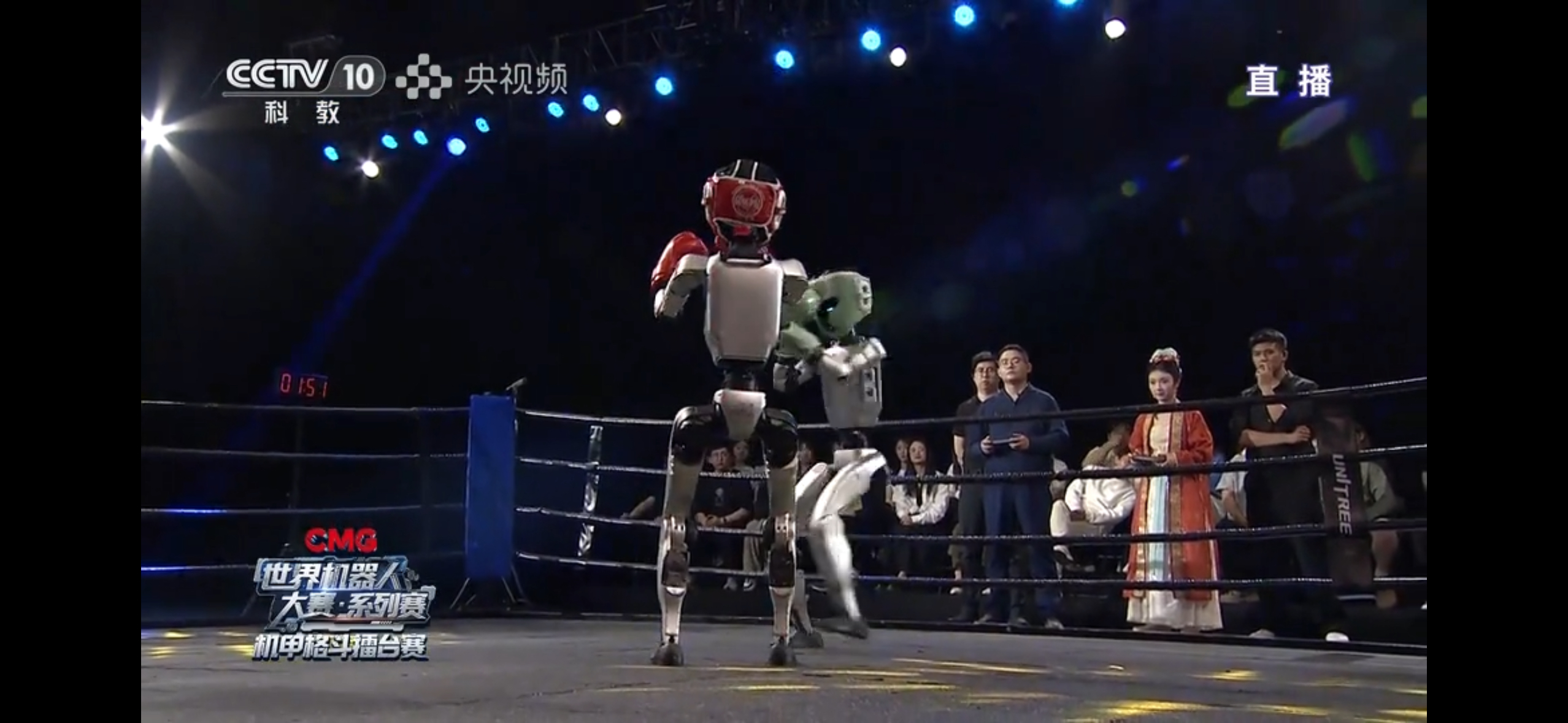
数次被“KO”,机器人有“皮外伤”!格斗大赛打出了宇树的技术底牌?
第一财经· 2025-05-26 03:43
Core Viewpoint - The "CMG World Robot Competition - Mecha Fighting Arena" serves as a platform for technology validation, showcasing the capabilities and limitations of the Yushu G1 robots in a competitive environment, despite being labeled as a "science popularization exhibition" [1][10]. Group 1: Event Overview - The competition featured four non-professional operators controlling Yushu G1 robots in a series of three rounds, totaling twelve rounds of combat, with the "AI Strategist" emerging as the champion [1][4]. - The Yushu G1, set to launch in 2024, stands approximately 1.3 meters tall, weighs 35 kilograms, and possesses 23 degrees of freedom, with a maximum torque of 90 N.m at the knee joint [3]. Group 2: Technical Insights - Observations during the competition revealed issues with dynamic control and real-time perception, as robots experienced instability and were knocked out, highlighting the challenges in their operational capabilities [6][7]. - The G1 robots utilize a combination of action control and intelligent decision-making algorithms, but face milliseconds of latency in executing movements, which can lead to timing errors during combat [6][7]. - The competition environment posed unique challenges, requiring the robots to adapt to dynamic interactions, which tested their mechanical structure and software coordination [10][11]. Group 3: Implications for Robotics - The event is seen as a pressure test for the robots, providing insights into their performance under real-time conditions, which can inform future applications in industrial and rescue scenarios [10][11]. - The lightweight design of the G1 allows for more efficient algorithm tuning, making it suitable for rapid iteration and learning strategies, unlike the larger H1 model [12]. - The competition serves as a window to assess the collaborative capabilities of intelligent hardware and software, indicating a potential trend towards "human-robot collaboration" in the next 5-10 years [12].

机器人摔倒、KO、站起再战,格斗大赛打出了宇树的技术底牌?
Di Yi Cai Jing· 2025-05-25 16:03
Core Viewpoint - The "CMG World Robot Competition Series - Mecha Combat Arena" serves as a platform for technology validation rather than just a performance showcase, highlighting the current limitations and capabilities of robotic systems [1][9]. Group 1: Event Overview - The competition took place on May 25, featuring four non-professional operators controlling four Yushun G1 robots in a three-round, twelve-match combat [1][2]. - The G1 robot, set to launch in 2024, stands approximately 1.3 meters tall, weighs 35 kilograms, and has 23 degrees of freedom with a maximum knee torque of 90 N.m [2]. Group 2: Technical Insights - The competition revealed issues with dynamic control and perception delays in the robots, as they faced challenges such as losing balance and being knocked out [5][6]. - The robots utilized a combination of action control and intelligent decision-making algorithms, but still experienced milliseconds of delay in executing movements, affecting their performance in dynamic environments [6][8]. Group 3: Implications for Robotics - The combat scenario serves as a pressure test for robotic systems, assessing their mechanical structure, motion control, sensor fusion, and intelligent decision-making capabilities [9][11]. - The lightweight design of the G1 allows for more efficient algorithm tuning, making it better suited for rapid iteration and learning compared to larger models like the H1 [11].