安苏萌

Search documents
安科生物姚建平:创新引领企业高质量发展
Zhong Guo Jing Ying Bao· 2025-12-12 21:28
Core Insights - The core theme of the event was "Innovation Leading High-Quality Development" as presented by Anke Bio's Executive President, Yao Jianping [2] - Anke Bio aims to achieve a strategic development goal of "100 billion Anke," which includes a market value, revenue, and profit of 100 billion yuan each [2] Financial Performance - For the first three quarters of 2025, Anke Bio reported a revenue of 1.963 billion yuan, representing a year-on-year increase of 2.15% [3] - The net profit attributable to shareholders was 551 million yuan, showing a year-on-year decrease of 6.48% [3] - Research and development expenses amounted to 145 million yuan, reflecting a year-on-year growth of approximately 12.4% [3] Business Strategy and Innovations - Anke Bio has developed a strategic layout centered on biopharmaceuticals, with a focus on traditional Chinese medicine and small molecule drugs, while actively exploring mRNA technology, ADC, oncolytic viruses, cell therapy, and gene therapy [2][4] - The company emphasizes innovation, having invested nearly 10% of its annual revenue into R&D since its inception [3] - Anke Bio's product portfolio includes growth hormone "Ansumeng," interferon "Andafen," and trastuzumab injection "Ansaiting" [2] Research and Development Focus - Anke Bio's business covers various areas including bioproducts, traditional Chinese medicine, small molecule drugs, peptide drugs, and cell immunotherapy [4] - The company has acquired a century-old brand to modernize traditional Chinese medicine, focusing on pain relief patches [4] - Anke Bio is leveraging AI in drug development, which could significantly reduce the time for drug discovery and clinical research [4] New Initiatives - The establishment of Anke Bio (Shanghai) Innovation Research Institute aims to accelerate innovation in biopharmaceuticals, peptide drugs, small nucleic acid drugs, and modern Chinese medicine [5] - The institute's core objective is to attract high-end talent and enhance R&D capabilities to overcome current research bottlenecks [5]


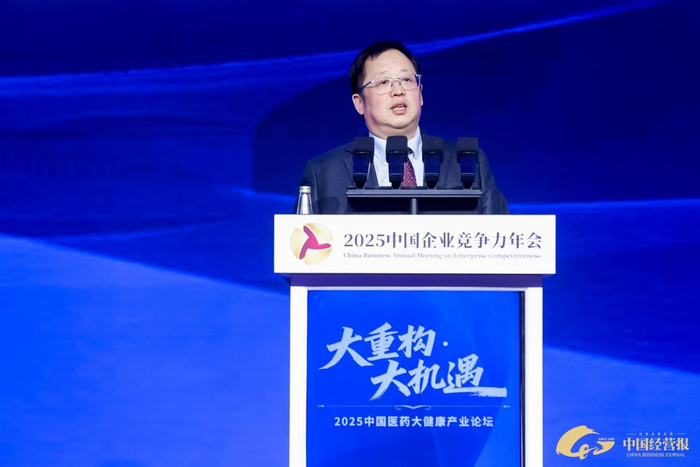
安科姚建平:创新引领企业高质量发展
Zhong Guo Jing Ying Bao· 2025-12-12 06:41
Core Viewpoint - Anke Biopharma aims for high-quality development through innovation, focusing on a strategic layout that includes biopharmaceuticals, traditional Chinese medicine, and precision medicine, while actively exploring mRNA technology, ADC, oncolytic viruses, cell therapy, and gene therapy [2][4]. Financial Performance - In the first three quarters of 2025, Anke Biopharma reported a revenue of 1.963 billion yuan, representing a year-on-year increase of 2.15%. The net profit attributable to shareholders was 551 million yuan, a decrease of 6.48%. R&D expenses amounted to 145 million yuan, reflecting a year-on-year growth of approximately 12.4% [3]. Strategic Development - Anke Biopharma's strategic goal is to achieve a valuation, revenue, and profit of 10 billion yuan each, encapsulated in the phrase "100 billion Anke, 100-year Anke" [2]. - The company has a history of innovation since its establishment, transitioning from a state-owned enterprise to a publicly listed company, with significant reforms occurring in 1995, 1996, and 2000 [3]. R&D Focus - Anke Biopharma invests nearly 10% of its annual revenue into R&D, emphasizing innovation in product development, talent acquisition, and research investment [4]. - The company’s product portfolio includes biopharmaceuticals, traditional Chinese medicine, small molecule drugs, peptide drugs, and cell immunotherapy [4]. AI Integration - The integration of AI in drug development is highlighted, with potential to significantly reduce the time for drug discovery and clinical research, from five years to one year for large molecules and from five to eight years to three to five years for clinical studies [5]. - The establishment of the Anke Biopharma (Shanghai) Innovation Research Institute aims to enhance R&D capabilities and attract high-end talent, addressing current R&D bottlenecks and fostering innovation in drug development [5].

中产家长的焦虑,让这些药企年入百亿
投中网· 2025-05-08 02:23
Core Viewpoint - The article discusses the growing market for growth hormone treatments in children, highlighting the increasing demand from parents who wish to enhance their children's height through medical interventions, despite the associated costs and potential side effects [20][21][23]. Group 1: Height Prediction and Growth Factors - A commonly accepted method for predicting a child's future height is based on the parents' heights, with a formula that includes a genetic baseline and a variable component that can be influenced by environmental factors [3]. - Key hormones affecting height during childhood include sex hormones and growth hormones, with the latter determining the growth rate [4]. Group 2: Market Dynamics and Consumer Behavior - The growth hormone market has evolved significantly over the past decade, with companies investing heavily in marketing and education to promote the use of growth hormones for children [17][19]. - The demand for growth hormone treatments has led to a substantial market, with some companies achieving annual revenues in the billions [19]. Group 3: Treatment Options and Costs - Common forms of growth hormone available in the market include powder, short-acting, and long-acting injections, with differences in administration frequency and pricing [5]. - The financial burden of growth hormone treatments can be significant, with families spending tens of thousands of yuan over the years for their children's height enhancement [15][16]. Group 4: Clinical Practices and Parental Expectations - Many parents are increasingly seeking growth hormone treatments for their children, often bringing them to clinics at younger ages than before, driven by societal pressures and personal aspirations [8][10]. - There is a notable trend of parents willing to invest heavily in treatments, reflecting a broader societal perception that height can influence social and economic outcomes [16][21]. Group 5: Regulatory and Market Challenges - The growth hormone market faces challenges such as regulatory scrutiny and price competition due to collective procurement initiatives, which have led to reduced profit margins for manufacturers [23]. - Despite the declining profitability for some companies, the persistent demand from parents for height enhancement treatments remains strong, indicating a complex market landscape [23].