
宏图一号卫星

Search documents
2026答案秀·思想者春晚| 任家栋:商业航天所有卡脖子技术均已攻克,这个行业就要爆发
Guan Cha Zhe Wang· 2026-01-26 00:25
Core Viewpoint - The commercial space industry has transitioned from a state-controlled domain to a rapidly evolving commercial sector, with China positioned as a key player in this global trend [1][2]. Group 1: Current State of Commercial Space - The commercial space industry has reached a significant milestone, with the number of satellites launched annually expected to exceed 4,000 by 2025, compared to just over 1,000 active satellites currently [8]. - The establishment of the Commercial Space Administration by the National Space Administration signifies a major opportunity for the commercial space sector in China [8]. - The industry is moving from a research-focused phase to a commercial phase, as evidenced by the increasing discussions around satellite quantities and pricing at industry events [4][8]. Group 2: China's Position in Commercial Space - China is not merely a follower in the commercial space race but is among the few countries defining the rules, particularly in remote sensing and communication sectors [12]. - The successful launch of the "Hongtu-1" satellite, which utilizes an innovative four-satellite formation for global measurement, highlights China's leadership in SAR remote sensing technology [12]. - In communication, China's advancements in low-orbit broadband satellites have led to the development of satellites with capacities reaching 40 Gbps, showcasing international competitiveness [13]. Group 3: Key Challenges and Technological Breakthroughs - The commercial space industry faces challenges in supply chain expansion and technological innovation, with a focus on transforming space capabilities into societal industrial capabilities [16]. - The industry has seen a significant increase in suppliers, from around 100 in 2018 to over 1,000 by 2025, indicating a robust supply chain development [17]. - Key technological advancements include electric propulsion systems, flexible solar panels, and laser communication technologies, which are essential for the future of low-orbit communication satellites [19][20][21]. Group 4: Future Trends and Projections - By 2025, the total value of commercial contracts is expected to equal the total of the past five years, indicating a significant growth trajectory for the industry [24]. - The commercial space sector in China is anticipated to enter a phase of scale economy, with rapid increases in satellite launches and a shift towards a more competitive landscape [24][25]. - The integration of computing power into satellite technology is expected to create a new paradigm in space communication, enabling direct connections between mobile devices and satellites [25].

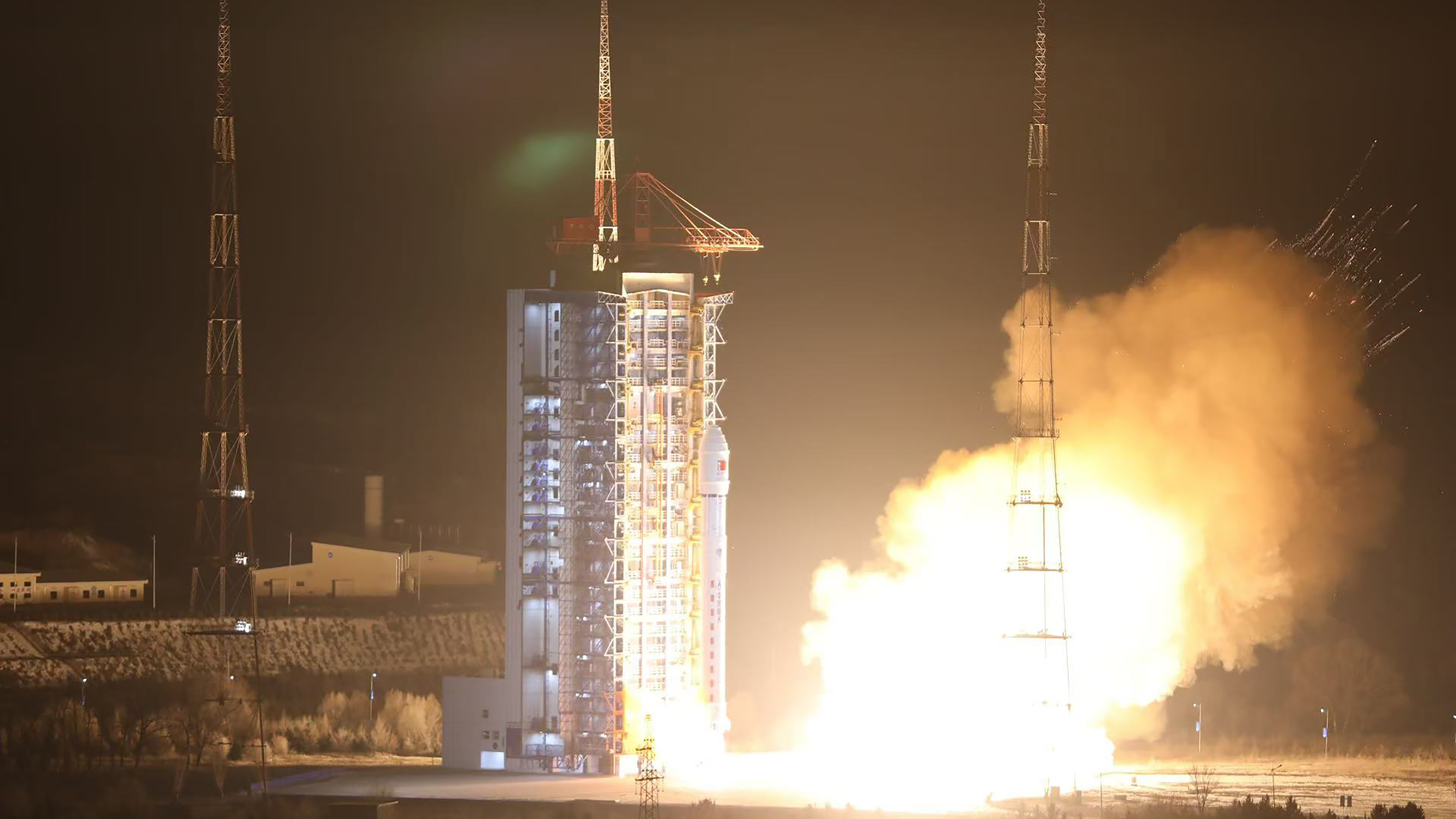
商业航天所有卡脖子技术均已攻克,这个行业就要爆发
Guan Cha Zhe Wang· 2026-01-26 00:18
Core Viewpoint - The commercial space industry has transitioned from a state-controlled domain to a rapidly evolving commercial sector, with China positioned as a significant player in this global trend [1][2]. Industry Development Stage - The commercial space industry has evolved significantly, with a notable shift from experimental systems to industrialization, exemplified by the launch of over 1,000 active satellites globally [5]. - By 2025, it is projected that over 4,000 satellites will be launched in a single year, indicating a robust industrial framework [5]. Key Opportunities and Trends - The establishment of the Commercial Space Administration in China and the mention of commercial space in government reports signal a major opportunity period for the industry [6]. - The integration of satellite communication with terrestrial networks is expected to reshape information systems, marking a significant advancement in the industry [6]. China's Position in Commercial Space - China is not merely a follower but is among the few countries defining the rules in the commercial space sector, particularly in remote sensing and communication [8][9]. - The successful launch of the "Hongtu-1" satellite, which utilizes all-electric propulsion, showcases China's innovative capabilities in the field [8]. Technological Breakthroughs - The industry has made significant strides in supply chain expansion and overcoming key technological challenges, such as electric propulsion and flexible solar panels [12][16]. - The development of laser communication technology and phased array antennas represents critical advancements that enhance satellite communication capabilities [18][19]. Future Outlook - By 2025, the total value of commercial contracts is expected to equal the total of the past five years, indicating a substantial growth trajectory [22]. - The commercial space sector in China is anticipated to enter a phase of scale economy, with rapid increases in satellite launches and a shift towards a more competitive landscape [22][23]. - The integration of computing power into satellite systems is expected to create a new paradigm in satellite communication, enabling direct connections between mobile devices and satellites [23].
航天宏图与巴基斯坦签署29亿元互联网卫星合作项目战略合作协议,仅为初步意向
Zheng Quan Shi Bao Wang· 2025-09-05 13:27
Core Viewpoint - The stock price of Aerospace Hongtu (688066) surged over 15% to 36.28 yuan per share, with a total market value reaching 9.5 billion yuan following the announcement of a strategic cooperation agreement with Pakistan for a 2.9 billion yuan internet satellite project [1][2]. Group 1: Strategic Developments - Aerospace Hongtu clarified that the strategic cooperation agreement signed with Pakistan on September 4 is a preliminary intention, and specific procurement contracts have not yet been signed, indicating uncertainty regarding the formal contract's signing and content [1][2]. - The company emphasized that the signing of this contract represents a significant breakthrough in its overseas business, marking its first engagement in providing satellite delivery services to international clients, with the project contract amount being a historical high [2]. Group 2: Financial Performance - In the first half of 2025, Aerospace Hongtu reported a revenue of 290 million yuan, a year-on-year decrease of 65.63%, with a net profit attributable to shareholders of -248 million yuan, down 34.03% year-on-year [3]. - The decline in revenue was attributed to pressures from the macroeconomic environment and a strategic shift to only undertake projects with financial backing, leading to a reduction in business scale [3]. Group 3: Risk Factors - The company highlighted ongoing risks related to overdue commercial acceptance bills, with 14.49 million yuan remaining overdue, which constitutes 1.65% of the latest audited net assets [2]. - Aerospace Hongtu is still in the expansion phase of its overseas business and faces potential risks from external macroeconomic changes, policy shifts, and customer demand fluctuations [2].
