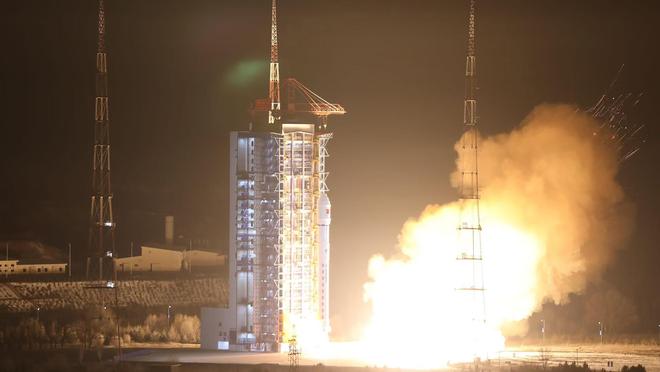
灵犀03卫星

Search documents
太空基建不断加速,持续看好商业航天和卫星产业链
Guotou Securities· 2026-01-26 08:53
Investment Rating - The industry investment rating is "Outperform the Market - A" [4] Core Insights - The importance of aerospace and satellite technology is increasingly recognized, with the acceleration of space infrastructure construction benefiting the related industry chain in the long term [2][12] - The report highlights significant recent developments in the commercial aerospace and satellite industry, including the launch of new satellite networks and rockets, which are expected to enhance the application potential of satellite infrastructure [1][11] - The report suggests focusing on incremental directions in space infrastructure, such as space computing power, 3D printing, terminal direct connection, and inter-satellite connectivity, as well as value-enhancing segments in low Earth orbit satellites [2][12] Summary by Sections Industry Performance - The report indicates that the industry has shown a relative return of 14.7% over the past month, 9.2% over three months, and 23.8% over twelve months, with absolute returns of 16.5%, 11.2%, and 47.4% respectively [6][13] Recent Developments - The report details various recent events, including the launch of the "TeraWave" satellite communication network by Blue Origin, which will consist of 5,408 low Earth orbit satellites, and the successful launch of multiple satellites by different companies [1][11] - It also mentions the approval of policies in Beijing to support the development of commercial satellite remote sensing data resources from 2026 to 2030, indicating a favorable regulatory environment for the industry [1][11] Investment Focus - The report recommends paying attention to companies involved in satellite and space asset management, safety, and applications, as well as those engaged in testing and simulation services [2][12]
2026答案秀·思想者春晚| 任家栋:商业航天所有卡脖子技术均已攻克,这个行业就要爆发
Guan Cha Zhe Wang· 2026-01-26 00:25
Core Viewpoint - The commercial space industry has transitioned from a state-controlled domain to a rapidly evolving commercial sector, with China positioned as a key player in this global trend [1][2]. Group 1: Current State of Commercial Space - The commercial space industry has reached a significant milestone, with the number of satellites launched annually expected to exceed 4,000 by 2025, compared to just over 1,000 active satellites currently [8]. - The establishment of the Commercial Space Administration by the National Space Administration signifies a major opportunity for the commercial space sector in China [8]. - The industry is moving from a research-focused phase to a commercial phase, as evidenced by the increasing discussions around satellite quantities and pricing at industry events [4][8]. Group 2: China's Position in Commercial Space - China is not merely a follower in the commercial space race but is among the few countries defining the rules, particularly in remote sensing and communication sectors [12]. - The successful launch of the "Hongtu-1" satellite, which utilizes an innovative four-satellite formation for global measurement, highlights China's leadership in SAR remote sensing technology [12]. - In communication, China's advancements in low-orbit broadband satellites have led to the development of satellites with capacities reaching 40 Gbps, showcasing international competitiveness [13]. Group 3: Key Challenges and Technological Breakthroughs - The commercial space industry faces challenges in supply chain expansion and technological innovation, with a focus on transforming space capabilities into societal industrial capabilities [16]. - The industry has seen a significant increase in suppliers, from around 100 in 2018 to over 1,000 by 2025, indicating a robust supply chain development [17]. - Key technological advancements include electric propulsion systems, flexible solar panels, and laser communication technologies, which are essential for the future of low-orbit communication satellites [19][20][21]. Group 4: Future Trends and Projections - By 2025, the total value of commercial contracts is expected to equal the total of the past five years, indicating a significant growth trajectory for the industry [24]. - The commercial space sector in China is anticipated to enter a phase of scale economy, with rapid increases in satellite launches and a shift towards a more competitive landscape [24][25]. - The integration of computing power into satellite technology is expected to create a new paradigm in space communication, enabling direct connections between mobile devices and satellites [25].

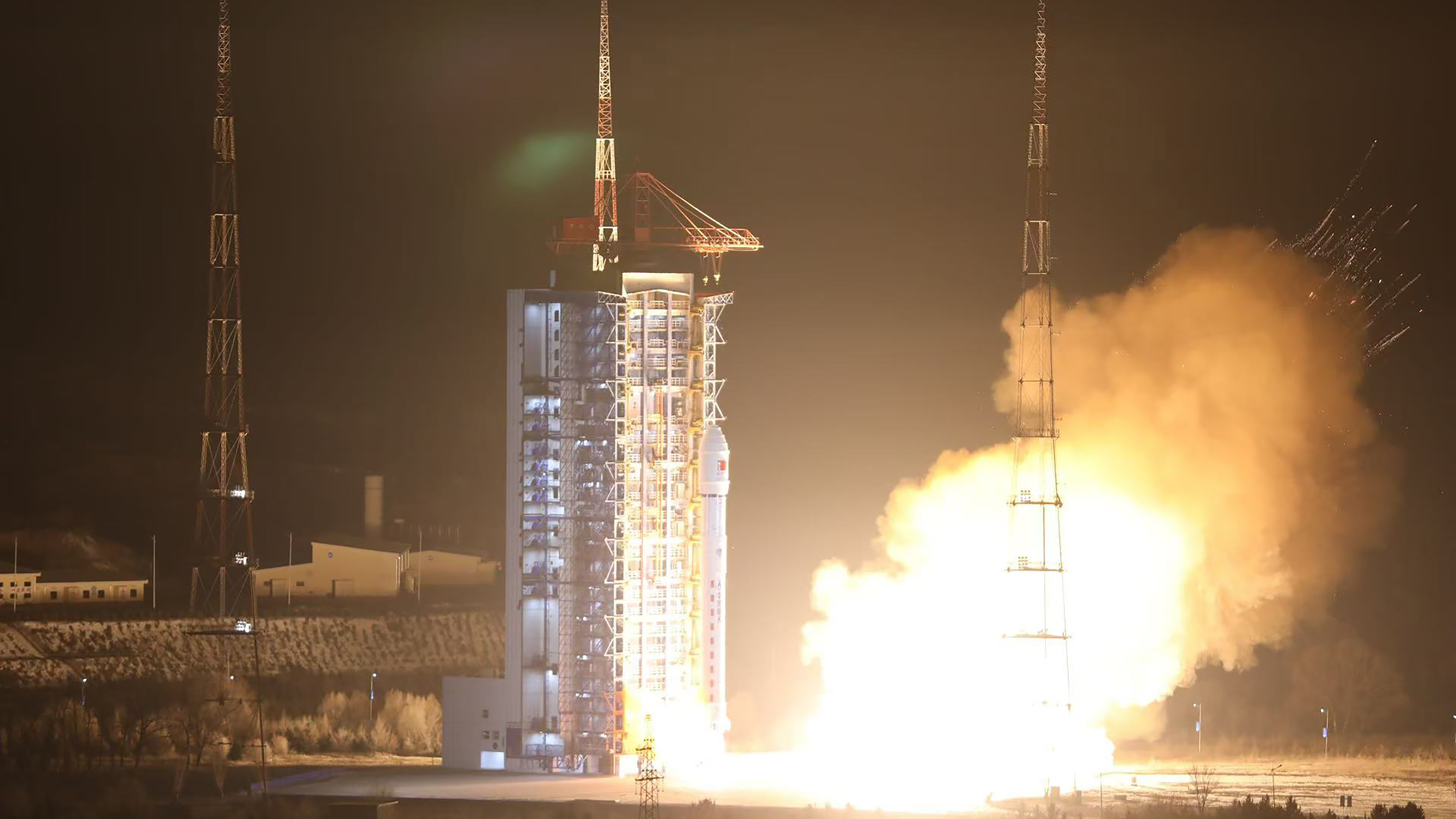
商业航天所有卡脖子技术均已攻克,这个行业就要爆发
Guan Cha Zhe Wang· 2026-01-26 00:18
Core Viewpoint - The commercial space industry has transitioned from a state-controlled domain to a rapidly evolving commercial sector, with China positioned as a significant player in this global trend [1][2]. Industry Development Stage - The commercial space industry has evolved significantly, with a notable shift from experimental systems to industrialization, exemplified by the launch of over 1,000 active satellites globally [5]. - By 2025, it is projected that over 4,000 satellites will be launched in a single year, indicating a robust industrial framework [5]. Key Opportunities and Trends - The establishment of the Commercial Space Administration in China and the mention of commercial space in government reports signal a major opportunity period for the industry [6]. - The integration of satellite communication with terrestrial networks is expected to reshape information systems, marking a significant advancement in the industry [6]. China's Position in Commercial Space - China is not merely a follower but is among the few countries defining the rules in the commercial space sector, particularly in remote sensing and communication [8][9]. - The successful launch of the "Hongtu-1" satellite, which utilizes all-electric propulsion, showcases China's innovative capabilities in the field [8]. Technological Breakthroughs - The industry has made significant strides in supply chain expansion and overcoming key technological challenges, such as electric propulsion and flexible solar panels [12][16]. - The development of laser communication technology and phased array antennas represents critical advancements that enhance satellite communication capabilities [18][19]. Future Outlook - By 2025, the total value of commercial contracts is expected to equal the total of the past five years, indicating a substantial growth trajectory [22]. - The commercial space sector in China is anticipated to enter a phase of scale economy, with rapid increases in satellite launches and a shift towards a more competitive landscape [22][23]. - The integration of computing power into satellite systems is expected to create a new paradigm in satellite communication, enabling direct connections between mobile devices and satellites [23].