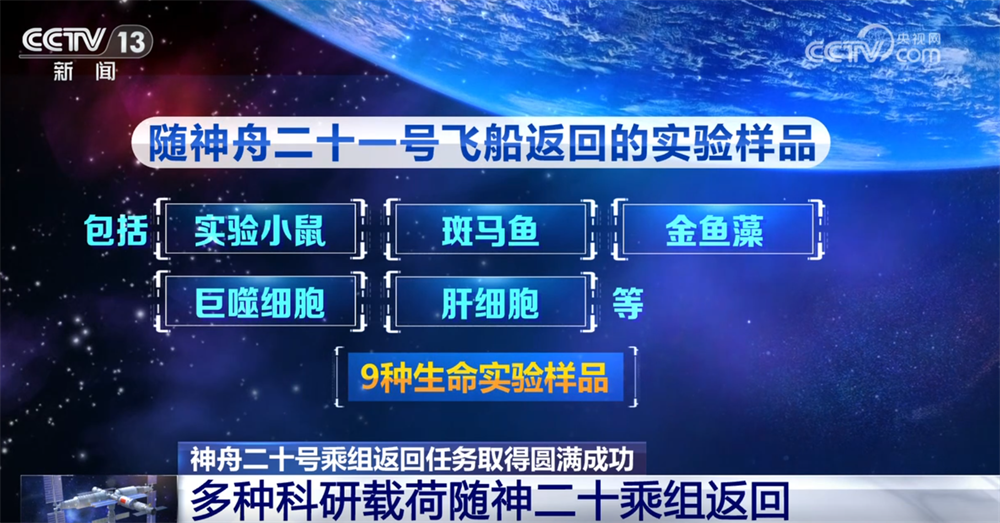
实验小鼠

Search documents
中国空间站第九批实验样品顺利返回并交付科学家
Yang Guang Wang· 2025-11-16 02:22
Core Points - The ninth batch of space science experiment samples from China's space station was successfully delivered to scientists for further research on November 15, involving 26 experimental projects with a total weight of 46.67 kilograms [1] - The samples include life science experiments with mice, materials experiments, and combustion experiments, highlighting the establishment of an integrated animal cultivation system for future research [1] - The research aims to analyze the behavioral and physiological characteristics of mice in response to space environments, providing scientific evidence for the impact of space conditions on living organisms [1] Summary by Categories - **Life Science Experiments** - The batch includes various life science samples such as mice, zebrafish, and brain organoids, which are being studied for their adaptation to gravity and stress responses [1] - The research is focused on understanding the effects of space environments on living organisms, which is crucial for future space missions [1] - **Materials and Combustion Experiments** - The samples also encompass materials and combustion experiments, emphasizing the application of new materials and the development of renewable energy [2] - The research aims to enhance human health and safety through innovative applications derived from these experiments [2]
中国空间站第九批实验样品交付科学家
Yang Shi Wang· 2025-11-15 21:13
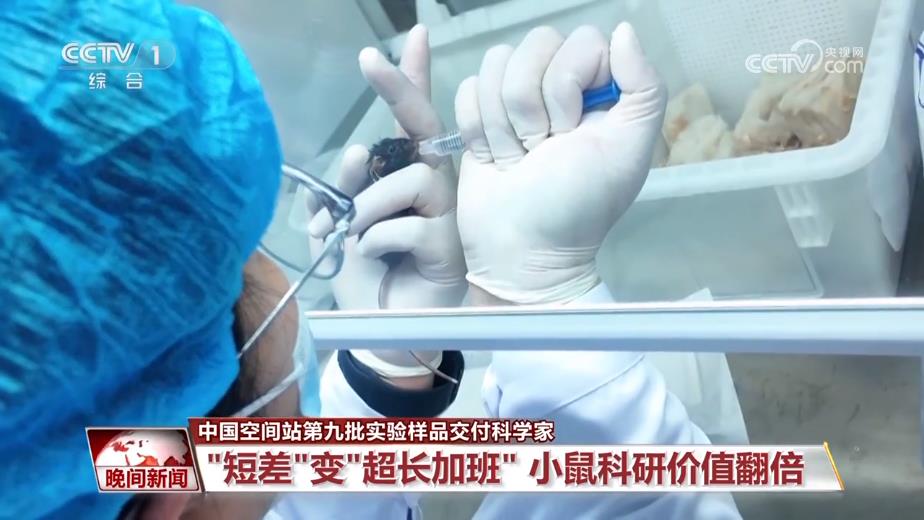
Core Points - The Shenzhou-20 mission successfully returned with the ninth batch of space science experiment samples on November 15, which will be used for further research [1] - The returned samples include 26 experimental projects across three main categories: life sciences, materials, and combustion, weighing a total of 46.67 kilograms [3] - Four special "mouse astronauts" were part of the mission, initially scheduled for a short trip of 5-7 days but extended to nearly two weeks due to a delayed return, enhancing the scientific value of their journey [3] - Other life science samples, including zebrafish, goldfish algae, planarians, and brain chips, were delivered to research teams in Beijing for subsequent studies [5] - Planned research includes transcriptome sequencing and proteomics analysis for life science samples, as well as morphological and chemical composition testing for material samples [5]

“星际快递”送达!新认识、新发现 在轨实验长期滚动实施“全”释硬科技↓
Yang Shi Wang· 2025-11-15 05:54
Core Points - The Shenzhou-20 astronaut crew safely returned to Beijing on November 14, 2023, and will undergo a recovery period with medical evaluations [1] - Accompanying the astronauts were space medicine experiment samples weighing 3.2 kilograms, supporting 19 space medicine research projects [2][4] - The ninth batch of space science experiment samples, weighing 46.67 kilograms, was also successfully delivered for further research [4][6] Group 1: Astronaut Return and Medical Samples - The Shenzhou-20 astronaut crew, including Chen Dong, Chen Zhongrui, and Wang Jie, received a warm welcome upon their return [1] - The medical samples include 199 samples across seven categories, such as blood and urine, aimed at analyzing the effects of microgravity on human health [2][4] - The research will focus on various aspects, including bone metabolism and brain homeostasis, using advanced omics technologies [4] Group 2: Space Science Experiment Samples - The ninth batch of space science samples includes living organisms like mice and zebrafish, as well as various materials for testing [6][8] - Scientists will conduct biological analyses on the returned cell samples to understand the impact of microgravity on biological functions [8] - Material samples will be tested for their growth and composition under microgravity, contributing to future applications in space exploration [10][13] Group 3: Research and Development Goals - The ongoing experiments in the space laboratory are expected to yield original and internationally influential scientific results [12] - Research on combustion samples aims to provide insights for new energy systems and advanced nanocarbon materials [13]

小鼠等空间站科学实验样品搭载“神二十一”返回并交付科学家
Nan Fang Du Shi Bao· 2025-11-15 02:40
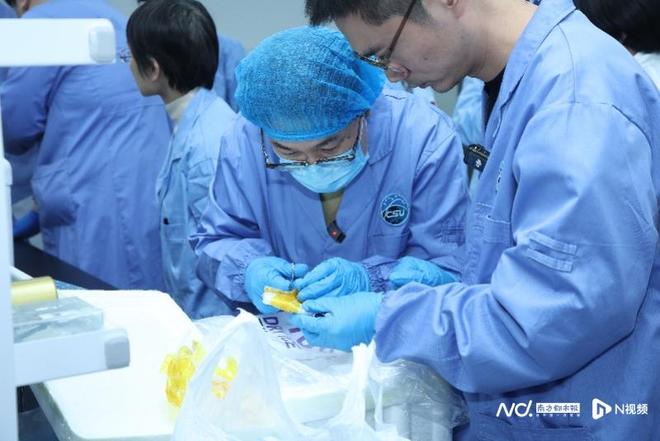
Core Viewpoint - The successful return of the ninth batch of space science experiment samples from the Chinese space station via the Shenzhou 21 spacecraft marks a significant advancement in understanding the effects of space environments on biological and material sciences [1][3]. Group 1: Biological Research - The returned biological samples include 9 types of life science experiments, such as mice, zebrafish, and other organisms, weighing approximately 46.67 kilograms in total [1]. - Scientists will conduct research on the behavior and physiological biochemical indicators of the mice to understand their stress responses and adaptive changes to the space environment [3]. - Further biological analyses, including transcriptome sequencing and proteomics, will be performed on the returned cell samples to explore the impact of microgravity on biological mechanisms and potential intervention targets for related diseases [5]. Group 2: Material Science Research - The materials returned include tungsten-hafnium alloys, soft magnetic materials, and relaxor ferroelectric single crystals, which will be analyzed for their structural morphology, chemical composition, and distribution differences [5]. - Research will focus on how gravity affects material growth, segregation, solidification defects, and performance, contributing to the development of high-performance materials for satellite communication and lunar base construction [5]. Group 3: Combustion Research - The combustion samples returned include flame synthesis products of semiconductor nanomaterials and carbon soot samples, which will be analyzed to understand the characteristics of nanoparticle generation [5]. - The findings are expected to support the development of extraterrestrial nanomaterials, new energy systems, space fire prevention technologies, and advanced functional nanocarbon materials [5].
大批空间科学实验样品随神二十乘组返回 都有啥?108秒快速了解→
Yang Shi Wang· 2025-11-14 10:14
Core Insights - A large number of space science experiment samples, including mice, successfully returned with the Shenzhou 21 spacecraft [1] - The experiment mice lived in the Chinese space station for nearly two weeks, which is about double the planned duration [4] - The research aims to understand the stress responses and adaptive changes of mice in space, providing scientific basis for the effects of space environments on living organisms [4] Group 1: Experiment Samples - The returned samples include nine types of biological experiment samples such as mice, zebrafish, and macrophages [1] - Various material samples were also included, such as tungsten-hafnium alloys, soft magnetic materials, and new thermal control coatings [1] Group 2: Research and Development - The entire process of feeding and caring for mice in space has been successfully established, laying a solid foundation for future large-scale mammal cultivation and research in space [6] - The research on mice is expected to help understand potential impacts on humans in microgravity, including effects on muscles and bones [6]