审计委员会监督服务

Search documents
标配近30年A股监事会谢幕 审计委员会登场,上市公司治理体系迈入新阶段
Shang Hai Zheng Quan Bao· 2025-12-15 19:19
郭晨凯 制图 截至目前,已有超5400家A股上市公司完成或启动取消监事会的程序——这一运行近30年的公司治 理"标配"即将正式退出历史舞台 ◎记者 高志刚 随着2026年1月1日监管大限临近,A股市场正经历一场静水深流的制度变革。 据上海证券报记者不完全统计,截至目前,已有超5400家A股上市公司完成或启动取消监事会的程序 ——这一运行近30年的公司治理"标配"即将正式退出历史舞台。 "此次调整并非简单做减法,而是一整套制度协同的深度优化。"北京京师律师事务所顾问林晓辉在接受 上海证券报记者采访时表示,"同时,市场对专业人士的履职要求显著提高,既带来了治理脱虚向实的 动力,也施加了前所未有的责任压力。" 她预计:未来一段时间将会出现一批治理成效突出的优秀范例,为全市场提供可复制、可推广的经验; 当然,在运行初期,也不可避免会出现摩擦与挑战,需要监管部门、企业和中介机构等各方共同总结完 善。 多家公司"压线"推进 12月15日晚,多家上市公司集中发布召开临时股东会的通知公告。安车检测、荃银高科、科大讯飞、三 诺生物、联创光电等至少10家上市公司集中公告,将于12月31日召开临时股东会,审议取消监事会、修 订公司 ...


多家银行保险机构取消监事会 业内:由审计委员会行使职权将为公司治理提供更多灵活选择
Mei Ri Jing Ji Xin Wen· 2025-05-21 10:41
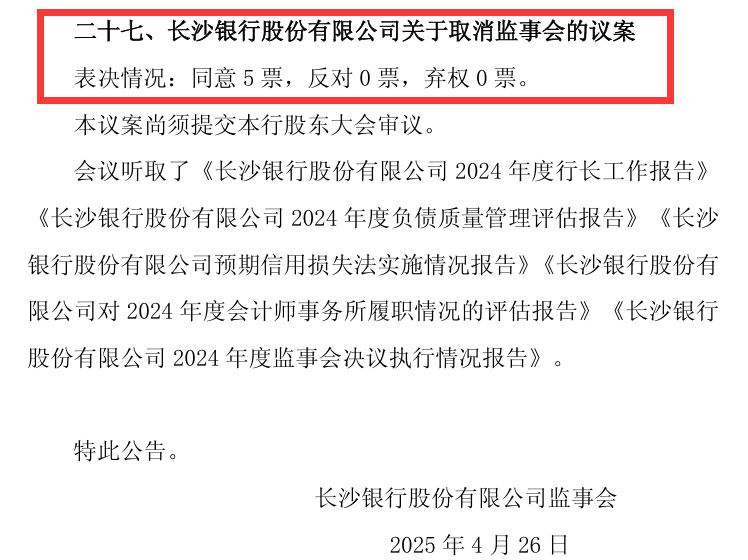
Core Viewpoint - The recent trend of financial institutions, including banks and insurance companies, to abolish supervisory boards reflects a significant reform in corporate governance, driven by changes in the Company Law of the People's Republic of China [1][6][12]. Group 1: Abolishment of Supervisory Boards - Changsha Bank has decided to abolish its supervisory board, transferring its functions to the audit committee of the board of directors [1]. - Many financial institutions, including major state-owned banks and insurance companies, are following suit, indicating a broader shift in governance practices [1][6]. - The new Company Law allows limited liability companies to establish an audit committee within the board of directors to perform the functions of a supervisory board, thus eliminating the need for a separate supervisory board [6][9]. Group 2: Regulatory Changes and Implications - The National Financial Regulatory Administration has issued new regulations that allow trust companies to set up audit committees within their boards, further promoting the idea of eliminating supervisory boards [2][6]. - The changes aim to enhance operational efficiency by reducing redundancy in oversight functions, as the roles of supervisory boards and audit committees often overlap [2][8]. - The flexibility provided by the new governance structure is expected to lead to more tailored governance models that suit the specific needs of different financial institutions [9][10]. Group 3: Impact on Corporate Governance - The shift to a single-tier governance model allows boards to exercise oversight more directly, potentially improving decision-making efficiency in a rapidly changing financial environment [9][10]. - Smaller financial institutions may benefit from reduced operational costs by not having a supervisory board, while larger institutions may require more complex oversight mechanisms [9][10]. - The transition to audit committees taking on supervisory roles is seen as a way to innovate governance structures and improve compliance management [10][12]. Group 4: Concerns and Future Considerations - There are concerns regarding the effectiveness of audit committees in fulfilling the oversight roles traditionally held by supervisory boards, particularly regarding potential conflicts of interest [11][12]. - Experts suggest that while the new structure may reduce costs, it is crucial to ensure that adequate checks and balances remain in place to maintain effective governance [11][12]. - Future modifications to the Company Law may be necessary to address the evolving needs of corporate governance in the financial sector [12].