
富达任远保守养老目标一年持有混合FOF

Search documents
对话富达基金赵强:富达FOF的背后不是一个团队在“战斗”
Sou Hu Cai Jing· 2025-12-05 04:03
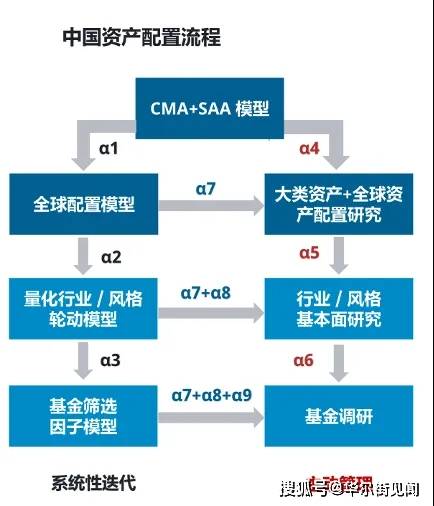
Core Insights - Public FOF products are expected to become a prominent category in the fund industry by 2025, driven by their inherent "diversified investment" and "asset allocation" capabilities [1] - The market is increasingly recognizing that stable product positioning and clear allocation logic, managed by experienced teams, make FOF products appealing as "one-stop" investment options for the general public [1] - However, there is a growing awareness that high-quality FOF products are scarce, and exceptional FOF managers are rare [1] Group 1: FOF Management and Team Structure - Zhao Qiang, head of the Multi-Asset Department at Fidelity, emphasizes that FOF management involves not just the fund manager's decisions but also teamwork and the support of a robust research system [2][3] - Fidelity's FOF management is supported by a comprehensive financial technology system that provides real-time strategy performance, risk alerts, and AI investment tools for portfolio optimization [2] - Fidelity China has developed the "NEMO" system to assist fund managers in managing investment processes from strategic to tactical allocation [2] Group 2: Investment Philosophy and Framework - Zhao Qiang's investment philosophy is influenced by his education at the University of Chicago, where he learned from Nobel laureates, shaping his views on quantitative and active investing [5] - He emphasizes the importance of accumulating a "framework" through practical experience, which helps in refining investment principles and response patterns [7] - Zhao Qiang's early experiences with Go have also influenced his approach to problem-solving and investment challenges, reinforcing the idea that difficulties often have systematic solutions [8] Group 3: Investment Strategy and Market Insights - Zhao Qiang initially focused on cash flow-related assets, prioritizing investments in markets and products with strong cash flow, such as high-yield overseas bonds and high-dividend stocks in Hong Kong [9] - After joining Fidelity, he recognized the importance of a balanced approach to FOF management, moving away from aggressive strategies that do not align with the product's design philosophy [9] - The FOF products are ultimately driven by asset allocation thinking, tailored to meet client wealth management needs [10] Group 4: Fidelity's Competitive Advantages - Fidelity's long-term strategic investments and commitment to its non-public company structure allow for sustained focus on long-term goals, which is rare in the industry [14] - The company places significant emphasis on human resources, fostering global team collaboration and integration to enhance strategic asset allocation [14] - Fidelity's investment systems, such as NEMO, facilitate collaboration among research teams, enabling effective portfolio construction and optimization [15] Group 5: Decision-Making Process in FOF Management - Fidelity employs a dual decision-making approach in FOF management, integrating both quantitative systems and subjective team insights to achieve balanced investment strategies [17] - Each asset allocation decision involves multiple layers of analysis, ensuring that both quantitative and qualitative perspectives are considered [17] - This structured approach minimizes emotional decision-making among research personnel, maintaining product integrity and optimizing performance [18] Group 6: New Product Launch and Market Positioning - The "Fidelity Renyuan Conservative Pension FOF" is notable for being the first pension FOF in the market to include overseas market indices in its benchmark [19] - Historical backtesting indicates that incorporating global assets like gold and overseas indices improves both returns and drawdowns compared to traditional asset mixes [19] - As a leading global player in pension investment, Fidelity's new FOF product is expected to attract significant interest regarding its performance and net value trajectory [20]

养老投资不追明星基金经理 不做情绪化博弈
Sou Hu Cai Jing· 2025-11-23 22:13
Core Insights - The approval of Fidelity's first foreign pension FOF marks a significant breakthrough in the participation of foreign institutions in China's pension system [1][2] - The introduction of international investment institutions is expected to create a "catalyst effect" in China's pension investment landscape [2] - The design of the new pension FOF focuses on conservative risk management, aligning with the needs of the current domestic pension investors [3][4] Group 1: Market Entry and Strategy - Fidelity's new conservative pension target fund is a response to the growing demand for stable and low-volatility retirement assets among the 40 to 60 age group in China [3][4] - The fund's asset allocation includes approximately 15% in risk assets, with a focus on stable domestic bonds and diversified international assets [4] - The shift in regulatory focus from local AUM assessment to a global pension asset scale evaluation reflects a broader strategy to enhance the pension investment framework in China [2] Group 2: Long-term Investment Perspective - The long-term nature of pension funds in China presents a unique opportunity for foreign institutions to leverage their expertise in investment research and technology [2][6] - Fidelity's approach emphasizes a lifecycle investment philosophy, adapting global strategies to local market characteristics [6] - The integration of advanced financial technology, such as AI risk management models, aims to enhance investment decision-making and risk assessment [6] Group 3: Target Audience and Product Design - The target audience for the conservative target risk fund includes pre-retirees, retirees seeking stable income, and high-net-worth individuals looking for low-volatility investment options [4][5] - The emphasis on professional management and systematic investment processes aims to alleviate the burden of complex investment decisions for individual investors [7] - The successful implementation of the pension FOF will depend on effectively matching the product with the right customer segments [7]
富达基金赵强: 养老投资不追明星基金经理 不做情绪化博弈
Zheng Quan Shi Bao· 2025-11-23 21:41
Core Insights - The approval of Fidelity's first foreign pension fund of funds (FOF) marks a significant breakthrough in the participation of foreign institutions in China's pension system [1][2] - The introduction of international investment institutions is expected to create a "catalyst effect" in China's pension investment landscape, reflecting a shift in regulatory assessment from local assets under management (AUM) to a global perspective [2][3] Group 1: Product Launch and Market Positioning - Fidelity's newly launched conservative pension target fund is designed to meet the needs of Chinese pension investors, focusing on stable asset allocation and risk control [1][4] - The fund's asset allocation includes approximately 15% in risk assets, with a significant portion in lower-risk assets, aligning with the preferences of the target demographic [4][5] - The target audience includes individuals nearing retirement, retirees needing income, and high-net-worth investors seeking stable growth without high volatility [4][5] Group 2: Long-term Investment Strategy - The pension market in China is characterized by long-term investment needs, requiring international institutions to invest in research, human resources, and technology [2][3] - Fidelity's approach emphasizes a lifecycle investment philosophy, adapting global strategies to local market characteristics, and focusing on risk control rather than chasing returns [5][6] - The integration of advanced financial technology, such as AI risk management models, aims to enhance investment decision-making and risk assessment [5][6] Group 3: Challenges and Future Outlook - The successful implementation of pension FOFs in China faces challenges in matching products with the right customer segments, emphasizing the need for stability and long-term risk alignment [6] - The ultimate goal of pension investment managers is to simplify investment decisions for individual investors, allowing them to focus on long-term growth [6]