
导航软件

Search documents
南京导航软件失灵?定位与实际“差十万八千里”!后果多严重?
Xin Jing Bao· 2025-12-22 07:36
Core Viewpoint - The navigation software in Nanjing has reportedly experienced a sudden collective failure, leading to significant discrepancies in location accuracy, prompting multiple parties to investigate the issue [1] Group 1: Impact on Users - The navigation failure has affected various users, including delivery riders facing delays, shared bicycles showing location errors of up to 57 kilometers, and ride-hailing services mistakenly entering construction zones [1] - Experts suggest that users should adapt by utilizing alternative navigation systems like "Beidou," learning to cross-verify locations, and being cautious of overly intelligent vehicle systems [1]
南京导航集体失灵 原因公布:本次干扰精准针对北斗、GPS民用频段
Zhong Guo Ji Jin Bao· 2025-12-19 12:53
Core Viewpoint - The navigation signal anomaly in Nanjing on December 17, 2025, was caused by temporary interference affecting GNSS satellite signals, not by a network signal interruption [2][4]. Technical Analysis - Offline maps cannot resolve the navigation anomaly as they only store geographic data and do not replace the need for positioning signals from GNSS satellites [3]. - Navigation requires signals from at least four GNSS satellites to calculate position coordinates, making positioning signals and map data independent systems [3]. - The interference specifically targeted the civilian frequency bands of Beidou and GPS, leading to issues such as position drift and lack of data feedback, rendering offline maps ineffective for navigation [3]. Strategic Significance - The simultaneous impact on both Beidou and GPS signals during the anomaly validates the strategic foresight of China's Beidou system in planning its civilian frequency bands [4]. - The compatibility of Beidou's civilian signal (B1C band) with GPS's civilian signal (L1C band) breaks the spectrum resource blockade and creates a strategic balance, where interference with Beidou also affects GPS applications [4]. - The design of frequency compatibility serves as a deterrent against malicious interference, ensuring that any disruption to Beidou's civilian signals will also impact GPS, thereby enhancing the security of civilian navigation services [4]. Military Frequency Resilience - The signal anomaly only affected civilian GNSS frequency bands, while Beidou's military frequencies remained unaffected [5]. - Beidou employs a military-civilian frequency separation design, with military frequencies being exclusive and physically isolated from civilian bands [5]. - The military system incorporates advanced anti-jamming technologies, ensuring robust resistance to interference and deception, thus providing stable and reliable services for national defense and emergency support [5].

最新通报:卫星信号(含北斗、GPS)受到临时干扰压制,北斗军用频率不受影响
Xin Lang Cai Jing· 2025-12-19 12:44
Core Viewpoint - On December 17, 2025, a navigation signal anomaly occurred in Nanjing, affecting multiple navigation software systems and causing delivery delays for food delivery services due to the inability to access navigation data [12][18]. Group 1: Technical Analysis of the Navigation Anomaly - The core reason for the navigation failure was temporary interference suppression of GNSS satellite signals (including Beidou and GPS), rather than a network signal interruption, making offline maps ineffective [6][20]. - Offline maps only store geographic data and cannot replace the positioning signal source, as mobile navigation relies on GNSS satellite signals to calculate location coordinates [8][21]. - The interference specifically targeted the civilian frequency bands of Beidou and GPS, leading to the inability of receivers to recognize positioning signals, resulting in navigation drift and lack of data feedback [8][22]. Group 2: Strategic Significance of Beidou and GPS Compatibility - The simultaneous impact on Beidou and GPS signals during the anomaly validates the forward-looking strategic vision of China's Beidou system's civilian frequency band planning [8][22]. - The international satellite navigation spectrum resources follow a "first come, first served" rule, with GPS having occupied core L-band resources early on, leaving limited quality spectrum for Beidou [8][22]. - The compatibility of Beidou's civilian signal (B1C band) with GPS's civilian signal (L1C band) not only breaks the spectrum resource blockade but also creates a strategic balance where interference with Beidou also affects GPS applications [8][22]. Group 3: Resilience of Beidou Military Frequency - It is important to note that the signal anomaly only affected civilian GNSS frequency bands, while Beidou's military frequencies remained completely unaffected [9][23]. - The Beidou system employs a military-civilian frequency separation design, with military frequencies being exclusive and physically isolated from civilian bands [9][23]. - The military system is equipped with advanced anti-jamming technology and adaptive filtering algorithms, providing strong resistance to interference and deception, ensuring stable and reliable time-space services for national defense and emergency support [9][23].
南京导航集体失灵?多方回应
中国基金报· 2025-12-19 00:23
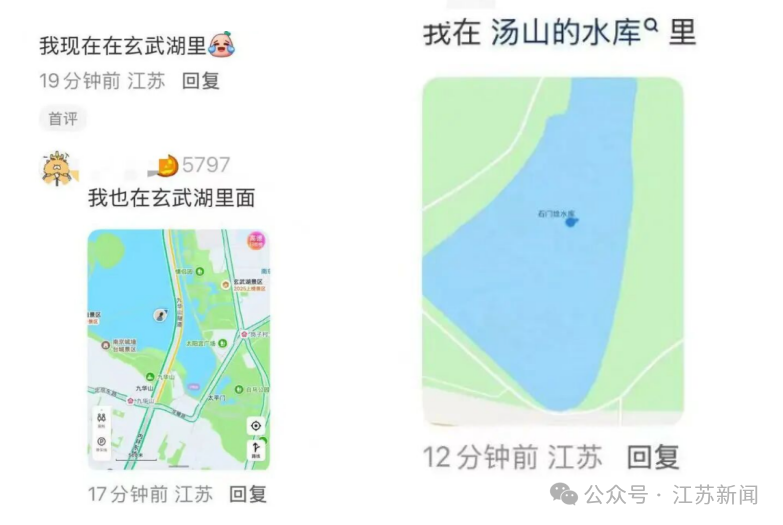
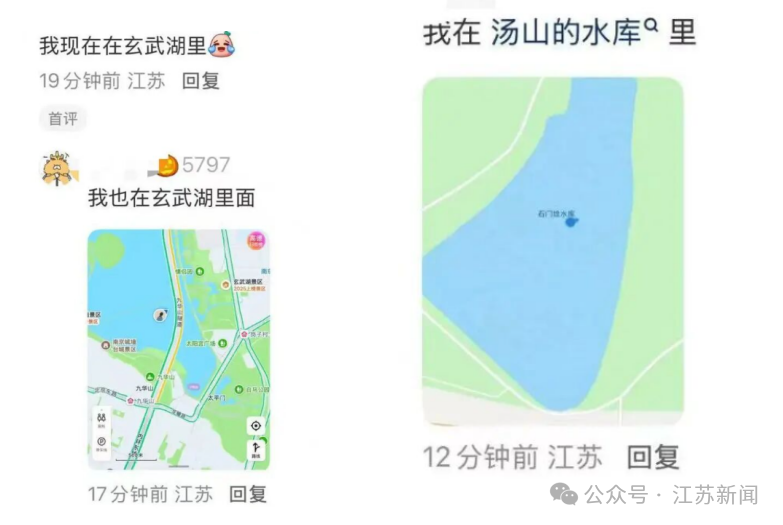
Group 1 - Multiple navigation software systems experienced sudden failures, displaying "driving on a road with no data" [2] - Delivery riders reported issues with navigation in food delivery apps, leading to potential delays in deliveries [3] - Shared bike services also faced location errors, with users unable to lock bikes due to incorrect operational range displays [6] Group 2 - Platforms indicated that users could file complaints regarding order anomalies caused by location issues [6] - Customer service from Baidu Maps and Gaode Maps acknowledged the reported issues and stated they would relay the information to their engineering teams [6]

南京导航集体失灵?多方回应
Xin Lang Cai Jing· 2025-12-18 12:27
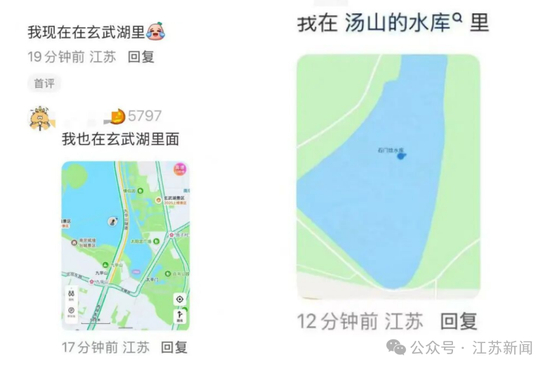
Core Viewpoint - Multiple navigation software systems in Nanjing experienced sudden failures, leading to significant disruptions in navigation services for users, including delivery riders and shared bike users [1][5]. Group 1: Navigation Software Issues - Users reported that navigation interfaces displayed "driving on a road with no data," causing confusion and delays in services [1]. - Delivery riders faced issues with embedded navigation in food delivery apps, resulting in potential delays in food delivery [1]. Group 2: Shared Bike Problems - Some shared bikes also encountered location errors, with users unable to lock their bikes after use, indicating operational range issues [5]. - A specific incident involved a user whose bike showed a drop-off location 57 kilometers away, highlighting the severity of the navigation errors [5]. Group 3: Company Responses - Various platforms acknowledged the issues and stated that users could file complaints regarding order anomalies caused by location errors [5]. - Meituan, a major player in the delivery service sector, confirmed that riders could appeal for resolutions if navigation issues led to delays [5].
江苏所以,只有南京一地发生了异常?
Xin Lang Cai Jing· 2025-12-18 12:27
Group 1 - Multiple navigation software in Nanjing experienced sudden failures, affecting services like food delivery and shared bicycles [2] - The issue appears to be localized to Nanjing, raising questions about the extent and cause of the malfunction [2] - The incident highlights potential vulnerabilities in navigation systems that could disrupt urban mobility and logistics [2]
导航软件不能偏离安全底线
Jing Ji Ri Bao· 2025-06-09 21:44
Core Viewpoint - The integration of "lane-level advertising" in navigation software raises concerns about driving safety and potential violations of advertising laws, as it may distract drivers and obscure critical navigation information [1][2]. Group 1: Industry Concerns - The new advertising format may violate laws that prohibit interference with normal internet use and road safety regulations [1]. - The presence of large advertisements on navigation screens can lead to distractions, increasing the risk of accidents [1]. - The ethical implications of prioritizing commercial interests over public safety are significant, as even brief distractions can have severe consequences while driving [1]. Group 2: Recommendations for Navigation Software - Navigation software developers should take responsibility by optimizing ad placements to avoid disrupting the core user experience [2]. - Clear labeling of advertisements is essential to prevent confusion with navigation instructions, and options to close or skip ads should be provided to users [2]. - There is a need for enhanced internal regulation and a robust advertising review and complaint response mechanism to ensure compliance with public safety standards [2].