外卖软件

Search documents
首超20万亿美元!我国去年GDP超140万亿人民币,增长率5%利好多多
Sou Hu Cai Jing· 2026-01-30 08:08
Economic Overview - In 2025, China's economy demonstrated resilience and growth amidst global economic challenges, achieving a GDP of 140 trillion RMB (over 20 trillion USD) [3][11] - The economic growth rate of 5% is significant given the complex international environment, showcasing China's strong resilience and potential [5][10] Structural Changes - A notable shift in the economic drivers is observed, moving away from real estate and infrastructure towards high-tech manufacturing [7][8] - High-tech manufacturing saw a value-added growth of 9.4%, outpacing overall industrial growth by 3.5 percentage points, indicating a transition to technology-driven and smart manufacturing [8] Digital Economy - The information transmission, software services, and leasing business services sectors are thriving, contributing to economic vitality and changing the economic structure [10] - The digital economy, including short videos, food delivery apps, and mobile games, is becoming a new engine for growth, reflecting China's adaptation to modern economic trends [10] Income and Employment - In 2025, the per capita disposable income reached 43,377 RMB, with a real growth of 5.0%, indicating equitable distribution of economic gains [10] - The urban unemployment rate averaged 5.2%, with new job creation comparable to the labor force of a medium-sized city, highlighting employment stability [10] Trade and Global Positioning - China's total import and export volume reached 45.4687 trillion RMB, growing by 3.8%, solidifying its role as a key hub in global trade [11] - The share of private enterprises in imports and exports increased to 57.3%, showcasing the vibrancy and resilience of the Chinese economy [12] Future Outlook - The achievement of 140 trillion RMB is seen as a new starting point, indicating China's ability to withstand external risks and pursue transformation [12] - The future economic growth is expected to be driven by new energy, artificial intelligence, a unified national market, and the evolving consumption demands of 1.4 billion people [12]


南京导航集体失灵?多方回应
中国基金报· 2025-12-19 00:23
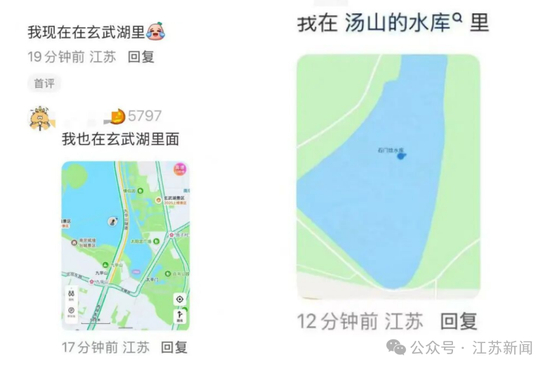
Group 1 - Multiple navigation software systems experienced sudden failures, displaying "driving on a road with no data" [2] - Delivery riders reported issues with navigation in food delivery apps, leading to potential delays in deliveries [3] - Shared bike services also faced location errors, with users unable to lock bikes due to incorrect operational range displays [6] Group 2 - Platforms indicated that users could file complaints regarding order anomalies caused by location issues [6] - Customer service from Baidu Maps and Gaode Maps acknowledged the reported issues and stated they would relay the information to their engineering teams [6]

南京导航集体失灵?多方回应
Xin Lang Cai Jing· 2025-12-18 12:27
Core Viewpoint - Multiple navigation software systems in Nanjing experienced sudden failures, leading to significant disruptions in navigation services for users, including delivery riders and shared bike users [1][5]. Group 1: Navigation Software Issues - Users reported that navigation interfaces displayed "driving on a road with no data," causing confusion and delays in services [1]. - Delivery riders faced issues with embedded navigation in food delivery apps, resulting in potential delays in food delivery [1]. Group 2: Shared Bike Problems - Some shared bikes also encountered location errors, with users unable to lock their bikes after use, indicating operational range issues [5]. - A specific incident involved a user whose bike showed a drop-off location 57 kilometers away, highlighting the severity of the navigation errors [5]. Group 3: Company Responses - Various platforms acknowledged the issues and stated that users could file complaints regarding order anomalies caused by location errors [5]. - Meituan, a major player in the delivery service sector, confirmed that riders could appeal for resolutions if navigation issues led to delays [5].
人工智能+,10年之后,AI将像水电一样无处不在你准备好了吗?
Sou Hu Cai Jing· 2025-09-16 12:39
Group 1 - The era of "Artificial Intelligence+" is emerging, transforming work, life, and the future, making everyone a participant in this change [1][3] - The "Artificial Intelligence+" initiative is a significant policy document aimed at integrating AI deeply with the economy and society, following the "Internet+" initiative [3][4] - AI is seen as an upgrade to "Internet+", providing intelligent cores to industries, enhancing efficiency and service experiences [5][6] Group 2 - By 2027, AI is expected to be deeply integrated into key sectors, with over 70% penetration of new intelligent devices, making AI commonplace in daily life [6][7] - By 2030, AI is projected to become a crucial driver of economic growth, with over 90% penetration of intelligent devices [6][10] - The integration of AI with six key areas—science and technology, industrial development, consumer upgrades, public welfare, governance enhancement, and global cooperation—is essential for achieving a smart economy and society by 2035 [6][7] Group 3 - AI can optimize public service management, such as dynamically adjusting traffic lights based on real-time data [7][8] - The concept of "AI-native enterprises" is introduced, where businesses are fundamentally driven by AI from inception, enhancing operational efficiency [8][10] - The transition to an AI-driven economy is seen as a way to improve overall productivity, especially in industries facing labor shortages [10]
三巨头为什么要打外卖大战
Sou Hu Cai Jing· 2025-08-11 06:05
Core Insights - The major players in the food delivery market are investing heavily in subsidies to attract consumers, with over 100 billion yuan spent to enhance user engagement and address long-standing traffic issues in e-commerce [2][3] - The ultimate goal of these subsidies is to cultivate user habits that lead to increased consumption and advertising revenue, particularly targeting the burgeoning instant retail market, which is projected to be worth trillions [3][4] Group 1: Market Dynamics - The competition among major companies is not merely about gaining market share in food delivery but is part of a broader strategy to secure user attention and spending power [2][3] - E-commerce platforms like Taobao and JD.com struggle with user engagement compared to social media platforms, which have significantly higher daily user interaction times [2] - Instant retail is emerging as a transformative force in consumer behavior, with a growing demand for immediate delivery of products, reshaping the retail landscape [3] Group 2: Financial Implications - The strategy of burning cash to attract users is aimed at achieving scale effects, where increased user numbers lead to better merchant participation and enhanced consumer experience [4] - This cycle can create a positive feedback loop, resulting in a significant "Matthew Effect" where a few dominant players emerge in the market, while others are pushed out [4] - The financial implications for consumers remain minimal, as they continue to benefit from low prices and promotions regardless of which companies survive the competition [4]