小猿学习机

Search documents
首个综合AI教室落地宿迁光明村 京东:未来将复制全国
Guan Cha Zhe Wang· 2026-01-29 00:44
Core Insights - JD.com has established China's first comprehensive AI classroom in Guangming Village, Suqian, Jiangsu Province, as part of its "Delivering New Year Goods to Hometown" initiative in 2026, integrating advanced technology and digital education tools for rural students [2] - The company has launched the "AI Liao Yuan Plan," aiming to replicate the comprehensive AI classroom model nationwide, with a goal of building 100 such classrooms to provide access to cutting-edge technology resources [2] Group 1 - The AI classroom features multiple functional areas designed to meet diverse learning needs, including personalized learning planning and language training through various smart devices [4] - It includes popular consumer-grade 3D printing technology, enabling students to transform abstract knowledge into tangible learning tools, fostering engineering thinking and practical skills [5] - The classroom also incorporates AI interactive tools, such as a chess-playing robot, to enhance students' logical and strategic thinking [5] Group 2 - The establishment of the AI classroom addresses the lack of quality educational resources and technology exposure in rural areas, positively impacting students' perspectives and bridging the digital divide [8] - This initiative represents JD.com's innovative practice in promoting educational equity, transitioning from material support to technology-assisted education [8] - The project reflects the company's commitment to social responsibility, leveraging its supply chain and technological capabilities to integrate AI and smart hardware into rural education [8]



宿迁首个综合AI教室正式启用 京东将以光明村为起点全国打造AI教室
Jing Ji Guan Cha Wang· 2026-01-28 08:17
Group 1 - A new comprehensive AI classroom has been established in Guangming Village, Jiangsu Province, as part of JD's "I Send New Year Goods to My Hometown" initiative, showcasing the integration of advanced technology into rural education [1][4] - JD has launched the "AI Liao Yuan Plan," aiming to build 100 comprehensive AI classrooms across the country, bringing the latest technological resources to more areas [1][4] Group 2 - The AI classroom breaks traditional educational models by creating an immersive learning space that combines reading, creative practice, and intelligent interaction, fostering curiosity and innovative thinking among students [2] - Various AI learning partners are introduced, including personalized AI teachers, language learning tools, and interactive reading devices, enhancing the educational experience [2][3] Group 3 - The 3D creative area features advanced 3D printing technology, allowing students to transform abstract concepts into tangible models, thereby enhancing their understanding and problem-solving skills [3] - The AI interaction zone includes a chess-playing robot that promotes logical and strategic thinking through engaging interactions [3] Group 4 - The establishment of the AI classroom addresses the challenges of resource scarcity and limited technological exposure in rural education, significantly contributing to bridging the digital divide [4] - JD's initiative reflects its commitment to social responsibility and educational equity, evolving from material support to technology-assisted learning, aiming to deliver quality educational resources to more students [4]
“泡面神器”Kindle离场后,汉王科技等国内品牌叙事方式变了
Huan Qiu Wang· 2025-07-01 06:08
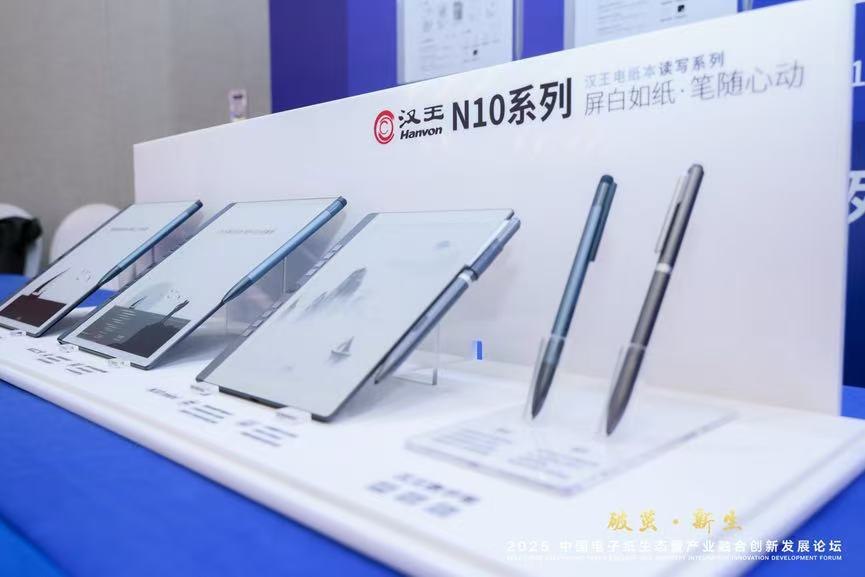
Core Insights - The exit of Kindle from the Chinese e-book market has created a significant opportunity for domestic brands like Hanwang Technology to fill the void and innovate in the electronic paper industry [1][3][10] Market Opportunities - The Chinese electronic paper market is expected to experience explosive growth, with projected shipments of electronic paper tablets reaching 3.1 million units by 2025, reflecting a growth rate exceeding 30%, significantly higher than the global average of 9.3% [3] - The digital reading market in China is also expanding, with revenue expected to reach 66 billion yuan in 2024, accounting for half of the publishing industry, supported by a user base of 670 million and a total of 63 million works [3] Industry Standards and Ecosystem Development - The establishment of market standards is underway, including quality grading for electronic paper readers and eye protection norms, leading the industry towards a more standardized development path [4] - The electronic paper industry is evolving from a niche market to a mainstream segment, with a focus on multi-modal interaction and AI applications to enhance user experience and productivity [7][9] Technological Advancements - The industry is undergoing a critical transition from black-and-white to color electronic paper, with challenges such as insufficient oxide backplane production capacity and high costs of high-voltage driver ICs [6] - Companies are collaborating to enhance production capabilities and reduce costs, with a focus on full-color, flexible, and large-size electronic paper technologies [6] Scene Expansion - Electronic paper is expanding its applications from reading to office and educational environments, with products like Hanwang's color office tablet M10C targeting light office scenarios [4][5] - The integration of AI in educational tools, such as the Xiaoyuan Learning Machine, is enabling personalized learning experiences, showcasing the potential for electronic paper in educational settings [5] Ecosystem Collaboration - The electronic paper industry is moving towards a collaborative ecosystem that includes advancements in processors, multi-modal interaction, and AI applications, which are essential for achieving annual sales exceeding 100 million units and entering a trillion-yuan market [7][9] - The industry is still in its early stages compared to smartphones and PCs, necessitating the establishment of unified platforms and standards to accelerate development [9]