小米15S Pro特别版

Search documents
雷军预告小米神秘新品:有望实现芯片/AI/OS大会师
Sou Hu Cai Jing· 2026-01-08 06:13
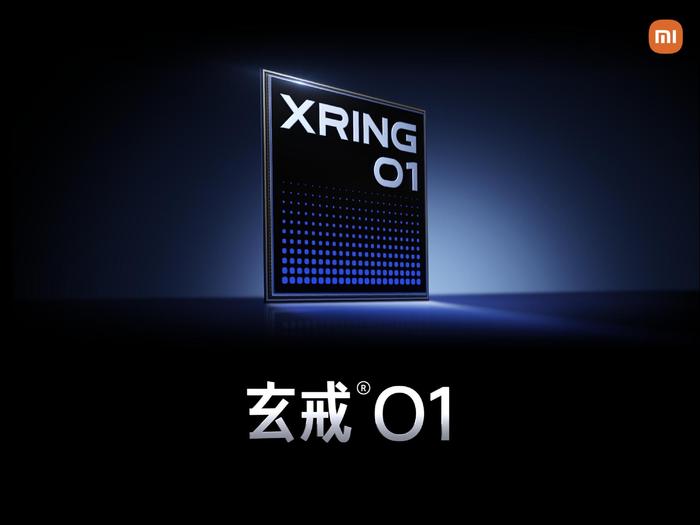
Core Insights - Xiaomi's Chairman and CEO Lei Jun announced that by 2026, the company aims to achieve the integration of self-developed chips, operating systems, and AI models in a terminal product, likely a flagship smartphone [1] Group 1: Chip Development - Xiaomi has developed a complete underlying technology stack, with its self-developed mobile SoC chip, Xuanjie O1, set to be officially released on May 22, 2025. This chip utilizes TSMC's second-generation 3nm (N3E) process, integrating 19 billion transistors and featuring a 10-core 4-cluster CPU architecture [3] - The Xuanjie O1 chip includes two Cortex-X925 super-large cores with a frequency of 3.9GHz, four performance cores at 3.4GHz, two efficiency cores at 1.9GHz, and two efficiency small cores at 1.8GHz, along with a 16-core Arm Immortalis-G925 GPU. It will debut in the Xiaomi 15S Pro special edition, marking a significant step in Xiaomi's core hardware development [3] Group 2: Operating System Development - Xiaomi officially launched its third-generation ecosystem operating system, Surge OS 3, in August 2025, which is deeply customized based on Android 16. The system was first pushed in the Chinese market in September 2025 and later expanded to India, Europe, and Southeast Asia [5] - Surge OS 3 incorporates technologies such as hotspot compilation acceleration, resulting in faster application launches and lower gaming power consumption. In a stress test involving the continuous launch of 22 applications, it maintained smooth animations, achieving a system efficiency optimization improvement of 10% [5] Group 3: AI Development - Xiaomi's large model team, led by former DeepSeek researcher Luo Fuli, is set to release and open-source its flagship model MiMo-V2-Flash in December 2025. This follows the earlier open-sourcing of models like MiMo-7B and MiMo-Embodied, establishing a capability system that covers inference, multi-modal, and embodied intelligence [7]


小米“双芯路线”浮出水面:玄戒O1只是开始,与高通合作“下一个15年”
Tai Mei Ti A P P· 2025-05-21 10:52
Core Insights - Xiaomi has officially announced a new long-term partnership with Qualcomm, ensuring continued collaboration on flagship smartphones and the use of Snapdragon platforms for multiple product generations [2][3] - The announcement coincides with the launch of Xiaomi's self-developed SoC, the Xuanjie O1, which marks a significant step in the company's dual-chip strategy, combining self-developed and third-party SoCs [3][4] Partnership with Qualcomm - Xiaomi and Qualcomm have renewed their partnership for another multi-year agreement after 15 years of collaboration, with expectations for increasing shipment volumes during the agreement period [2] - Xiaomi will be among the first manufacturers to adopt Qualcomm's next-generation Snapdragon 8 series flagship mobile platform, set to be unveiled at the Snapdragon Summit in late 2025 [2] Development of Self-Developed Chips - Xiaomi's journey in self-developed chips began in October 2014, leading to the release of the first self-developed SoC, the Surge S1, in 2017, which faced challenges due to outdated technology [4] - The company has since shifted focus to peripheral chips, such as imaging and charging solutions, while recently achieving significant advancements in self-developed SoC technology, including a successful 3nm chip [4][5] Performance of Xuanjie O1 - The Xuanjie O1 SoC features a 10-core architecture and has demonstrated competitive performance metrics, with single-core scores ranging from 2709 to 3119, surpassing Snapdragon 8 Gen3 [5] - The chip is expected to debut in the Xiaomi 15S Pro special edition, with an initial production scale of 2 to 3 million units aimed at domestic and Southeast Asian markets [6] Future Investment Plans - Xiaomi has committed to a long-term investment strategy in chip development, planning to invest at least 50 billion yuan over the next decade, with cumulative R&D spending on the Xuanjie series exceeding 13.5 billion yuan as of April 2023 [6]