
工业用盐

Search documents
来自喜马拉雅山的盐礼
Ren Min Ri Bao· 2025-12-04 22:24
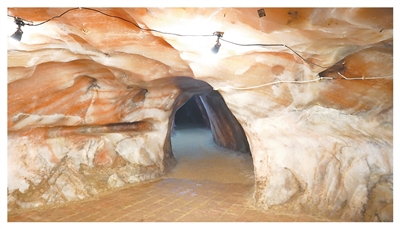
Core Viewpoint - The article highlights the cultural and economic significance of Himalayan pink salt, particularly its popularity in China and its historical roots in Pakistan's Khewra salt mine, which has a history of over 2000 years [1][8]. Group 1: Historical Significance - The Khewra salt mine, located in Pakistan's Punjab province, is part of the Himalayan mountain range and has been a source of salt for over 2000 years, formed from ancient ocean deposits [1]. - The mine gained historical recognition when Alexander the Great's army discovered the salt during their campaign in India, marking its introduction to the outside world [2]. Group 2: Geographical Importance - The salt range serves as a crucial geographical barrier in South Asia, separating the fertile Punjab plain from the higher plateau, making it a strategic location for trade and military endeavors throughout history [2][5]. - The region has been a significant trade node due to its salt resources, which were historically a vital strategic commodity for various empires [5]. Group 3: Mining Techniques and Tourism - The Khewra salt mine employs traditional mining techniques, including the "room and pillar" method, and has been developed into a tourist attraction with guided tours through its salt tunnels [6][7]. - Visitors can explore the mine's unique salt formations and sculptures, enhancing its appeal as a tourist destination [6]. Group 4: Economic Impact and Globalization - Himalayan pink salt has gained international popularity, particularly in Western markets, where it is marketed as a premium culinary salt and decorative item [8]. - The salt's unique color and health benefits have led to its incorporation into various products, including salt lamps and bath salts, which have become popular among consumers [8].

高温热浪下的“PK”
Zhong Guo Hua Gong Bao· 2025-08-25 02:02
Core Viewpoint - The article highlights the challenges faced by railway workers in the Zhejiang Quzhou region due to extreme heat, emphasizing their dedication and the increasing demand for freight transport during high-temperature seasons [1][2]. Group 1: Working Conditions - The temperature at the railway freight yard has reached as high as 50°C, creating a hazardous working environment for the railway workers [1]. - Workers are required to wear two pairs of gloves to prevent burns from the hot train bodies [2]. - The team is busy with operations, completing five to six dozen coupling tasks in a single shift, indicating a high workload [2]. Group 2: Operational Demands - The freight yard is crucial for transporting coal, industrial salt, and containers, with an increase in operational volume during the high-temperature season due to rising demand for these materials [1]. - Daily operations involve multiple steps, including vehicle inspection, ventilation preparation, and route confirmation, all performed efficiently despite the heat [1]. Group 3: Team Dynamics - Workers take short breaks to hydrate and rest, demonstrating the importance of maintaining energy levels in extreme conditions [2]. - The camaraderie among workers is evident as they support each other through challenging tasks and share moments of relief during breaks [2].