幸福99添益(安享优选)14天持有期6期理财A款

Search documents
监管亮剑“打榜营销” 理财子公司紧急调整业务
经济观察报· 2026-03-03 08:17
Core Viewpoint - The article discusses the pros and cons of "ranking marketing" practices in bank wealth management products, highlighting concerns about misleading high yields and the resulting pressure from customer complaints and product redemptions [1][4]. Group 1: Marketing Practices - "Ranking marketing" has become prevalent in the banking wealth management industry, where companies initially issue products with artificially high short-term yields to attract investors [3][8]. - Wealth management subsidiaries often showcase products with yields exceeding 10% in prominent positions, leading to a rapid increase in product scale [3][4]. - The strategy involves creating a perception of high returns through small-scale initial offerings and subsequent asset transfers to maintain these yields temporarily [8][10]. Group 2: Regulatory Response - Regulatory authorities have taken notice of these marketing tactics, leading to administrative penalties for some wealth management subsidiaries for misleading yield displays [5][18]. - New regulations, such as the "Financial Institutions Product Appropriateness Management Measures," prohibit misleading marketing practices and require transparency in product risk disclosures [5][18]. - Following increased customer complaints, banks have begun to adjust their marketing strategies and compliance measures to align with regulatory expectations [18][19]. Group 3: Market Impact - As of the end of 2025, the total scale of the banking wealth management market reached 33.29 trillion yuan, marking a significant growth of 11.15% from the beginning of the year [11]. - The rapid expansion of product scales often leads to unsustainable high yields, resulting in significant drops in actual returns, which has caused dissatisfaction among investors [15][16]. - Despite regulatory pressures, some banks continue to promote high-yield products, indicating a tension between compliance and sales performance [20].

开年频现“高收益” 银行理财“打榜”被要求整改
2 1 Shi Ji Jing Ji Bao Dao· 2026-01-29 06:41
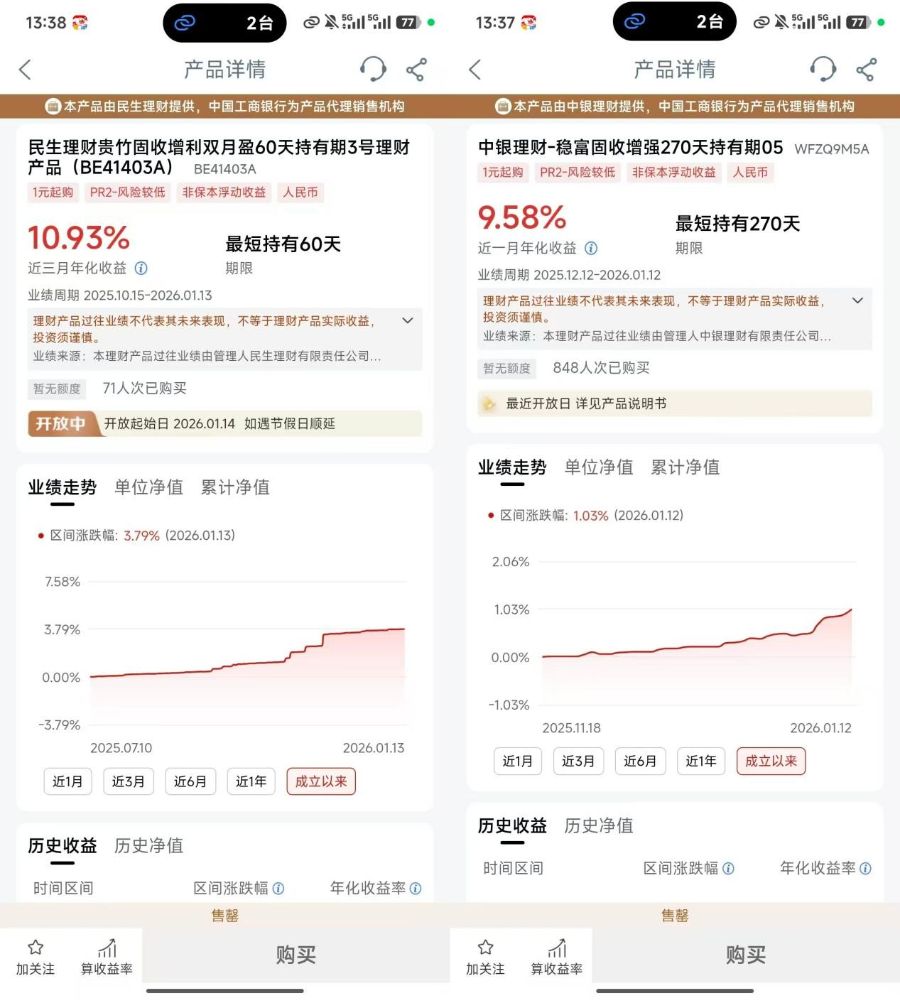
Core Viewpoint - The phenomenon of "ranking" in bank wealth management has drawn significant attention, with regulatory bodies closely monitoring the situation and institutions taking corrective actions [1][2][18]. Group 1: Ranking Behavior - "Ranking" in wealth management refers to the practice where some wealth management subsidiaries launch "shell products" to inflate yield rates, attracting funds to newly issued products with small scales, often only a few million yuan [2][17]. - This practice leads to a rapid increase in product scale, causing initial high yields (5%-15%) to decline as the products become more common, resulting in complaints from investors and disrupting industry order [2][5][18]. - As of early 2026, the occurrence of ranking wealth management products remains prevalent, with industry insiders acknowledging that such practices are unsustainable in the long run [2][18]. Group 2: High Yield Products - Data from South Finance Wealth Management shows that as of January 26, 2026, there were 4,552 fixed-income products with annualized yields exceeding 4% in the last three months, including 104 products with yields over 10% [3]. - Some short-term products with holding periods of 7 to 14 days are showcasing yields around 4%, attracting investor interest despite the underlying market conditions [3][10]. - Examples of high-yield products include "Happiness 99 Add Benefits (Enjoy Selection) 14-Day Holding Period 6th Phase A" which saw a yield of 14.57% in September 2025 but dropped to 1.54% by the fourth quarter of 2025 [5][6]. Group 3: Market Dynamics and Investor Experience - Investors are increasingly frustrated when high-yield products revert to lower yields after a few months, leading to negative experiences often referred to as "wealth management assassins" [5][6]. - The "Minsheng Wealth Management Guizhu Fixed Income Increased Weekly Profit 7-Day Holding Period 40th Product" experienced a yield spike to 23.89% shortly after its launch, but yields quickly fell to 1.04% and 1.62% in subsequent months [8][10]. - The rapid growth in product scale, from 4.25 million yuan to 596 million yuan, highlights the volatility and risks associated with these high-yield products [8][10]. Group 4: Regulatory and Industry Response - Regulatory bodies have previously restricted practices like smoothing trust valuations and have mandated wealth management companies to complete rectifications by the end of the previous year [18][19]. - Industry insiders emphasize the need for standardized practices to prevent "bad money driving out good" and to address the competitive pressures that lead to ranking behaviors [18][19]. - The number of investors holding wealth management products has increased to 143 million, a 14.37% rise since the beginning of the year, with total returns reaching 730.3 billion yuan [18][19].