
广州白云机场T3航站楼

Search documents
广州白云机场T3航站楼启用 C919执飞首航
Zhong Guo Xin Wen Wang· 2025-10-30 11:39
Core Viewpoint - The inauguration of Guangzhou Baiyun Airport's T3 terminal marks a significant milestone in the development of a comprehensive international aviation hub in the Guangdong-Hong Kong-Macao Greater Bay Area, enhancing the airport's capacity and operational efficiency [1][5]. Infrastructure Development - The T3 terminal is part of a major project under the "14th Five-Year Plan," representing a leap to a "five-runway and three-terminal" operational model, which strengthens the airport's role in global aviation [1][7]. - The terminal features advanced hardware, including 199 check-in counters, 60 self-service check-in machines, and 59 self-service baggage drop devices, enhancing passenger service capabilities [5]. Technological Innovations - T3 integrates "smart" and "human-centered" design, with innovations such as a centralized security check system and RFID technology, improving security efficiency with a low false identification rate of less than 0.1% [5]. - It is the first large hub airport terminal in China to fully implement BIM (Building Information Modeling) for intelligent construction, ensuring comprehensive management throughout its lifecycle [5]. Operational Capacity - The expansion of Baiyun Airport from "two runways and one terminal" to "five runways and three terminals" supports the increase in flight routes, attracting airlines to enhance popular routes and establish new domestic and international connections [7]. - In the current year, Baiyun Airport has opened, restored, and intensified over 30 international passenger routes, aiming to strengthen its position as a core node in the "Air Silk Road" [7].



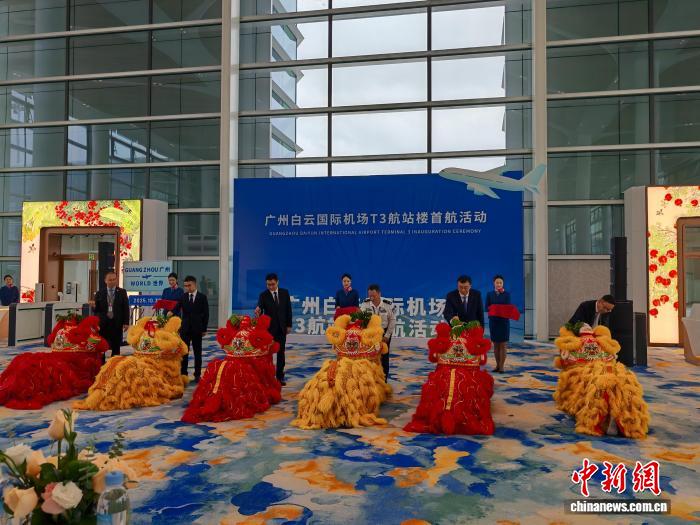
C919执飞首航!广州白云机场T3航站楼今日启用
Nan Fang Du Shi Bao· 2025-10-30 07:33
Core Points - Guangzhou Baiyun Airport officially enters the "five-runway era" with the opening of its fifth runway, becoming the first airport in China to operate five commercial runways [1] - The new T3 terminal has commenced operations, with the inaugural flight being Eastern Airlines MU6308, marking a significant milestone for the airport [1][2] - The expansion is part of a key project for the Guangdong-Hong Kong-Macao Greater Bay Area and aims to enhance Guangzhou's status as a comprehensive international aviation hub [1] Summary by Sections Airport Expansion - The opening of the fifth runway and T3 terminal signifies a major upgrade for Guangzhou Baiyun Airport, now featuring "five runways and three terminals" [1][6] - The T3 terminal is designed with a "flower" theme, reflecting Guangzhou's cultural identity, and aims to enhance passenger experience through smart and human-centered design [6][7] Inaugural Events - The inaugural flight event included a ceremony with representatives from various airlines and the airport authority, celebrating the historical significance of the T3 terminal [2] - Passengers on the inaugural flight received commemorative gifts, highlighting the airport's commitment to customer experience [2] Flight Operations and Capacity - The new winter-spring flight schedule will see an increase in weekly passenger flights to 10,728, with major airlines enhancing their routes from Guangzhou [3] - The introduction of the C919 aircraft by major airlines marks a significant development in domestic aviation, with the aircraft now operating from Guangzhou [3] International Connectivity - The launch of a direct flight from Algeria to Guangzhou establishes a new international route, enhancing the airport's global connectivity [4][5] - This route is part of a broader strategy to expand international flight networks, with over 30 new, restored, and enhanced international routes introduced this year [5] Infrastructure and Technology - The T3 terminal features advanced passenger service facilities, including 199 check-in counters and 60 self-service check-in machines, aimed at improving operational efficiency [6][7] - The terminal is recognized for its innovative construction methods, being the first large hub airport terminal in China to fully implement BIM technology and achieve paperless documentation [7]