底置电池包

Search documents
2026头部企业,要在这三个战场“定”胜负!
Xin Lang Cai Jing· 2026-01-07 01:29
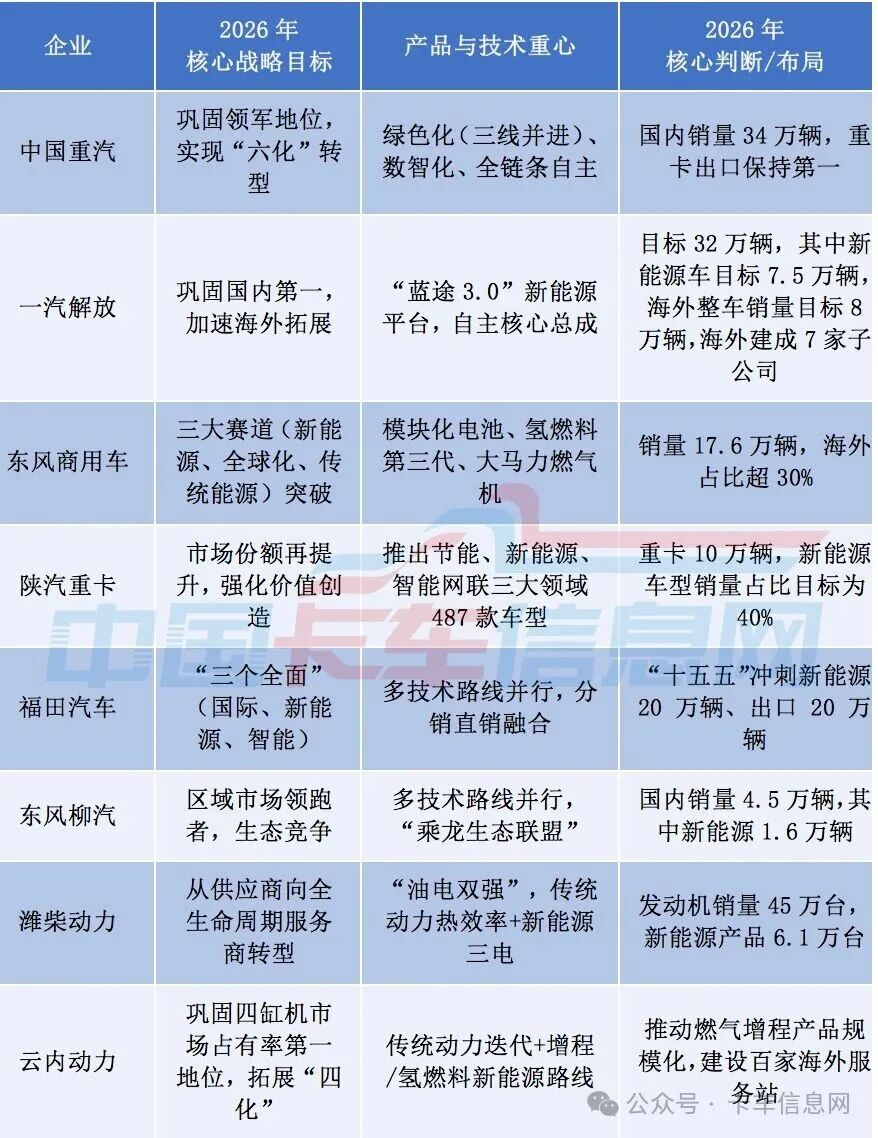
Core Insights - The industry consensus indicates a shift from an incremental expansion phase to a new cycle focused on deepening the value of existing assets, with competition evolving from price-based to providing comprehensive lifecycle value (TCO) [1][9] Industry Consensus: Three Deterministic Trends - The market is expected to enter a phase of "high-level consolidation and structural differentiation," with the medium and heavy truck market projected to remain stable at 1.1 to 1.25 million units, similar to 2025, as the driving force shifts from policy stimulus to optimizing existing resources [2][10] - Three major trends have emerged as strategic anchors for all companies: 1. Accelerated penetration of new energy vehicles (NEVs), with a consensus that the penetration rate will exceed 30% and potentially reach 35% or higher by 2026, driven by market demand rather than policy [3][11] 2. Value competition is replacing price wars, with a focus on service and ecosystem as key differentiators, emphasizing the importance of a comprehensive ecosystem that includes finance, used vehicles, and connectivity [3][11] 3. Globalization is becoming a core growth driver, with exports viewed as a crucial growth engine, as companies shift from simple trade to a more integrated approach involving products, technology, services, and finance [3][11] Strategic Differentiation: Paths of Eight Major Companies - Companies are adopting different strategic focuses based on their resources and capabilities: - China National Heavy Duty Truck Corporation aims to consolidate its leading position through a comprehensive transformation strategy [4][13] - FAW Jiefang focuses on accelerating overseas expansion and enhancing its core components [4][13] - Dongfeng Commercial Vehicle targets breakthroughs in new energy, globalization, and traditional energy markets [4][13] - Shaanxi Heavy Duty Truck emphasizes value creation through a diversified product lineup [4][13] - Foton Motor is pursuing a multi-faceted strategy focusing on internationalization and new energy [4][13] - Dongfeng Liuzhou Motor is leading in regional markets through ecosystem competition [4][13] - Weichai Power and Yunnei Power are adopting a pragmatic approach by diversifying their energy technology routes [6][14] Technology Routes: Diverse Approaches Based on Application Scenarios - The commercial vehicle power technology landscape is expected to be diverse, with choices heavily influenced by application scenarios: - Traditional power is evolving towards high-end and specialized applications, focusing on improving thermal efficiency and reducing fuel consumption [7][15] - Pure electric technology is becoming the preferred choice for short-distance fixed routes, with competition centered on battery energy density and lifecycle costs [7][15] - Hybrid and range-extended technologies are seen as key solutions for long-distance logistics, with significant R&D efforts underway [7][15] - Hydrogen fuel technology is being explored as a future strategic reserve, with ongoing commercial exploration [7][15] Ecosystem Construction: From Chain Leaders to Symbiosis - Leading companies are actively reshaping the industry ecosystem, moving beyond simple supplier relationships to create a community that shares risks and values: - China National Heavy Duty Truck Corporation leverages its capabilities for strong collaboration [8][16] - Dongfeng Liuzhou Motor is integrating upstream and downstream through the "Chenglong Ecosystem Alliance" [8][16] - Weichai Power is collaborating with multiple strategic partners to create a comprehensive service system [8][16] Observations: Coexistence of Consensus and Differentiation - The 2026 Chinese commercial vehicle market is characterized by both consensus on the shift to value-based competition and differentiation in strategic paths chosen by companies [9][17] - The upcoming competition will focus on technological depth, ecosystem breadth, and precision in user operations, with companies that effectively reduce operational costs and enhance efficiency poised to lead in this transformative phase [9][17]




2026商用车年会第一枪!潍柴连发新品!明年什么动向?丨头条
Xin Lang Cai Jing· 2025-12-08 12:27
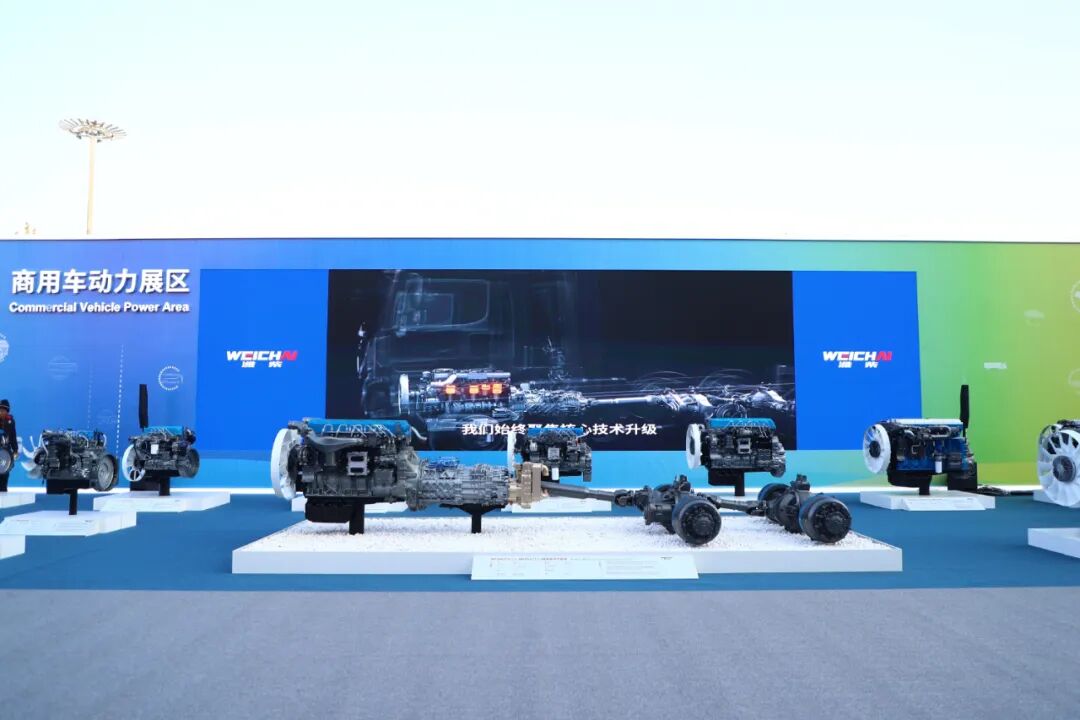
Core Insights - Shandong Heavy Industry Weichai Group aims for significant growth in commercial vehicle sales, targeting 450,000 engines and 61,000 new energy vehicles in 2026, up from 420,000 engines and approximately 20,000 new energy vehicles in 2025 [1][21] Group 1: 2025 Performance - In 2025, Weichai's heavy-duty engine market share reached 34%, maintaining its industry leadership [3][23] - The light-duty engine sales surpassed 110,000 units, reflecting a 10% year-on-year growth [3][23] - The company entered the pickup/VAN market, with the WP2H model expected to sell 13,000 units, marking a 134% increase [5][25] Group 2: 2026 Market Outlook - The heavy-duty truck market is projected to reach 1.13 million units in 2026, a 2% increase, with domestic sales expected at 790,000 units [9][29] - The light-duty truck market is anticipated to reach 750,000 units, also a 2% increase, with new energy light-duty trucks expected to grow by 11% [9][29] Group 3: Product Launches and Innovations - Weichai introduced three new commercial vehicle engines: WP14NG, WP5H, and WP2.5T, along with new battery and electric drive systems [1][21] - The WP14NG-4.0 engine features a displacement of 14 liters, a maximum power of 610 horsepower, and a torque of 2800 N·m, showcasing significant performance improvements [13][33] - The WP5H engine has been upgraded to 4.9 liters and 300 horsepower, designed for heavy-duty applications [15][35] Group 4: Strategic Goals and Initiatives - Weichai plans to enhance its overseas market presence, targeting sales of 130,000 units internationally [9][29] - The company aims to leverage new product launches and optimize existing products to improve competitiveness and meet customer needs [11][31] - The focus on new energy solutions is expected to drive growth, with a comprehensive product lineup in batteries, motors, and control systems [5][25]