
建垃拉小程序

Search documents
骑共享自行车可以攒钱?碳账户激励绿色生活
Xin Lang Cai Jing· 2026-01-31 01:55
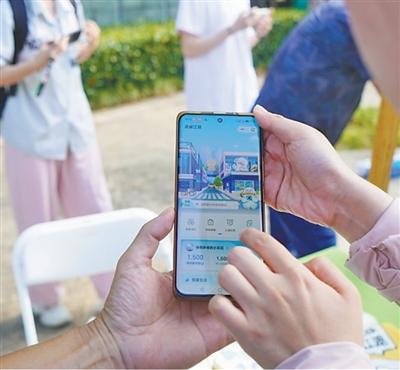
Core Viewpoint - Green development is a prominent feature of China's modernization, emphasizing ecological priority and sustainable practices as highlighted by President Xi Jinping [1]. Group 1: Green Development Initiatives - Over 2 million citizens in Wuhan have personal carbon accounts, with the province recycling approximately 21 million tons of construction waste annually, and half of the province's electricity comes from renewable sources [3][4]. - The "Wutan Jianghu" app incentivizes low-carbon living by allowing users to accumulate carbon reduction credits through activities like riding shared bikes, which can be exchanged for discounts and products [4][5]. - As of December 2025, the "Wutan Jianghu" app will connect with 13 internet platforms, facilitating easier access to carbon accounts and rewards for low-carbon behaviors [4][5]. Group 2: Construction Waste Management - Hubei produces 65 million tons of construction waste annually, with initiatives like the "Jianlala" app enabling residents to schedule waste pickups easily [7][8]. - The city of Xianning has established a construction waste disposal center with a capacity to process 1.1 million tons of waste per year, ensuring proper tracking and management of waste [8][9]. - Hubei has 95 recycling plants for construction waste, with an annual processing capacity exceeding 30 million tons, converting waste into reusable materials [9]. Group 3: Renewable Energy and Zero Carbon Villages - The village of Tudianzai in Hubei is the first in the province to achieve 100% clean energy supply, with a solar capacity of 1,800 kW and an annual generation of approximately 2 million kWh [11][12]. - The village has implemented a new power system integrating solar, wind, and biogas energy, enhancing energy supply stability and supporting local economic activities [11][12]. - Hubei has established three zero-carbon villages, promoting a new path for rural energy revolution through the integration of renewable energy and waste recycling [12].

荆楚大地,满眼绿意
Xin Lang Cai Jing· 2026-01-31 00:57
Core Viewpoint - The article emphasizes the rapid advancement of green and low-carbon transformation in Hubei, highlighting initiatives like the "Wutan Jianghu" app that incentivizes low-carbon living and the establishment of zero-carbon villages, showcasing a commitment to ecological priority and green development in line with China's modernization goals [4][10]. Group 1: Green Development Initiatives - Hubei has over 2 million residents in Wuhan with personal carbon accounts, contributing to a total reduction of 53,000 tons of CO2 through low-carbon behaviors [7]. - The "Wutan Jianghu" app allows users to accumulate carbon reduction credits through activities like riding shared bicycles, which translates to 90 grams of CO2 reduction per kilometer [6]. - The app has integrated with platforms like Didi and Alipay, enhancing user engagement and allowing for the exchange of carbon credits for various rewards [6][7]. Group 2: Construction Waste Management - Hubei generates approximately 65 million tons of construction waste annually, with initiatives like the "Jianla La" app facilitating the collection and recycling of this waste [8]. - The city of Xianning has established a construction waste disposal center with a capacity to process 1.1 million tons of waste per year, ensuring proper tracking and management of waste [9]. - The province has 95 recycling plants for construction waste, with an annual processing capacity exceeding 30 million tons [9]. Group 3: Renewable Energy and Zero-Carbon Villages - The village of Tudianzi in Hubei has become the first zero-carbon village, achieving 100% clean energy supply through solar and wind power installations [10]. - The village's energy system includes 1,800 kW of solar capacity and micro wind turbines, with an expected annual electricity consumption of over 600,000 kWh [11]. - Hubei has established three zero-carbon villages, promoting a new path for rural energy revolution that integrates renewable energy development and waste recycling [11].
湖北加快推动“双碳”目标实现 生产生活 绿意浸润(深阅读)
Ren Min Ri Bao· 2026-01-30 23:19
Core Viewpoint - Green development is a prominent feature of China's modernization, with a focus on ecological priority and sustainable practices emphasized by President Xi Jinping during a meeting on the high-quality development of the Yangtze River Economic Belt [1]. Group 1: Green Initiatives in Hubei - Over 200 million residents in Wuhan have personal carbon accounts, contributing to a significant reduction of 53,000 tons of CO2 through low-carbon behaviors [3]. - The "Wutan Jianghu" app incentivizes low-carbon lifestyles by allowing users to accumulate carbon reduction credits through activities like riding shared bicycles, which equates to over 90 grams of CO2 reduction per kilometer [2]. - The app has expanded its user base significantly, with over 200 million product exchanges recorded by December 2025, and has integrated with major platforms like Didi and Alipay [2][3]. Group 2: Construction Waste Management - Hubei generates approximately 65 million tons of construction waste annually, with innovative solutions like the "Jianla La" app facilitating efficient waste collection and management [4]. - The app allows users to schedule waste pickups and track disposal progress, with a processing capacity of 1.1 million tons of construction waste per year at dedicated facilities [5]. - Hubei has established 95 recycling plants for construction waste, with an annual processing capacity exceeding 30 million tons, promoting resource recovery and minimizing environmental impact [5]. Group 3: Renewable Energy Development - The village of Tudianzai in Hubei has become the first zero-carbon village, achieving 100% clean energy supply through a combination of solar and wind power [6]. - The village's solar capacity is 1,800 kW, generating around 200,000 kWh annually, with excess energy supplied to the grid [6][7]. - Hubei has established three zero-carbon villages, promoting a new path for rural energy revolution that integrates renewable energy development, waste recycling, and industrial growth [7].