
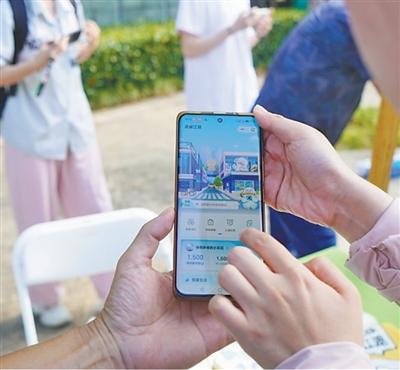
武碳江湖小程序

Search documents
骑共享自行车可以攒钱?碳账户激励绿色生活
Xin Lang Cai Jing· 2026-01-31 01:55
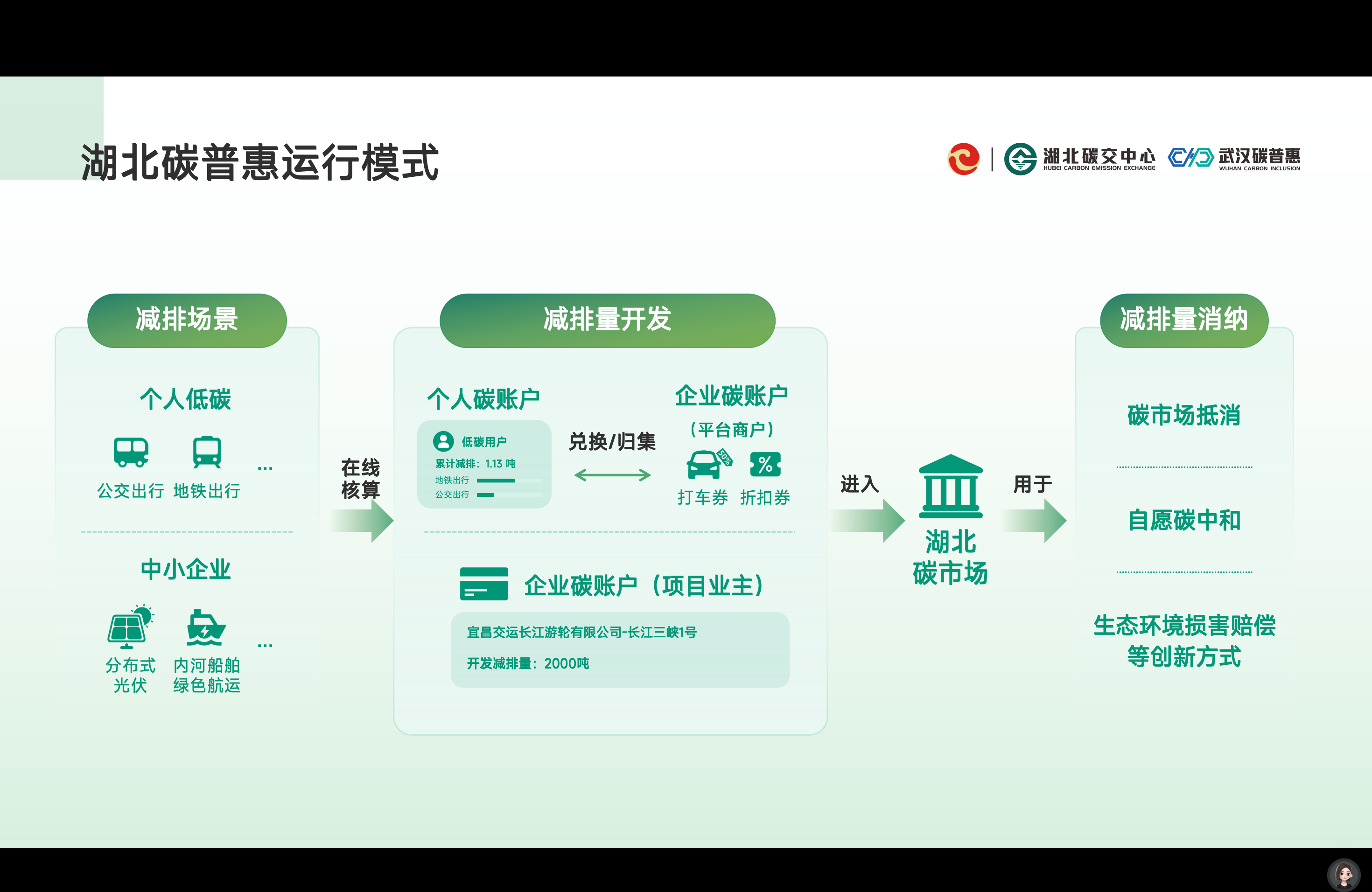
Core Viewpoint - Green development is a prominent feature of China's modernization, emphasizing ecological priority and sustainable practices as highlighted by President Xi Jinping [1]. Group 1: Green Development Initiatives - Over 2 million citizens in Wuhan have personal carbon accounts, with the province recycling approximately 21 million tons of construction waste annually, and half of the province's electricity comes from renewable sources [3][4]. - The "Wutan Jianghu" app incentivizes low-carbon living by allowing users to accumulate carbon reduction credits through activities like riding shared bikes, which can be exchanged for discounts and products [4][5]. - As of December 2025, the "Wutan Jianghu" app will connect with 13 internet platforms, facilitating easier access to carbon accounts and rewards for low-carbon behaviors [4][5]. Group 2: Construction Waste Management - Hubei produces 65 million tons of construction waste annually, with initiatives like the "Jianlala" app enabling residents to schedule waste pickups easily [7][8]. - The city of Xianning has established a construction waste disposal center with a capacity to process 1.1 million tons of waste per year, ensuring proper tracking and management of waste [8][9]. - Hubei has 95 recycling plants for construction waste, with an annual processing capacity exceeding 30 million tons, converting waste into reusable materials [9]. Group 3: Renewable Energy and Zero Carbon Villages - The village of Tudianzai in Hubei is the first in the province to achieve 100% clean energy supply, with a solar capacity of 1,800 kW and an annual generation of approximately 2 million kWh [11][12]. - The village has implemented a new power system integrating solar, wind, and biogas energy, enhancing energy supply stability and supporting local economic activities [11][12]. - Hubei has established three zero-carbon villages, promoting a new path for rural energy revolution through the integration of renewable energy and waste recycling [12].

荆楚大地,满眼绿意
Xin Lang Cai Jing· 2026-01-31 00:57
Core Viewpoint - The article emphasizes the rapid advancement of green and low-carbon transformation in Hubei, highlighting initiatives like the "Wutan Jianghu" app that incentivizes low-carbon living and the establishment of zero-carbon villages, showcasing a commitment to ecological priority and green development in line with China's modernization goals [4][10]. Group 1: Green Development Initiatives - Hubei has over 2 million residents in Wuhan with personal carbon accounts, contributing to a total reduction of 53,000 tons of CO2 through low-carbon behaviors [7]. - The "Wutan Jianghu" app allows users to accumulate carbon reduction credits through activities like riding shared bicycles, which translates to 90 grams of CO2 reduction per kilometer [6]. - The app has integrated with platforms like Didi and Alipay, enhancing user engagement and allowing for the exchange of carbon credits for various rewards [6][7]. Group 2: Construction Waste Management - Hubei generates approximately 65 million tons of construction waste annually, with initiatives like the "Jianla La" app facilitating the collection and recycling of this waste [8]. - The city of Xianning has established a construction waste disposal center with a capacity to process 1.1 million tons of waste per year, ensuring proper tracking and management of waste [9]. - The province has 95 recycling plants for construction waste, with an annual processing capacity exceeding 30 million tons [9]. Group 3: Renewable Energy and Zero-Carbon Villages - The village of Tudianzi in Hubei has become the first zero-carbon village, achieving 100% clean energy supply through solar and wind power installations [10]. - The village's energy system includes 1,800 kW of solar capacity and micro wind turbines, with an expected annual electricity consumption of over 600,000 kWh [11]. - Hubei has established three zero-carbon villages, promoting a new path for rural energy revolution that integrates renewable energy development and waste recycling [11].
湖北加快推动“双碳”目标实现 生产生活 绿意浸润(深阅读)
Ren Min Ri Bao· 2026-01-30 23:19
Core Viewpoint - Green development is a prominent feature of China's modernization, with a focus on ecological priority and sustainable practices emphasized by President Xi Jinping during a meeting on the high-quality development of the Yangtze River Economic Belt [1]. Group 1: Green Initiatives in Hubei - Over 200 million residents in Wuhan have personal carbon accounts, contributing to a significant reduction of 53,000 tons of CO2 through low-carbon behaviors [3]. - The "Wutan Jianghu" app incentivizes low-carbon lifestyles by allowing users to accumulate carbon reduction credits through activities like riding shared bicycles, which equates to over 90 grams of CO2 reduction per kilometer [2]. - The app has expanded its user base significantly, with over 200 million product exchanges recorded by December 2025, and has integrated with major platforms like Didi and Alipay [2][3]. Group 2: Construction Waste Management - Hubei generates approximately 65 million tons of construction waste annually, with innovative solutions like the "Jianla La" app facilitating efficient waste collection and management [4]. - The app allows users to schedule waste pickups and track disposal progress, with a processing capacity of 1.1 million tons of construction waste per year at dedicated facilities [5]. - Hubei has established 95 recycling plants for construction waste, with an annual processing capacity exceeding 30 million tons, promoting resource recovery and minimizing environmental impact [5]. Group 3: Renewable Energy Development - The village of Tudianzai in Hubei has become the first zero-carbon village, achieving 100% clean energy supply through a combination of solar and wind power [6]. - The village's solar capacity is 1,800 kW, generating around 200,000 kWh annually, with excess energy supplied to the grid [6][7]. - Hubei has established three zero-carbon villages, promoting a new path for rural energy revolution that integrates renewable energy development, waste recycling, and industrial growth [7].
“惠”过日子 低碳达人领跑绿色生活
Chang Jiang Ri Bao· 2025-08-10 00:33
Core Viewpoint - The article highlights the innovative carbon reduction initiatives in Wuhan, where citizens actively participate in low-carbon behaviors that are quantifiable and can be converted into tangible benefits, thus promoting a culture of sustainability and environmental responsibility. Group 1: Personal Carbon Reduction Initiatives - Citizens in Wuhan, like Gu Yu, have adopted low-carbon habits such as cycling and using public transport, which are tracked through a mobile app called "Wutan Jianghu" [2][3] - The app allows users to accumulate carbon reduction credits for various activities, such as 84 grams for a 5-minute bike ride and 829 grams for a 40-minute subway ride [2][3] - Over 182,000 residents are using the "Wutan Jianghu" app, which has recorded 12.2 million carbon reduction actions, resulting in a total reduction of 34,600 tons of carbon emissions [4] Group 2: Carbon Credit Monetization - Residents can convert their accumulated carbon reduction credits into financial benefits, such as using 118 kilograms of carbon reduction to redeem 236 yuan in bank loan interest [5] - The "carbon credit loan" system, a collaboration between the government, banks, and tech companies, allows users to offset loan interest with their carbon credits [6] - Approximately 39 residents have already benefited from this system, demonstrating a novel approach to integrating low-carbon living with financial incentives [7] Group 3: Community Engagement and Events - The "Wuhan Marathon" has successfully achieved carbon neutrality for three consecutive years by offsetting its carbon emissions through donations of personal carbon credits and corporate contributions [9] - The concept of carbon-neutral weddings is gaining popularity, with couples using carbon credits as gifts to offset the emissions from their ceremonies, exemplified by a wedding that offset 1,340 kilograms of carbon emissions [9] - Increasingly, citizens are engaging in community activities such as planting carbon sink forests and participating in energy-saving initiatives, reflecting a broader cultural shift towards sustainability in urban living [11]
武汉 择高而立、向上而行 在支点建设中走在前列
Ren Min Ri Bao· 2025-06-30 21:52
Core Viewpoint - Wuhan is actively transforming its advantages in science, education, transportation, and ecology into development momentum, aiming to become a strategic hub in central China [1] Group 1: Innovation and Talent - Wuhan has achieved a world record of 71.36 Tesla in pulsed magnetic fields at the National Pulsed Magnetic Field Science Center, surpassing the previous record of 64 Tesla set in 2018 [2] - The city is home to 141,000 university students and 81 academicians, highlighting its strong talent pool [2] - Wuhan plans to establish its first batch of industrial innovation joint laboratories in 2024, aiming to tackle key technologies and develop major innovative products within three years [2][3] Group 2: Transportation Hub - Yangluo Port is the leading container throughput port in the middle and upper reaches of the Yangtze River, with a throughput of 2.381 million TEUs in 2024, a 3.5% increase year-on-year [4] - The China-Europe Railway Express (Wuhan) has launched its second starting station at Yangluo Port, enhancing connectivity to Europe [4] - Wuhan's GDP is projected to exceed 2.1 trillion yuan in 2024, with a foreign trade volume surpassing 400 billion yuan, reflecting its growing role as a dual-circulation hub [5] Group 3: Ecological Development - The water quality of the Yangtze River in Wuhan has maintained a stable Class II standard for five consecutive years, contributing to ecological restoration efforts [6] - The ecological restoration of abandoned mines in Jiangxia District has led to a 12% increase in vegetation coverage and the establishment of a popular tourist destination [6] - Wuhan is promoting the application of the ecosystem production value (GEP) accounting system to quantify ecological value [6][7] Group 4: Cultural and Tourism Integration - Wuhan is developing a world-class cultural tourism destination centered around iconic sites like the Yellow Crane Tower, with over 130,000 visitors during the recent holiday [8] - The East Lake Ecological Tourist Area aims to create a world-class resort, having received 13.3 million visitors from January to May 2024 [8] - The city is leveraging its cultural heritage and innovative projects to enhance its international image as a vibrant and technologically advanced city [9]
武汉绿色低碳先行一步,39位居民用碳减排量抵扣贷款利益
Chang Jiang Ri Bao· 2025-06-30 00:40
Core Insights - Wuhan has implemented a carbon reduction mechanism allowing residents to offset loan interest with carbon reduction amounts, marking a significant shift towards green low-carbon development [1][11] - The initiative has seen 39 residents utilize their carbon reduction amounts to offset a total of 740 yuan in loan interest [1] Group 1: Carbon Reduction Mechanism - The carbon reduction mechanism allows daily low-carbon behaviors to be converted into carbon reduction amounts that can offset interest on housing and consumer loans [2] - The program was launched in March 2023, making Wuhan the first city in China to offer such a system [1][11] Group 2: User Engagement - Young individuals, such as Wei Ying, are actively participating in the program by using public transport and shared bicycles, accumulating significant carbon reduction amounts [3][4] - Wei Ying has recorded approximately 43 kilograms of carbon reduction monthly, totaling 491 kilograms to date, which she has used for various rewards and donations [6][7] Group 3: Broader Impact - The "Wuhan Carbon Public Welfare Comprehensive Service Platform" has recorded over 827 million instances of citizen carbon reduction behavior, equating to approximately 30,000 tons of carbon reduction, similar to planting around 900,000 trees [11] - The initiative has also inspired community activities, such as the "carbon neutrality" campaign in neighborhoods, encouraging residents to use their carbon reductions to offset local government emissions [11] Group 4: Economic Benefits - The carbon trading market in Wuhan has facilitated the trading of 6.68 billion tons of carbon quotas, generating approximately 45.9 billion yuan in transaction value, establishing Wuhan as a central hub for carbon trading [11][12] - Companies like Rebohong New Energy are benefiting from carbon asset aggregation, generating significant revenue through carbon reduction initiatives [12]

“数”说绿色奇迹 人与自然和谐共生美丽图景处处可见
Yang Shi Wang· 2025-06-05 08:43
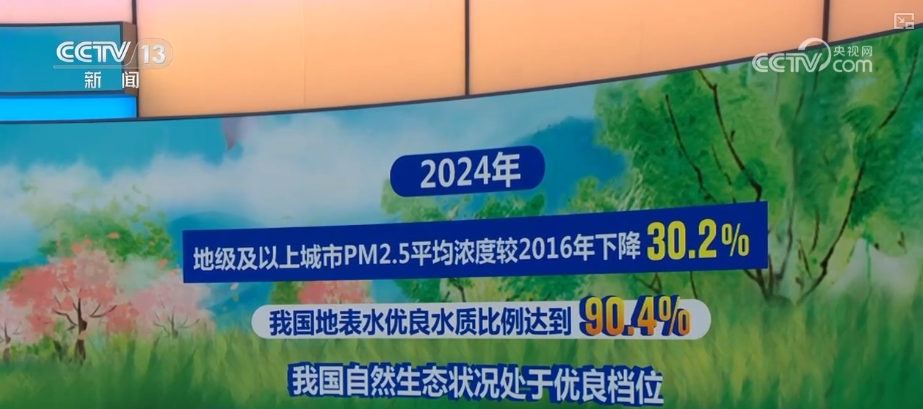
Group 1 - The theme for World Environment Day 2025 is "Beautiful China, I Take the Lead," emphasizing China's commitment to ecological protection and green development [1] - The 2024 China Ecological Environment Status Bulletin reports that the average PM2.5 concentration in cities has decreased by 30.2% since 2016, making China the fastest country in the world to improve air quality [3] - The proportion of surface water with good quality has reached 90.4%, marking a significant milestone in environmental quality [3] Group 2 - In Wuhan, low-carbon living is being incentivized through practical rewards for citizens engaging in eco-friendly behaviors such as public transport use and recycling [4] - Citizens can convert their carbon reduction efforts into tangible benefits, such as discounts on loans and rewards in a low-carbon marketplace [4][11] - The city has seen over 161 million residents participating in low-carbon initiatives, collectively reducing carbon emissions by over 30,000 tons [13]
武汉勇当“碳”路先锋,把“双碳”目标装进市民手机
Chang Jiang Ri Bao· 2025-06-05 02:35
Core Viewpoint - Wuhan is taking a proactive role in promoting a comprehensive green transformation of economic and social development in the context of China's "dual carbon" goals [2] Institutional Initiatives - Wuhan serves as the national carbon market's "big data hub," facilitating the reduction of social emission costs through innovative carbon market mechanisms [2] - The carbon trading platform "Zhong Carbon Registration" has traded 653 million tons of carbon quotas since its establishment in 2021, with a transaction value exceeding 44.8 billion yuan, making it the largest carbon market globally [5] - The national carbon market has expanded to cover over 80 billion tons of emissions, accounting for 60% of industrial carbon emissions in China [5][6] - The high compliance rate of enterprises in the Hubei carbon market demonstrates the effectiveness of the market logic that "pollution has costs, and reduction has benefits" [6] Public Engagement - The "Wuhan Carbon Benefit" platform has engaged 1.6 million residents, quantifying 8.27 million reduction actions and saving 51,800 tons of carbon emissions over two years [7][8] - Young people in Wuhan are increasingly using carbon reduction amounts as wedding gifts, reflecting a cultural shift towards carbon neutrality [9] Innovative Practices - Companies in Wuhan are discovering new revenue streams through carbon trading, with one company generating 1.4 million tons of carbon reduction annually, translating to approximately 4 million yuan in additional income [11] - The integration of solar energy and carbon trading is becoming standard in industrial parks, with one park saving 5 million yuan in electricity costs and earning an additional 160,000 yuan through carbon trading [11] - The establishment of a 400-kilometer new energy demonstration line in Wuhan showcases a comprehensive energy supply for various new energy vehicles [12] Pathways for Low-Carbon Development - Wuhan is pioneering a "model-driven, all-domain promotion" approach to low-carbon development, exploring various scenarios for urban low-carbon transformation [13]
坐公交可抵贷款!这样的“碳福利”多多益善
Guang Zhou Ri Bao· 2025-05-18 06:07
Core Insights - The initiative in Wuhan allows citizens to use their carbon reduction credits to offset loan interest, promoting individual participation in carbon reduction efforts [1][2] - The "Wutan Jianghu" platform has established over 1.5 million personal carbon accounts, encouraging low-carbon behaviors through various rewards [1][2] - The program aims to create a sustainable mechanism for carbon reduction, enhancing public awareness and engagement in green practices [1][2][3] Group 1 - The case of Ms. Wei demonstrates a practical approach to incentivizing carbon reduction through tangible benefits [1] - The "Wutan Jianghu" platform launched in June 2023, records low-carbon activities and allows citizens to exchange carbon credits for rewards [1][2] - The initiative has the potential to evolve into a lifestyle change, promoting a healthy and fashionable way of living [1] Group 2 - The program's success relies on enhancing public perception of the benefits of carbon reduction, with various redemption options available [2] - Other regions in China are also implementing similar carbon welfare programs, indicating a growing trend [2] - The collaboration between the "Wutan Jianghu" platform and banks allows citizens to directly reduce loan interest through accumulated carbon credits [2] Group 3 - The push for green consumption is seen as essential for stimulating overall economic activity [3] - Suggestions from the public highlight the potential for expanding carbon welfare benefits to other activities, such as exercise [3] - The initiative reflects a broader commitment to sustainable urban development and citizen engagement in environmental governance [3]