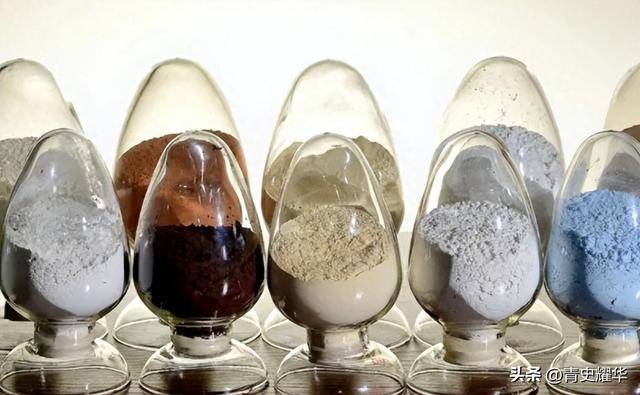
微型磁体

Search documents
特朗普签下85亿大单,一年后稀土多到用不完?没中国技术难成事
Sou Hu Cai Jing· 2025-10-21 10:31
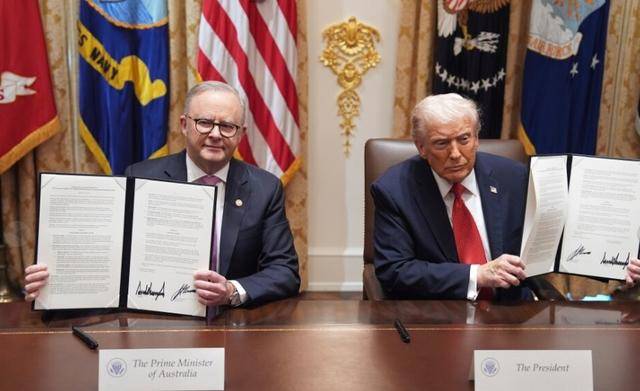
Core Viewpoint - The recent agreement between Trump and Australian Prime Minister Albanese aims to counter China's dominance in the rare earth sector, involving an investment of $8.5 billion in key mineral extraction projects [1][4]. Group 1: Agreement Details - The agreement includes a $1 billion investment from both the U.S. and Australia in rare earth projects over the next six months [1]. - Plans to construct an advanced gallium refining plant in Western Australia with an annual production capacity of 100 tons are part of the deal [1]. - Approximately $2.2 billion in financing will be provided through the Export-Import Bank [1]. Group 2: Challenges in the Rare Earth Sector - Despite the ambitious plans, the U.S. faces significant challenges in disrupting China's established dominance in the rare earth industry, which controls over 85% of global refining and separation capacity [4][11]. - The U.S. once held 90% of the global rare earth supply in the 1980s, but policies led to a decline in its domestic industry, resulting in a fragmented supply chain [4][6]. - Current U.S. efforts to rebuild the rare earth supply chain have not yielded successful projects, with the Mountain Pass mine still relying on China for refining [6][9]. Group 3: Historical Context and Economic Factors - Previous attempts to reduce reliance on Chinese rare earths, such as the "Rare Earth and Critical Materials Revitalization Act" initiated by Obama, have not succeeded due to high production costs in the U.S. [9][11]. - U.S. rare earth production costs are reportedly 50% higher than those in China, impacting competitiveness [11]. - The systemic challenges in the U.S. rare earth supply chain reflect broader issues within American manufacturing, where high costs hinder domestic production [9][11].

中国扔下“稀土核弹”,向全世界发动稀土管辖,历史将记住这一天
Sou Hu Cai Jing· 2025-10-10 10:41
Core Viewpoint - China has significantly escalated its control over rare earth elements, extending restrictions from just metals and products to the entire industry chain and overseas derivatives, marking a qualitative leap in its regulatory approach [4][9][24]. Group 1: Policy Changes - On October 9, the Ministry of Commerce of China issued six announcements, with the 61st and 62nd being particularly impactful, as they broadened the scope of export restrictions to include the entire rare earth industry chain and related technologies [4][9]. - The new regulations introduce an "extraterritorial jurisdiction" mechanism, requiring permits for exports of rare earth items containing over 0.1% specific Chinese-origin rare earth metals or utilizing Chinese extraction and refining technologies [11][15]. Group 2: Industry Impact - China's rare earth production in 2023 reached 240,000 tons, accounting for 68.6% of global output, solidifying its position as the only country with a complete industry chain from mining to refining and manufacturing [9][26]. - The new policy has caused immediate concern among U.S. rare earth companies, particularly MP Materials, which has relied heavily on China for processing and lacks the capability to handle heavy rare earths [17][20]. Group 3: Strategic Implications - The policy shift signifies a transition from merely defending resources to establishing rule-making authority in the global rare earth trade, allowing China to define the game rules rather than just adhering to them [24][29]. - The new regulations are expected to disrupt previous strategies employed by other countries to circumvent Chinese controls, effectively closing loopholes that allowed for the processing of Chinese rare earths in third countries [13][15].