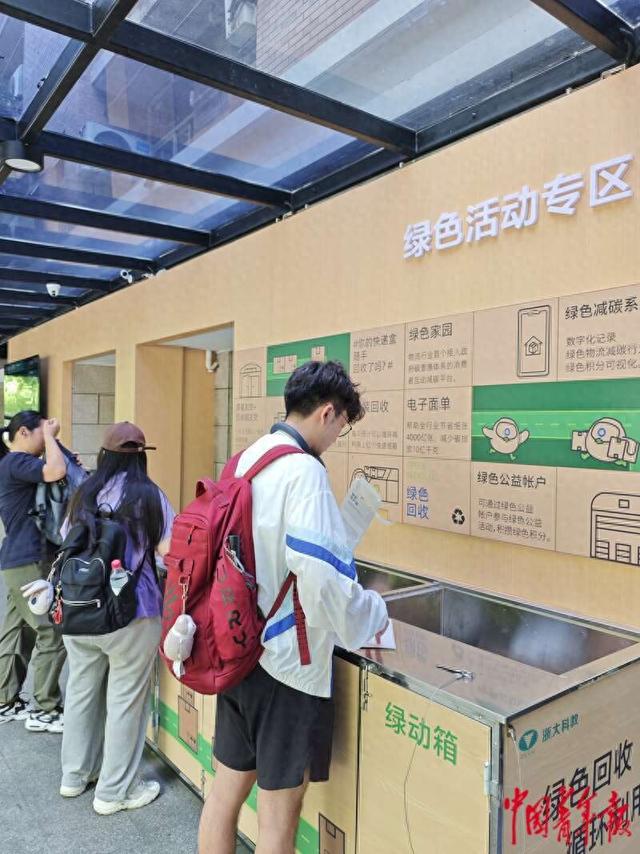
快递纸箱

Search documents
快递纸箱的“不坏金身”如何炼成? 菜鸟揭晓背后的绿色供应链
Mei Ri Shang Bao· 2025-12-29 22:17
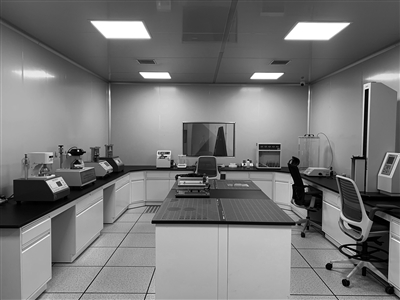
Core Viewpoint - The article highlights the advancements in packaging technology by Cainiao, focusing on the development of green packaging solutions that enhance product protection while reducing environmental impact [2][4]. Group 1: Packaging Testing and Development - Cainiao's green packaging laboratory conducts rigorous testing on packaging materials, including drop tests from heights over one meter and pressure tests up to 300 kilograms, ensuring the integrity of products during transit [3]. - The laboratory is equipped with various functional modules, including temperature and humidity control, material analysis, and logistics safety testing, which improve the efficiency and quality of packaging development [3]. Group 2: Collaboration and Cost Reduction - Cainiao collaborates with hundreds of brands, including Procter & Gamble and Unilever, to create customized packaging solutions that have significantly reduced transportation losses, with one partner saving 1 million yuan annually [4]. - The company employs strategies such as packaging reduction design and the use of reusable boxes to provide sustainable solutions for brands [4]. Group 3: Digitalization and Smart Solutions - Digitalization and intelligence are central to Cainiao's green supply chain solutions, utilizing self-developed RFID technology to create smart boxes that enhance tracking and inventory efficiency while supporting carbon reduction efforts [5]. - The AI-driven packaging design assistant customizes packing solutions based on product data, achieving an average reduction of 15% in packaging material usage, thus lowering costs for merchants [6]. Group 4: Innovation and Patents - Cainiao has accumulated over 20 patents related to packaging technology, covering various aspects such as electronic waybills, packaging equipment, and new materials, demonstrating its commitment to innovation in the logistics sector [6]. - The company’s innovations, including high-performance air column films and integrated RFID technology, are widely applied in the logistics supply chains of global brands [6].

甲醛超标!别再把快递箱囤在家里了
Yang Shi Xin Wen· 2025-11-23 11:05
Group 1: Global Express Delivery Market - The core point of the report is that the global express parcel business volume is projected to reach approximately 26.79 billion packages in 2024, with China's express parcel market maintaining its position as the largest globally for eleven consecutive years, achieving a remarkable average of over 10 billion packages per month [1]. Group 2: Health Risks Associated with Packaging - The article highlights potential health risks associated with keeping delivery boxes at home, particularly the risk of formaldehyde exposure due to adhesives, coatings, and recycled materials used in packaging [2][3][4]. - Recommendations include unpacking deliveries outdoors or at the entrance, washing hands after handling packages, and ensuring proper ventilation if boxes must be kept indoors [5].
别再把快递箱囤在家里了,出现这些不适可能是甲醛超标
Yang Shi Xin Wen· 2025-11-22 01:41
Group 1 - The core viewpoint of the article highlights the rapid growth of the global express delivery market, with China maintaining its position as the largest market for eleven consecutive years, achieving an average of 10 billion packages per month in 2024, projected to reach approximately 26.79 billion packages globally [1] Group 2 - The report indicates that while cardboard itself generally does not contain formaldehyde, various factors during production can introduce it, such as adhesives that may release formaldehyde over time [3] - Surface coatings on cardboard boxes, including waterproof and moisture-proof layers, may contain formaldehyde or other volatile organic compounds (VOCs) [3] - The use of low-quality packaging materials, such as cheap tape and plastic, can also lead to the introduction of formaldehyde [3] Group 3 - Recommendations for handling packages include opening them outdoors when possible, avoiding placing them on furniture, washing hands after handling, and ensuring proper ventilation if boxes must be kept indoors [5] Group 4 - Symptoms of formaldehyde exposure include dizziness, headaches, respiratory issues, skin allergies, and eye irritation, indicating potential overexposure [9][10][11][13] Group 5 - To reduce formaldehyde sources in homes, it is advised to avoid accumulating new cardboard boxes, enhance ventilation, use water bowls or formaldehyde purification sprays, and conduct regular testing for formaldehyde levels [14]
快递大省如何让绿色包裹“触手可及”?
Zhong Guo Qing Nian Bao· 2025-05-21 15:11
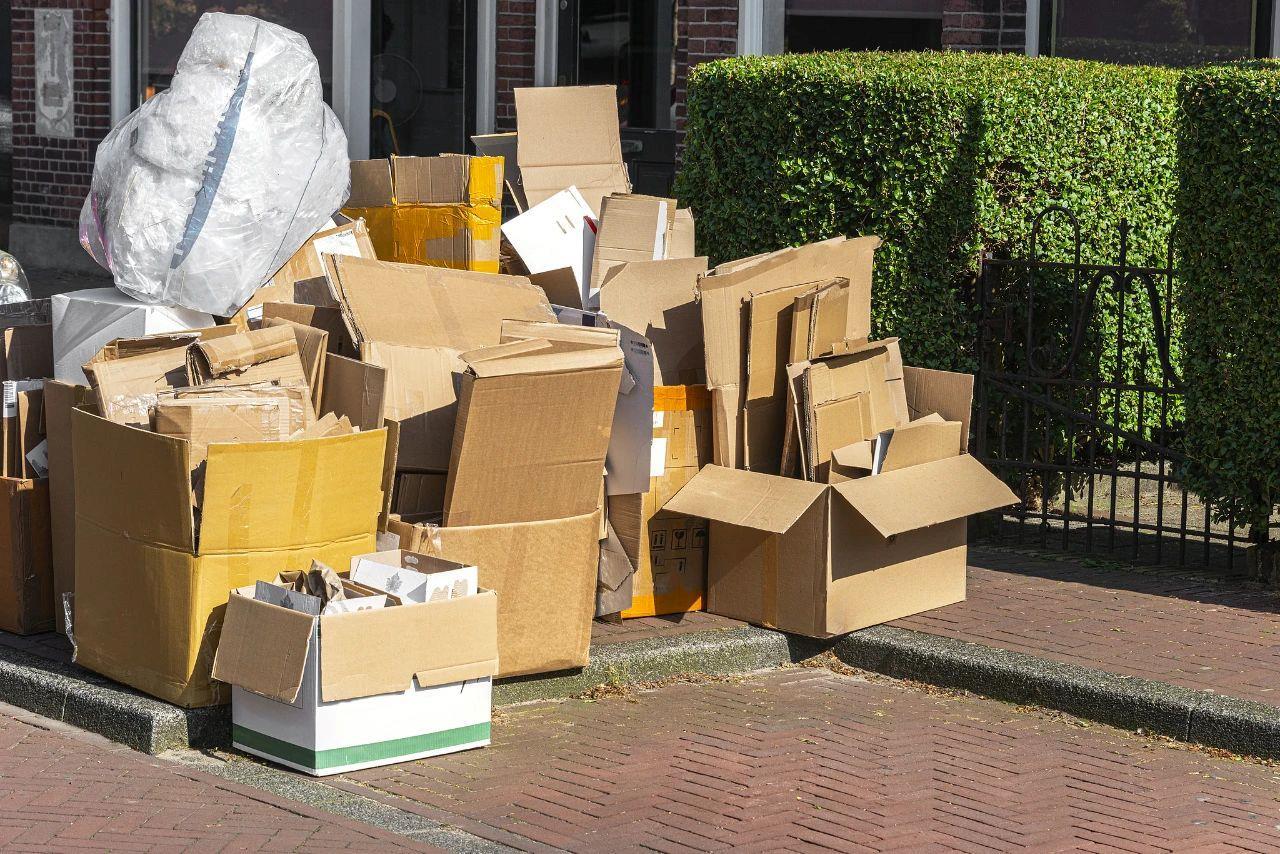
Core Viewpoint - The handling of used cardboard boxes after unpacking is crucial for the green transformation of the express delivery industry, with initiatives like recycling programs being implemented in universities and supported by new regulations [1][3][4]. Group 1: Industry Development - The express delivery industry in China has seen rapid growth, with the volume expected to reach 175 billion packages in 2024, maintaining its position as the world's largest market for 11 consecutive years [1]. - The revised "Express Delivery Temporary Regulations" effective from June 1 aims to address packaging issues by clarifying responsibilities across various stakeholders, including businesses and government [1][3]. Group 2: Recycling Initiatives - Zhejiang University has implemented a "green box" program for nearly a decade, recycling cardboard boxes and significantly reducing carbon emissions [1][4]. - The university's postal service stations handle over 820 million packages annually, with a daily recycling capacity of over 200 boxes at a single station [4][11]. Group 3: Policy and Regulation - The "Zhejiang Province Express Industry Promotion Regulations," effective from March 1, 2022, encourages the use of recyclable packaging and aims to reduce excessive packaging [3][4]. - Future policies will promote the establishment of recycling facilities in various locations and incentivize users to reuse packaging through rewards [5][12]. Group 4: Corporate Practices - Companies like Jingxing Packaging Materials focus on recycling waste cardboard, with a closed-loop system that transforms waste into new packaging materials, significantly reducing resource waste [8][9]. - Jingxing Paper has achieved a recycling rate of over 200 million tons of waste paper annually, contributing to a green and low-carbon development model [9][11]. Group 5: Market Impact - In 2024, Zhejiang's express delivery business volume surpassed 30 billion packages, with a year-on-year growth of 10.4%, and a significant increase in the reuse of old cardboard boxes [11][12]. - The proportion of e-commerce packages without secondary packaging reached 95.83%, indicating a shift towards more sustainable practices [11].