思皓X4

Search documents
车企组团出逃俄罗斯,304亿直接打水漂?
虎嗅APP· 2026-01-10 13:26
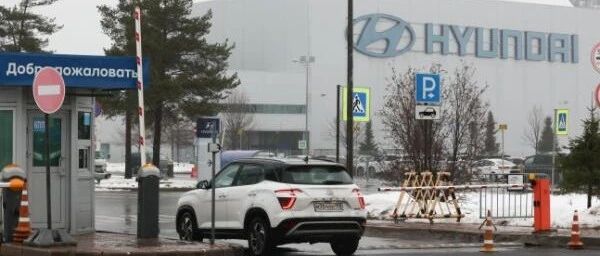
Core Viewpoint - International car manufacturers that exited the Russian market two years ago are now facing significant challenges in potentially returning, with substantial investments at stake and geopolitical instability persisting [5][7]. Group 1: International Car Manufacturers' Exit - Many international car manufacturers, including Hyundai, voluntarily exited the Russian market in response to Western sanctions, selling their assets at symbolic prices while retaining buyback rights [5][10]. - The urgency of the situation has left companies like Hyundai grappling with the dilemma of either investing heavily to restore operations or losing significant investments made in local facilities [7][11]. - Mazda has opted not to exercise its buyback rights after selling its stake in a Russian joint venture, indicating that the decision to abandon the investment was relatively straightforward due to the lower production capacity of its facility compared to others [12][13]. Group 2: Buyback Rights and Future Decisions - Several international car manufacturers, including Renault, Ford, Nissan, and Mercedes-Benz, have retained buyback rights for their Russian assets, with expiration dates ranging from 2027 to 2029 [15][16]. - The geopolitical crisis has caught these companies off guard, as they initially viewed their exit as temporary, expecting to return once stability was restored [17][18]. - Renault's attempt to exercise its buyback rights was met with a demand for a substantial compensation of 112.5 billion rubles (approximately 9.7 billion RMB), highlighting the financial implications of re-entering the market [21][22]. Group 3: Rise of Chinese Car Manufacturers - The exit of major international brands has created a vacuum in the Russian automotive market, which has been seized by Chinese car manufacturers, leading to a significant increase in their market share from 9% in 2022 to 49% in 2023, and projected to reach 62% in 2024 [24][27]. - Chinese automotive exports to Russia are expected to grow significantly, with projected figures of 16.3 million units in 2022, 55.3 million in 2023, and 128 million in 2024 [28]. - By 2024, Chinese brands are anticipated to dominate the top sales rankings in Russia, with several brands like Haval, Chery, Geely, and Changan leading the market [29][30]. Group 4: Challenges Ahead for Chinese Manufacturers - Despite the initial success, Chinese car manufacturers face increasing challenges in Russia, including new tax regulations and negative media portrayals that could impact their market position [34][36]. - The Russian government has implemented higher taxes on imported vehicles, which could significantly reduce profit margins for Chinese manufacturers [37][38]. - Concerns regarding the reliability and quality of Chinese vehicles have been raised in Russian media, potentially affecting consumer perceptions and sales [39][40]. Group 5: Future Outlook - The future of the automotive market in Russia remains uncertain, with two potential trends emerging: international manufacturers may either reclaim their assets and re-enter the market, or they may abandon their investments, leaving Chinese brands to navigate a challenging environment [45][46]. - The complexity of the situation necessitates careful consideration from all manufacturers looking to establish a foothold in the Russian market, as they must prepare for various potential outcomes [42][46].

车企组团出逃俄罗斯!304亿直接打水漂?
电动车公社· 2026-01-07 16:40
Core Viewpoint - International car companies that voluntarily exited the Russian market two years ago may now find it difficult to return due to ongoing geopolitical instability and financial implications of their decisions [1]. Group 1: International Car Companies' Dilemma - Hyundai sold its St. Petersburg factory for 7,000 rubles (approximately 550 RMB) with a two-year buyback option, but now faces the dilemma of either investing heavily to restore the factory or losing a significant investment of 540 billion KRW (approximately 2.6 billion RMB) [4][5][10]. - Other international car manufacturers, such as Toyota and Volkswagen, chose to exit without retaining buyback rights, while companies like Mazda and Renault are now grappling with the implications of their buyback options [12][19]. - Mazda sold its 50% stake in a Russian joint venture for 1 euro and opted not to exercise its buyback option after three years, indicating the varying levels of commitment among companies [16][24]. Group 2: The Rise of Chinese Car Manufacturers - The exit of major international car companies led to a 60% drop in car production and sales in Russia, creating an opportunity for Chinese car manufacturers to capture market share [35][36]. - Chinese brands increased their market share in Russia from 9% in 2022 to 49% in 2023, with projections to reach 62% in 2024, demonstrating a significant shift in the automotive landscape [44]. - The volume of Chinese car exports to Russia is projected to rise from 163,000 units in 2022 to 1.28 million units in 2024, making Russia the largest export market for Chinese cars [45][48]. Group 3: Challenges Ahead for Chinese Car Manufacturers - Despite the initial success, Chinese car manufacturers face challenges starting in 2024, including increased taxes on imported vehicles and negative media coverage regarding vehicle reliability [53][61]. - The Russian government has implemented significant tax increases on imported vehicles, which could impact the profitability of Chinese car manufacturers operating in the market [57][60]. - The need for Chinese manufacturers to adapt their products to meet local consumer demands and improve quality is critical, but establishing local production facilities involves substantial investment risks [69][70].