
悦稳系列产品

Search documents
低利率环境下理财行业竞争加剧——多家银行和理财公司掀起降费潮
Xin Hua Wang· 2026-01-20 23:40
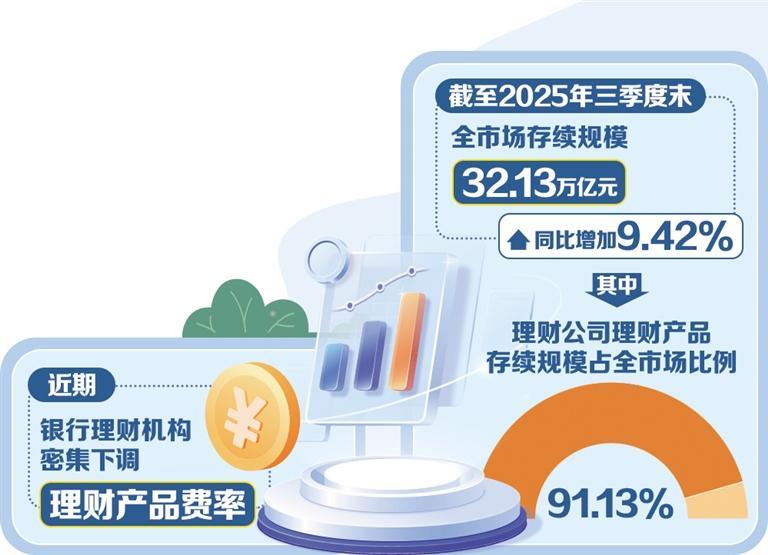
Core Insights - Banks and wealth management institutions are actively reducing management and sales fees for their financial products to attract investors and increase market share during a competitive low-interest environment [2][3] Group 1: Fee Reduction Trends - Multiple banks, including Nanyin Wealth Management and Zhongyuan Bank, have announced fee reductions for their financial products, indicating a trend of lowering costs to benefit investors [2] - The reduction in fees is seen as a strategy to attract funds during a period of "deposit migration," where customers are moving their savings to seek better returns [2][3] - The overall market for wealth management products has seen significant growth, with 43,900 products in circulation and a total scale of 32.13 trillion yuan, reflecting a 10.01% and 9.42% year-on-year increase respectively [3] Group 2: Strategic Implications - Experts suggest that fee reductions should be targeted and not a blanket approach, focusing on specific customer segments or time periods to enhance effectiveness [3] - The current trend of price competition among wealth management companies is viewed as unsustainable, with a recommendation for companies to adopt performance-linked management fees to align interests with investors [3][4] - To differentiate themselves from competitors, wealth management firms need to build core competencies beyond pricing, such as enhancing investment research capabilities and developing differentiated products that meet diverse investor needs [4] Group 3: Investor Considerations - Investors are advised to consider their risk preferences and the characteristics of financial products, balancing profitability, safety, and liquidity when selecting investments [5] - Effective cash management strategies are recommended, including segmenting funds based on their intended use and constructing a diversified portfolio to achieve stable returns [4][5]

新年伊始部分银行理财“零费率”优惠落地
Zheng Quan Ri Bao· 2026-01-09 16:40
Core Viewpoint - The recent wave of fee reductions by multiple banks and wealth management companies indicates a shift towards competitive pricing strategies in the financial industry, aiming to attract more investment and adapt to market pressures [1][3][5] Group 1: Fee Reductions - Since December 2025, over 10 banks and wealth management companies have lowered their product fee rates, including major state-owned banks and city commercial banks, with some products entering a "zero fee" range [1][2] - Notable fee reductions include Nanjing Bank Wealth Management lowering management fees to as low as 0.01% per year for certain products, and Nanjing Wealth Management eliminating sales service fees entirely for several products [2] - The trend of fee reductions has become common in the industry, with companies like Bank of China Wealth Management and Agricultural Bank of China Wealth Management also announcing similar adjustments [3] Group 2: Reasons for Fee Reductions - The fee reductions are driven by four main factors: the need to attract depositors, competitive pressure on product yields, stricter performance disclosure requirements, and the timing of year-end performance goals [3] - The current fee adjustments are primarily temporary measures, as management fees are a significant revenue source for wealth management companies, making it challenging to maintain low or zero fees in the long term [4] Group 3: Future Industry Trends - The wealth management industry is expected to see a divergence in fee strategies, with leading firms potentially adopting low or zero fee models as a standard competitive strategy, while smaller firms may struggle to keep up due to cost constraints [4] - A shift in revenue structures is anticipated, moving away from reliance on management fees towards a focus on service quality and innovative product offerings [4][6] - Experts suggest that the current fee reduction trend signals a transition away from "price wars" towards a focus on high-quality development in the banking wealth management sector [5]