低利率环境

Search documents
交通银行沃德财富万里行广州站活动举行
Shang Hai Zheng Quan Bao· 2026-03-25 18:09
Core Insights - The event "Wode Wealth Journey" was successfully held in Guangzhou, focusing on wealth management strategies in a low-interest-rate environment [1][2] - Key speakers included Xun Yugen, Chief Economist of Guosen Securities, and Cheng Zhucheng, Fund Manager at Huatai-PineBridge, who provided insights on macroeconomic trends and asset allocation [1][2] Group 1: Economic Insights - Xun Yugen emphasized the importance of focusing on two key areas for investment: technology innovation represented by AI applications and well-adjusted "old economy" sectors like liquor and real estate, which offer attractive dividend yields [2] - He suggested that if China can leverage its engineering talent and AI revolution to gain global market share in smart manufacturing, it could lead to a positive resonance between fundamentals and capital markets in the coming years [2] Group 2: Asset Allocation Strategies - Cheng Zhucheng introduced the "low-risk multi-asset FOF" investment strategy as a new choice in the context of low interest rates, advocating for a diversified approach beyond traditional stock-bond combinations [2] - He highlighted that during periods of significant A-share market adjustments, assets like gold, commodities, or US stocks can provide effective hedging, emphasizing the importance of low-correlation asset combinations to create a smoother net value curve for clients [2] Group 3: Client Engagement and Future Plans - Attendees expressed increased confidence in the wealth management capabilities of the bank after the expert discussions, gaining clearer insights into the current macroeconomic landscape and asset allocation directions [3] - The bank plans to continue leveraging the Wode Wealth brand to integrate group resources and provide more professional and stable comprehensive financial services to clients [3]

固定收益专题:低利率环境下ABS投资价值挖掘
GOLDEN SUN SECURITIES· 2026-03-22 08:43
1. Report Industry Investment Rating No information about the industry investment rating is provided in the report. 2. Core Viewpoints of the Report - ABS plays a counter - cyclical complementary role in the investment - financing cycle, serving as an important tool for enterprises to revitalize stock assets and relieve liquidity pressure during credit contraction periods [1][13]. - In the current environment of weak entity financing demand and insufficient credit supply, ABS supply has the basis for expansion. It maintains a clear spread stratification and high - yield varieties have prominent relative advantages, while its low - volatility feature can effectively smooth net value fluctuations [4][71]. 3. Summary by Relevant Catalogs 3.1 China's Asset Securitization Development Process and Market Status - **Investment - financing cycle division**: Credit bonds are pro - cyclical, while ABS is counter - cyclical, being more sensitive to underlying asset supply, regulatory orientation, and specific market cycles [1][13]. - **Regulatory pattern**: A "tripartite confrontation" regulatory pattern has been formed, with enterprise ABS, ABN, and credit ABS having different regulatory institutions, base asset types, and issuance methods [14]. - **Twenty - year evolution**: ABS has gone through stages of exploration, normal issuance, rapid development, and structural adjustment, with the issuance scale reaching 2.31 trillion yuan at the end of 2025 [17]. - **ABS stock market**: The supply of ABS in the whole market is concentrated on core assets, with the top 10 base asset types accounting for 86.4% of the total balance [26]. 3.2 ABS Primary Supply - **Interest rate and duration characteristics**: The primary supply of ABS shows significant interest rate differentiation and is dominated by short - duration products. Credit ABS has the lowest interest rate center and the smallest fluctuation, ABN pricing is highly consistent with the whole - market credit bonds, and enterprise ABS has a relatively high interest rate [30]. - **Spread stratification**: Credit ABS is the market's safety cushion with low spreads, ABN has medium spreads and income elasticity, and enterprise ABS is the main source of spread differentiation [33]. 3.3 ABS Secondary Market and Institutional Behavior - **Liquidity of varieties**: The overall liquidity of ABS is weaker than that of traditional credit bonds, but it is improving marginally. ABN has the best liquidity, followed by enterprise ABS, and credit ABS has the weakest liquidity [2][38]. - **Liquidity differentiation of base assets**: Assets with good credit, stable cash flows, and high standardization have high turnover rates, while bank credit and real - estate assets have low turnover rates [39]. - **Change in holder structure**: The holder structure of ABS is transforming from bank - dominated to diversified participation. In the inter - bank market, large - state - owned banks reduce their holdings while joint - stock banks increase theirs. In the exchange market, non - bank institutions such as insurance, public funds, and trusts are becoming new incremental funds [46][50]. 3.4 Analysis Framework for Various Base Assets - **Real - estate ABS**: It is supported by the dual credit of asset operation cash flow and disposal value. The core evaluation dimensions are the valuation rationality and realization potential of the underlying assets [54]. - **Operating claim ABS**: The cash flow depends on the contract claim income of enterprise operations, and the credit analysis focuses on the credit of the original equity holder and other credit - enhancing entities [59]. - **Bank credit ABS**: It has the attribute of quasi - financial bonds and is an important tool for banks to release capital and optimize statements. The historical performance and distribution characteristics of base assets are important for credit judgment [62]. - **Non - bank claim and other ABS**: It mainly comes from non - bank financial institutions, and the credit analysis needs to focus on the risk - control ability, asset quality, and compliance of the credit subject [66]. 3.5 ABS Investment Strategy - **Duration strategy**: Moderately lengthen the duration and focus on 2 - 3 - year varieties to lock in long - term income and reduce reinvestment risk [77]. - **Liquidity strategy**: Use ABN and credit ABS with good liquidity as the bottom - position assets, and moderately allocate high - yield varieties in the exchange market while controlling the single - variety exposure [77]. - **Portfolio strategy**: Build a diversified portfolio with credit ABS as the safety cushion, REITs for income elasticity, and supply - chain ABN for liquidity [77].
低利率环境下从基金配债行为寻找机会:“固收+”基金如何配纯债?
Shenwan Hongyuan Securities· 2026-03-12 08:30
Core Insights - The report highlights a significant shift in fund allocation preferences, with traditional pure bond funds losing dominance as "fixed income +" funds and index bond funds expand in size and popularity [3][14][33] - The "fixed income +" funds are seen as more attractive due to their ability to provide both bond base and equity flexibility, especially in a low-interest-rate environment where the appeal of pure bond funds diminishes [19][23][32] Fund Allocation Behavior Analysis - In 2025, pure bond funds experienced negative growth, while "fixed income +" funds and index bond funds saw substantial growth, indicating a market preference for diversified and tool-based products [3][14][33] - The allocation preferences have shifted, with "fixed income +" funds increasing their market share from 14% in Q4 2024 to 23% in Q4 2025, while pure bond funds decreased from 76% to 61% during the same period [14][33] - The report identifies that the marginal changes in bond allocation preferences within "fixed income +" products can influence market liquidity and credit spreads, providing valuable insights for bond fund managers and investors [33] Market Structure and Trends - The overall market for "fixed income +" funds saw a net increase of 86 products and a scale increase of 10,443 billion yuan in 2025, contrasting with a decline of 1,901 billion yuan in the previous year [46] - The report notes that the mixed secondary bond funds are leading in both product count and scale growth, with a significant increase in their market presence [46] - The asset allocation overview indicates a rebalancing towards interest rate bonds and equities, while reducing exposure to credit bonds and convertible bonds [52][56] Risk-Return Assessment - The report assesses that the return elasticity of "fixed income +" funds has improved, with defensive attributes being enhanced, while pure bond funds have seen a decline in return rates and increased volatility [23][26] - The performance of various fund types in 2025 shows a divergence in risk-return profiles, with stock and mixed funds performing better compared to pure bond funds, which have struggled in a low-interest-rate environment [23][26]
外资大幅加仓中国的传闻
表舅是养基大户· 2026-03-09 13:31
Core Viewpoint - The article discusses the strong performance of A-shares and H-shares in the Chinese stock market compared to other Asia-Pacific markets, highlighting the potential for foreign capital to increase its allocation to China amid geopolitical tensions [1][3][15]. Group 1: Market Performance - A-shares and H-shares have shown resilience, with a decline of around 1% compared to 5-6% in Japan and South Korea, indicating a "China asset" outperformance [3][4]. - The Hang Seng Index and Wind All A Index have experienced declines of -8.47% and -4.31% respectively, while the Nikkei 225 and Korean Composite Index have seen larger declines [6]. Group 2: Foreign Capital Inflow - There are indications of foreign capital increasing its allocation to A-shares, as evidenced by record high securities investment surpluses in January [15]. - In the Hong Kong market, passive index products have consistently seen inflows, suggesting a trend of foreign investment [16][18]. Group 3: Geopolitical Context - The Hong Kong Financial Secretary noted that ongoing tensions in the Middle East are driving U.S. funds into Hong Kong, as nearly 60% of listed companies are mainland enterprises, providing stability [20][24]. - The diversification of energy imports and proactive energy transition in China are highlighted as strengths in the current geopolitical climate [10][12]. Group 4: Investment Strategy - The article emphasizes that foreign capital is not merely increasing allocations but is also correcting under-allocated positions in China, as evidenced by the low representation of China in global indices [26][30]. - The current low interest rate environment is identified as a significant factor driving investment decisions, with A-shares being viewed as a valuable asset class [35][39]. Group 5: Market Trends and Recommendations - The article suggests that investors should focus on long-term capital and appropriate risk matching, especially in the context of potential market volatility [53]. - It advocates for a diversified investment approach, particularly in high-quality equity investments, as a favorable strategy for ordinary investors [53].


低利率环境下海外经验系列报告:固收增强收益的国际视野(海外固收+):从产品设计到负债把控
Shenwan Hongyuan Securities· 2026-03-05 07:07
1. Report Industry Investment Rating No information about the industry investment rating is provided in the report. 2. Core Viewpoints - The low - interest environment does not equal low volatility, and the risk - adjusted return of bond assets declines. In the long - term, gaming capital gains in the bond market may be a zero - sum game. [3][8][13][49] - Low - interest environments in the US, Europe, and Japan have led to the development of "Fixed - income +" products. Due to differences in social financing structures, the "+" assets in "Fixed - income +" funds vary. [3][49] - The design of US "Fixed - income +" products first determines the client's risk budget and then the implementation method. [2][52] - When the equity market performs poorly, three methods can be used to manage liabilities: asset allocation, price mechanisms, and product structures. [4][115] - China's "Fixed - income +" public funds have a concentrated stock - bond ratio at both ends, and there is a lack of products with a 20% - 50% stock asset ratio. The FOF products are mainly "Low - volatility Fixed - income +", and there is room for improvement in management fees and product structure. [4][120][136] 3. Summary by Sections 3.1 Overseas "Fixed - income +" Development Background: Low Interest Rates and High Volatility - Low - interest environment does not mean low volatility. The bond market volatility did not decline when the government bond yields of developed economies dropped from 2% to 1%. As interest rates decrease, bond duration lengthens, making bond prices more sensitive to interest rate fluctuations. [8][13][49] - In China, the low - interest environment may persist for a long time. The old - to - new kinetic energy transformation may take a long time, and the economic growth rate may decline. [14][19][49] - After interest rates enter a low level, the contribution of coupon income decreases. Capital gains can increase total returns in the short - to - medium - term, but in the long - term, gaming capital gains may be a zero - sum game. [20][49] - In the low - interest period, mixed - type funds in the US, Europe, and Japan developed well. The US mixed - type funds' share in the total mutual fund scale increased significantly from 5.84% in 2008 to 8.56% in 2016. [28][34] - The social financing structures of the US, Europe, and Japan are different, leading to differences in the "+" assets of "Fixed - income +" funds. The US focuses on direct financing, Europe is between direct and credit financing, and Japan's "Fixed - income +" mainly uses overseas bonds and foreign exchange investment strategies. [38][43][49] 3.2 US "Fixed - income +" Product Design Ideas - US "Fixed - income +" products first determine the client's risk budget (including volatility budget, maximum drawdown, and liquidity) and then the implementation method (including medium - volatility and low - volatility strategies). [52][53][54] - US FOF products' underlying funds can be divided into passive - tracking and active - management models. [55] - Vanguard Life Strategy is a passive - tracking FOF. Its target clients are mainly small - account holders, and it has a low annualized fee rate of 0.11%. It uses a daily threshold - monitoring rebalancing strategy, which performs better than the end - of - month fixed - time rebalancing strategy. The ratios of US stocks to foreign stocks and US bonds to foreign bonds are relatively fixed. [60][66][87] - Fidelity Asset Manager Funds is an active - management FOF. It aims to outperform the benchmark. The top - level fund manager is responsible for asset allocation and risk budgeting, and the underlying Central Fund conducts active stock selection. The performance evaluation of the top - level FOF is related to excess returns, monthly asset timing ability, and the performance of other funds and accounts. [95][96][100] 3.3 How to Stabilize Liabilities When the Equity Market Is Underperforming - Swing Pricing is more commonly used in the European system. It adjusts the net asset value (NAV) of the fund according to the scale of subscriptions and redemptions to transfer the liquidity cost to the trading party. [107] - Buffer ETF uses options to smooth returns, with a buffer for declines and a cap for increases, making it easier for clients to hold during market fluctuations. [108][110] - By increasing the allocation of derivatives, funds can maintain their positions and risk exposure while reserving cash to cope with redemption pressure. [111] 3.4 Areas for China to Learn From - China's "Fixed - income +" public funds have a concentrated stock - bond ratio at both ends, with a lack of products with a 20% - 50% stock asset ratio. The liability side of Chinese public funds is mainly institutional funds, while that of US public funds is mainly individual funds. [120][136] - China's FOF products are mainly "Low - volatility Fixed - income +", which may be to compete with bank wealth management products and attract deposit - moving funds. In the future, it is necessary to meet the individual clients' demand for large - scale asset allocation and develop "Medium - volatility Fixed - income +" products. [121][132][136] - There is room for China's FOF fund management fees to decline. The management fees of most Chinese FOF funds are above 0.6%, while the annualized holding fees of US FOF funds are 0.11% (Vanguard Life Strategy) and 0.63% (Fidelity Asset Manager). [135][136] - Areas for improvement include enriching product structures, adopting a daily threshold - monitoring rebalancing strategy, conducting long - term performance evaluations for active - management FOF fund managers, and introducing options and futures to control drawdowns. [135][136]
李若愚:用理财服务竞争代替价格“内卷”
Jing Ji Ri Bao· 2026-02-28 00:33
Core Viewpoint - The banking wealth management industry in China is experiencing a "fee reduction wave" due to increasing market competition in a low-interest-rate environment, indicating that attracting and retaining customers will ultimately depend on high-quality development rather than just fee reductions [1][2]. Group 1: Industry Overview - As of the end of 2025, there are 159 banking institutions and 32 wealth management companies in China with active wealth management products, totaling a scale of 33.29 trillion yuan, which accounts for 10% of all RMB and foreign currency deposits and 20% of resident deposit balances [1]. - Wealth management products have become an important avenue for household savings and "deposit migration," with a significant portion of funds being reinvested into the banking system through deposits and interbank certificates, while the remainder is invested in bonds, public funds, and non-standardized debt assets, providing substantial financial support for the real economy [1]. Group 2: Comparison with International Markets - The wealth management industry in developed countries like the US and Europe is more mature and diversified, with a high degree of institutional specialization, whereas China's industry is characterized by its reliance on banks, fixed-income products, and dual market-regulatory drivers [2]. - The low interest rate environment in China, driven by both long-term demographic changes and short-term economic policies, has compressed bank profit margins and intensified competition among financial sectors, leading to phenomena such as "deposit migration" and "deposit wars" [2]. Group 3: Challenges and Recommendations - The Chinese banking wealth management industry faces challenges such as product homogeneity, insufficient differentiation, and short-term fee adjustments driven by marketing strategies, leading to "involutionary fee reductions" [3]. - To address market competition, the industry should focus on high-quality development, enhance regulatory guidance, and encourage institutions to establish scientific fee structures linked to performance, while promoting differentiated product development and investor education [3]. - Wealth management institutions should shift from merely pursuing scale to emphasizing product differentiation, professional services, and improved customer experiences, transitioning from a sales-driven model to a client advisory model, and leveraging financial technology to enhance service efficiency [3].
低利率环境,红利投资需要择时
Orient Securities· 2026-02-26 14:46
Group 1 - The report concludes that in a low interest rate environment, dividend investments do not consistently outperform but rather exhibit rotational performance, similar to experiences in the US and Japan [5][19] - In the US, during low interest rate periods, the overall success rate of dividend investments did not exceed 50%, indicating a lack of significant advantage [8][10] - Japan's experience shows that while dividend investments can outperform in the long term, they also exhibit clear rotational characteristics rather than sustained superiority [13][19] Group 2 - Dividend investment strategies should be based on style analysis rather than solely on dividend yield, as there is no stable linear relationship between dividend yield and stock price performance [20][23] - The report categorizes dividend indices into five types based on risk levels, with classifications based on monthly return correlations and sample space considerations [25][28] - The risk ranking of dividend indices shows that A-share low volatility dividend indices have the lowest risk, while A-share quality dividend indices have the highest risk [30][29] Group 3 - Strategic allocation suggests that dividend indices perform best in a stock-weak, bond-strong environment, while high-risk dividend indices should be prioritized in a stock-strong, bond-weak environment [37][40] - Tactical enhancement strategies involve utilizing reversal effects for timing, with significant reversal signals observed in A-share dividend indices over a six-month period [41][46] - The report emphasizes the effectiveness of ETF-based dividend strategies, showing significant improvements in returns and risk control compared to single index investments [47][52]

狠拼资管!保险资管“吸金榜”:谁最赚钱、谁在掉队
Nan Fang Du Shi Bao· 2026-02-26 06:09
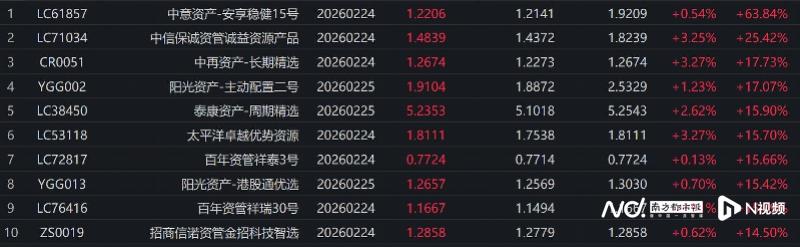
Core Insights - The insurance asset management products have shown impressive performance in early 2026, with 93.2% of 1,602 disclosed products achieving positive returns, and nearly 20 equity products exceeding a 10% return [1][2] - The strong performance is attributed to a combination of low interest rates, regulatory guidance, and a recovering capital market, indicating a shift in insurance capital from a defensive to an offensive investment strategy [1][7] Performance Overview - Among the 1,602 disclosed insurance asset management products, over 90% have reported positive returns, with 1,038 out of 1,098 fixed-income products, 245 out of 269 equity products, and 195 out of 220 mixed products achieving positive returns [2][4] - The top-performing products have shown returns ranging from 14.50% to 63.84%, with equity products making up more than half of the top 10 [4][6] Market Dynamics - The performance of insurance asset management products reflects a successful capture of the structural market trends in early 2026, particularly in technology and advanced manufacturing sectors [7] - The insurance asset management industry is experiencing a significant transformation, with a total managed fund size of 33.3 trillion yuan as of the end of 2024, marking a 10.6% year-on-year growth [9] Regulatory Environment - The favorable regulatory environment has been crucial for the growth of insurance asset management products, with policies emphasizing the long-term investment nature of insurance capital and increasing the equity asset allocation limits [8][13] - Recent regulatory changes have allowed insurance asset management products to participate in initial public offerings (IPOs), broadening their investment channels [8] Industry Leaders - Major players in the insurance asset management sector, such as China Life Asset Management, Taikang Asset Management, and Ping An Asset Management, have reported significant profits, collectively accounting for nearly half of the total profits of 34 institutions [10] - The industry is witnessing a performance divergence, with some companies experiencing declines in profitability, highlighting the competitive landscape [10] Investment Trends - Insurance asset management companies are increasingly focusing on high-dividend blue-chip stocks and undervalued quality assets, adopting a strategy of "stable foundation with equity enhancement" [8][9] - The interest in technology and innovation sectors is evident, with 33 insurance asset management companies conducting over 670 investigations into listed companies, indicating a proactive approach to investment [10]
存银行不如买理财!2025年理财规模暴增11%,这波操作你看懂了吗
Sou Hu Cai Jing· 2026-02-26 01:58
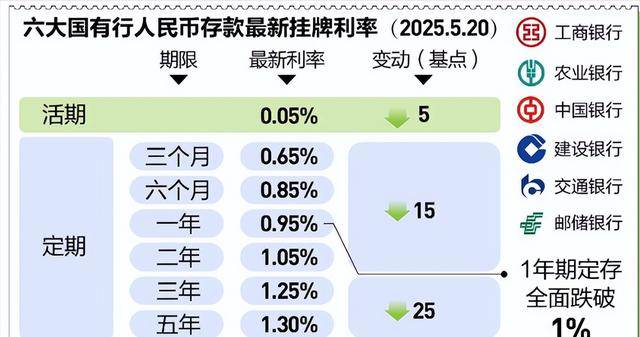
Core Viewpoint - The decline in deposit interest rates below 1% is a significant trend affecting both large state-owned banks and smaller banks, indicating a broader issue within the banking sector [1][3]. Group 1: Deposit Rate Trends - Major state-owned banks have reduced their large-denomination time deposit rates to 0.9% for 1-month and 3-month terms, with smaller banks following suit, leading to rates dropping into the single digits [1]. - By 2025, the average net interest margin for commercial banks is projected to fall to 1.42%, with state-owned banks potentially dropping to 1.31%, nearing regulatory limits [3]. Group 2: Shift in Investment Behavior - The banking wealth management market is expected to exceed 33.29 trillion yuan by the end of 2025, marking an 11.15% increase from the beginning of the year, indicating a shift from traditional savings to wealth management products [5]. - Approximately 17.69 million new individual investors have transitioned from bank deposits to wealth management products within a year, reflecting a significant behavioral change among the public [5]. Group 3: Investment Strategies - Given the low interest rate environment, individuals are advised to adopt a diversified investment strategy, including maintaining emergency funds and spreading investments across different time deposits [8]. - For those willing to take on some risk, a mix of low-risk assets like government bonds and higher-risk growth assets in sectors like technology is recommended, emphasizing the need for a restructured asset allocation approach [8]. Group 4: Future Outlook - The cessation of 5-year large-denomination time deposits by major banks signals a fundamental shift in banking practices, with a move towards shorter and more structured deposit products [8]. - The current low interest rate environment is expected to persist, necessitating a reevaluation of traditional savings strategies and encouraging individuals to enhance their financial literacy [9][10].
利率2.5%→1.75%,他的养老钱换了“新篮子”
Jing Ji Guan Cha Wang· 2026-02-20 01:32
Core Viewpoint - The article highlights the resurgence of participating insurance products, particularly in a low-interest-rate environment, as families seek options that provide both guaranteed returns and potential dividends [5][10]. Group 1: Market Dynamics - In July 2025, the insurance industry association reported a standard life insurance product interest rate of 1.99%, prompting a wave of announcements regarding interest rate reductions for various insurance products [3]. - Major insurance companies adjusted their maximum interest rates, with standard life insurance products dropping from 2.50% to 2%, and participating insurance products from 2% to 1.75% [3]. - The decline in interest rates has led to a renewed interest in participating insurance as a tool to hedge against low rates, allowing policyholders to benefit from potential excess returns [3][4]. Group 2: Product Features - Participating insurance offers two types of returns: guaranteed returns based on the predetermined interest rate and excess returns through dividends [6]. - Insurance companies are required to distribute at least 70% of their surplus earnings to policyholders, which can vary based on the company's profitability [6]. - The structure of participating insurance, with a guaranteed minimum return and potential for dividends, appeals to consumers facing uncertainty in business and declining interest rates [4][6]. Group 3: Historical Context - The first surge of participating insurance in China occurred in the late 1990s following a series of interest rate cuts, with the introduction of the first participating insurance product in 2000 [9]. - After 2013, the rise of traditional insurance products with higher guaranteed rates led to a decline in participating insurance sales, but recent low-interest trends have prompted a strategic shift back to these products [9][11]. - As of 2026, participating insurance is becoming a key focus for insurance companies, especially as consumer demand for stable investment options increases [11]. Group 4: Consumer Sentiment - Initial hesitations from consumers regarding participating insurance stemmed from past complaints about unmet dividend expectations and sales misrepresentations [10]. - Regulatory measures have been implemented to ensure clearer communication regarding the benefits and risks associated with participating insurance products [10]. - The current market environment, characterized by low interest rates and a shift in consumer investment preferences, is creating new opportunities for participating insurance products [11].