戈利昔替尼胶囊(高瑞哲)

Search documents
超百种肺癌创新药亮相世界肺癌大会,中国创新药崭露头角
Xin Jing Bao· 2025-09-11 06:07
Core Insights - The 2025 World Lung Cancer Congress held in Barcelona showcased over a hundred innovative drugs, highlighting the increasing international recognition of Chinese innovative drugs [1] - Lung cancer remains a leading cause of cancer-related deaths, with non-small cell lung cancer (NSCLC) accounting for 80%-85% of cases, and significant advancements in targeted and immunotherapy drugs have been made [2] - The conference featured significant clinical trial results, including AstraZeneca's positive findings on osimertinib combined with chemotherapy, demonstrating a median overall survival of nearly four years for patients with specific EGFR mutations [2] - The ADC I-DXd, targeting B7-H3, showed promising results in a phase II trial for small cell lung cancer, with an objective response rate of 48.2% and a disease control rate of 87.6% [3] - Chinese pharmaceutical companies made notable strides, with 35 oral presentations at the conference, including groundbreaking research from Bai Li Tian Heng on the dual-targeting ADC, iza-bren, achieving a 100% objective response rate [4][5] Industry Developments - The global lung cancer drug research landscape is evolving, with targeted therapies and immunotherapies gaining traction, marking a golden era for lung cancer treatment [2] - The ADC I-DXd is the first of its kind targeting B7-H3 and is currently in phase III trials, which could significantly impact the development of B7-H3 targeted drugs [3] - Bai Li Tian Heng's iza-bren has been recognized for its innovative approach, with its clinical data being highlighted at the congress, indicating a strong validation of Chinese innovation capabilities [4][5] - The approval of Shuwotein, a novel oral targeted drug for EGFR Exon20ins NSCLC, marks a significant milestone as it is the only drug approved for this mutation globally [6] - QLC5508, another ADC targeting B7-H3, has shown promising results in early trials, indicating a growing focus on innovative therapies for small cell lung cancer [7] - The increasing competitiveness of Chinese innovative drugs in clinical data and progress is leading to a trend of these drugs entering international markets [7]
科创板“U”标药企进入分化时刻
Bei Jing Shang Bao· 2025-09-01 16:40
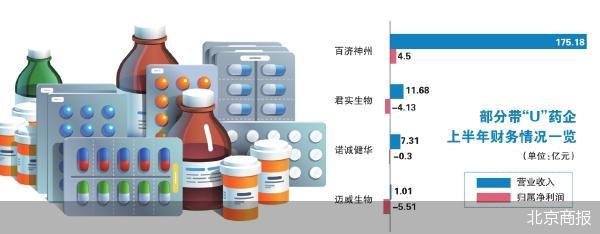
Core Viewpoint - The biotech companies listed on the STAR Market with "U" are entering a phase of differentiation, with varying performance in revenue and profitability, reflecting the changing valuation logic in the biotech sector [1][6]. Group 1: Revenue Performance - Among the 14 biotech companies with "U," 12 reported revenue growth in the first half of the year, accounting for approximately 85.71% [3]. - Baijia Shenzhou led with a revenue of approximately 17.518 billion yuan, a year-on-year increase of 46.03%, and was the only company to achieve profitability [3][4]. - Other companies like Junshi Biosciences and Nuo Cheng Jianhua also saw significant revenue increases, with Junshi reporting 1.168 billion yuan (up 48.64%) and Nuo Cheng reporting 731 million yuan (up 74.26%) [4]. Group 2: R&D Investment - The majority of the 14 companies continued to invest heavily in R&D, with 8 companies increasing their R&D expenses in the first half of the year [5]. - Baijia Shenzhou's R&D expenses reached 7.278 billion yuan, up from 6.628 billion yuan in the previous year [5]. - Other companies like Junshi, Nuo Cheng, and Dizhe Pharmaceuticals also reported increased R&D expenses, with figures of 706 million yuan, 450 million yuan, and 408 million yuan respectively [5]. Group 3: Financial Health and Funding - Many biotech companies are facing financial pressure, with several having asset-liability ratios exceeding 50%, including Maiwei Biotech at 77.54% [7]. - Baijia Shenzhou and Nuo Cheng Jianhua have relatively ample cash reserves, with 13.662 billion yuan and 6.981 billion yuan respectively [7]. - Companies are exploring various financing options, with Maiwei Biotech planning to list H-shares in Hong Kong to raise funds [7][8]. Group 4: Market Dynamics and Valuation - The market's valuation logic for biotech companies is shifting from focusing on pipeline quantity to emphasizing clinical data and commercialization potential [8]. - Analysts suggest that the ability to generate revenue is becoming a critical metric for evaluating biotech companies, moving away from merely assessing their cash burn rates [8].