
手部外骨骼机器人

Search documents
2025年,50个振奋人心的机器人科技瞬间 | 机器人大讲堂
机器人大讲堂· 2026-01-01 04:06
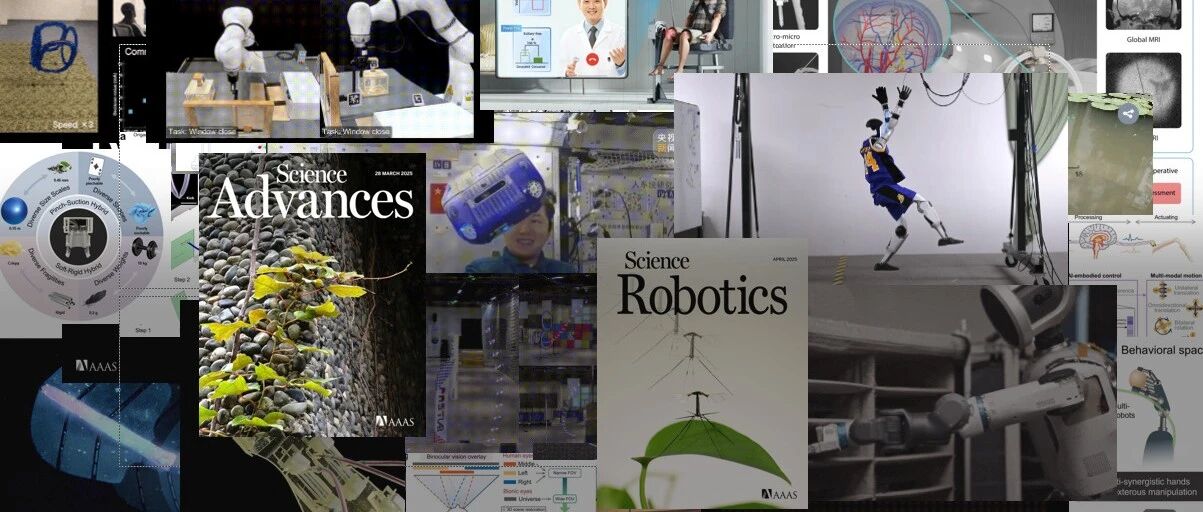
新年好!朋友们。 回望刚刚过去的2025年,历史的巨轮滚滚向前,而 巨变的开端,往往只是一粒微尘的颤动 。 我们每个人,都有幸成为这伟大时代的亲历者与见证者。 而「机器人大讲堂」,则有幸成为这个时代的忠实记录者。 我们深耕十年,与您一同见证中国机器人产业跨越万重山 , 始终立于科技浪潮之巅,传递着最前沿的 声音。 为此,我们从全年追踪的数百篇顶刊(《Science》、《Nature》...)与顶会(ICRA、IROS...)论文中, 精选了 50个令人振奋的科技瞬间。十年后再回望时, 这些标记技术脉络的重要坐标, 或许正是那个撬动未来的支点,那个撼动世界的开端 。 (以下盘点的每一条, 点击标题即可阅读「机器人大讲堂」发布的完整原 文 ,深入了解技术细节。) 1/50 1 月 1 日, 哈工大团队机器人登陆中国空间站 功能测试在轨验证成功! 随着中国空间站的成功对接,哈尔滨工业大学张立宪教授团队研发的智能机器人"小航",成为中国首台空间站舱内智能飞行机器人。该机器人能为航天员提供语音 交互、仓内巡检、物资整理、任务记录、数据分析以及情感陪伴服务,提高空间站的工作效率,同时促进科学实验的精准性和有效性。 2/5 ...

外骨骼机器人:赋能行动与康复的穿戴科技
2025-08-24 14:47
Summary of Exoskeleton Robots Industry and Company Insights Industry Overview - Exoskeleton robots integrate mechanical engineering, artificial intelligence, and biomechanics to provide physical support, improve mobility impairments, or enhance athletic performance. The penetration rate in consumer and medical rehabilitation sectors is rapidly increasing due to the maturity of the bipedal humanoid robot supply chain and decreasing costs [1][5][14]. Key Points and Arguments - **Market Demand**: The demand for exoskeleton robots is concentrated in three main areas: consumer market, industrial applications, and medical rehabilitation. The consumer market has been ignited by price reductions, while the industrial sector can significantly reduce injury rates and improve efficiency. The medical rehabilitation sector has a strong demand for lower limb recovery, with the market expected to reach hundreds of billions [3][14]. - **Technological Challenges**: Core technological challenges include structural optimization (lightweight design, flexible materials, modularity), flexible sensors and intent perception, motion state and gait analysis, human-machine interaction (comfort), and active interaction training methods [6][7][8]. - **Hardware and Software Technologies**: Key hardware technologies include actuators (motors and gear reducers) and sensors, while software technologies focus on human intent perception systems and human-machine collaborative control systems. The drive for lightweight design and safe human-machine interaction is critical [8][9]. - **Cost Structure**: For powered exoskeleton robots, the cost structure includes joint modules (approximately 50% of total cost), carbon fiber materials (10%-20%), and sensors (about 15%). The battery and control systems each account for around 10% [12][13]. - **Market Size and Growth**: The overall market demand for exoskeleton robots is approximately 200 billion annually, indicating substantial market potential. The medical sector is particularly notable, with a projected demand of 50 billion RMB by 2030 due to the high prevalence of mobility impairments among the elderly [15][16]. Additional Important Insights - **Competition Focus**: In the medical field, competition centers on AI capabilities, medical channels, and product certification. In the industrial sector, the focus is on adaptability to specific application scenarios, while in the consumer market, price and brand building are critical [3][16][17][18]. - **Emerging Segments**: Besides bipedal humanoid robots, other segments worth noting include exoskeleton robots, emotional companion robots, and mobile robots (like AMRs and autonomous vehicles), which are expected to grow rapidly and present numerous investment opportunities [4]. - **Consumer Market Dynamics**: The consumer exoskeleton robot market is highly competitive, with a focus on price and brand recognition. The price of consumer exoskeletons has dropped significantly, with products like the "Jike" brand reducing from around 10,000 RMB to approximately 6,000 RMB due to effective supply chain cost control [18][19]. - **Hand Exoskeleton Robots**: This segment is primarily applied in medical rehabilitation and gaming interaction, but it remains in the early stages in the domestic market, largely dominated by foreign manufacturers [20].
