抗癫痫药物

Search documents
颜宁团队论文登上施一公主编的Vita:首次捕获电压门控钠通道开放瞬间,揭秘疼痛开关之谜
生物世界· 2026-01-28 04:21
Core Viewpoint - The research led by Academician Yan Ning and his team successfully captured the open-state structure of the human Nav1.7 sodium channel, providing critical insights into pain mechanisms and potential analgesic drug development [2][3]. Group 1: Sodium Channel Function and Importance - Voltage-gated sodium channels (Nav) are essential transmembrane proteins that generate and transmit biological electrical signals, controlling key physiological processes such as neurotransmitter release and muscle contraction [6]. - Abnormalities in sodium channel function are closely related to various severe diseases, including epilepsy, arrhythmias, and chronic pain, with over a thousand pathogenic mutations identified in human sodium channel proteins [6][9]. - The rapid inactivation characteristic of sodium channels, which occurs within milliseconds, is crucial for ensuring the "all-or-nothing" principle of action potentials and unidirectional conduction [6]. Group 2: Research Methodology and Findings - The research team utilized veratridine (VTD), a potent sodium channel opener, to stabilize and capture the open state of Nav1.7, overcoming the challenge of capturing this transient state [8]. - Experiments demonstrated that VTD induced a dual regulatory effect on Nav1.7, inhibiting peak current while promoting sustained and tail currents [9]. - The study identified two distinct conformations of Nav1.7, with one showing a pore diameter of 8.2 Å, larger than the hydrated sodium ion diameter, confirming the channel's open state [9]. Group 3: Molecular Mechanism of Fast Inactivation - The research proposed a "wedge model" for the rapid inactivation of sodium channels, explaining how specific structural changes lead to the blocking of ion flow [14]. - The study revealed that mutations associated with sodium channel-related diseases cluster in specific regions, affecting the interaction and conformational coupling necessary for rapid inactivation [15]. Group 4: Implications for Drug Development - The high-resolution structure of Nav1.7 in its open state is significant for the development of analgesic drugs targeting this channel, which is a key focus in drug research for neurological and cardiovascular diseases [17]. - Sodium channels are critical targets for local anesthetics, anti-epileptic drugs, and analgesics, with the ability to selectively bind to specific channel states enhancing therapeutic efficacy and reducing side effects [17].


【脱水研报】赛道百花齐放,潜力靶点或迎新突破——癫痫药物行业深度报告
申万宏源研究· 2025-08-18 12:04
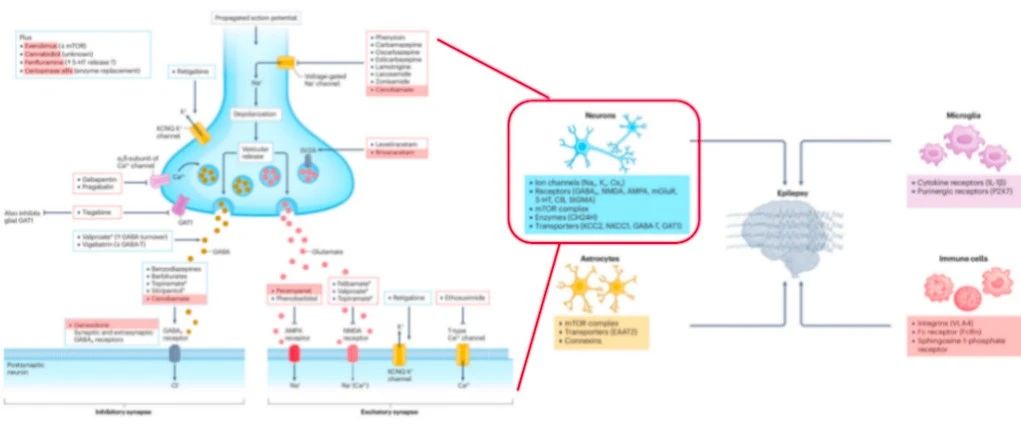
Core Viewpoint - The market perceives a saturated space for anti-epileptic drugs, but there exists a significant treatment gap in epilepsy, with 51.7 million people affected globally as of 2021, and current medications having limited efficacy and notable side effects. New drugs with promising clinical data may address this unmet need [1][3]. Group 1: Treatment Gap in Epilepsy - Approximately 9 million epilepsy patients in China face a treatment gap, with around 30% of patients unable to achieve effective seizure control despite monotherapy or polytherapy [1][3]. Group 2: New Drug Development - The pipeline for anti-epileptic drugs is expanding due to the discovery of new targets and technologies, with breakthroughs expected to fill the unmet market needs. Current anti-seizure medications (ASMs) have limited efficacy and significant side effects [3]. - Notable advancements in overseas clinical trials include Xenon's XEN1101, Longboard's Bexicaserin, and Stoke's Zorevunersen, while domestic progress includes Hainan Haiyao's new generation KCNQ potassium channel activator [3].