按摩沙发

Search documents
OSIM傲胜:不打价格战,高端市场“跟价格无关”
Guan Cha Zhe Wang· 2025-11-07 09:41
Core Insights - The article highlights the contrasting strategies of OSIM in the high-end massage chair market compared to emerging brands like Xiaomi, which focus on price competition and technology integration [1][3][4]. Market Overview - The Chinese massage chair market is projected to exceed $8.7 billion by 2025, with models priced below 3,000 yuan accounting for 58% of the market [3]. - OSIM's average product price is over 30,000 yuan, and it has experienced a 27% increase in sales in the first half of the year [3]. Consumer Behavior - OSIM targets middle-class families willing to invest in sleep quality, with 72% of its customers being female decision-makers aged 25-45 [7]. - A significant portion of the population in China suffers from sleep disorders, with over 300 million affected, indicating a strong demand for health-focused products [7]. Competitive Landscape - Emerging brands like Xiaomi and Huawei focus on low-cost, high-tech products, appealing to budget-conscious consumers in lower-tier cities [4][10]. - OSIM differentiates itself by emphasizing product quality and addressing specific health concerns rather than engaging in price wars [8][12]. Strategic Approach - OSIM operates 455 retail stores globally, with 271 in Greater China, focusing on providing immersive customer experiences rather than relying solely on online sales [10][12]. - The company has developed innovative products like the "invisible" massage chair based on extensive user data, contrasting with the rapid iteration seen in internet brands [13]. Financial Performance - High-end models contribute 70% of OSIM's revenue, while competitors like AUX derive 60% of their income from products priced below 3,000 yuan [13].


(活力中国调研行)开拓市场“新蓝海” 福建福安传统产业以“新”提质
Zhong Guo Xin Wen Wang· 2025-08-22 04:14
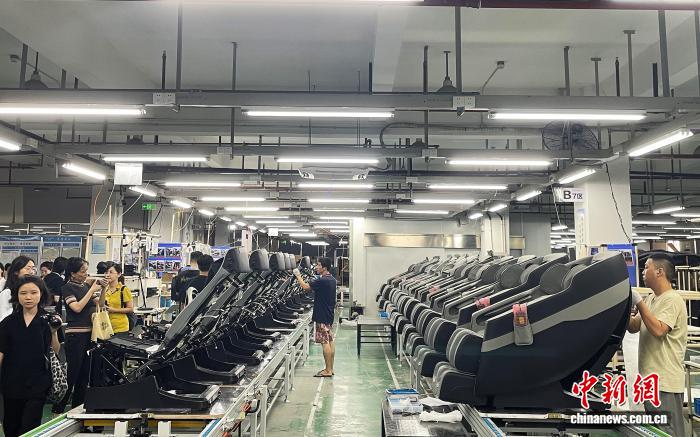
Core Viewpoint - The traditional massage equipment industry in Fuan is evolving through innovation, aiming to explore new market opportunities and enhance product offerings to meet diverse consumer needs [1][4]. Industry Overview - Fuan has 253 massage equipment production and supporting enterprises, with 38 of them being large-scale companies. The total industry chain output value is projected to reach approximately 22 billion yuan in 2024, with large-scale enterprises contributing 1.699 billion yuan [1]. - The industry has established a complete supply chain from raw material procurement to product sales, with 80% of raw materials sourced locally. Products are exported to over 50 countries and regions, including Europe, Australia, South America, the Middle East, and Southeast Asia [4][7]. Company Innovations - Fujian Glory Health Technology Co., Ltd. is focusing on customized products for the U.S. market, enhancing precision and comfort compared to traditional massage devices. The company produces over 50 types of products, with an annual output of 300,000 massage chairs, aiming for a revenue of 277 million yuan in 2024 [2][4]. - The company is shifting from product-oriented to customer-oriented strategies, responding to market diversity and targeting the mid-to-high-end market [2]. Market Trends - The rise of the silver economy and increasing health consumption demands are driving some manufacturers to develop "age-friendly" products, including traditional Chinese medicine smart health equipment and rehabilitation aids [2][4]. - The industry is witnessing a significant focus on developing products with health and wellness features, particularly for the elderly population, which is seen as a new economic opportunity [4][7]. Technological Advancements - Fuan's massage equipment industry has over 2,200 effective patents, covering key technologies such as smart sensing, human-computer interaction, and health data analysis, enabling a comprehensive system from technology research to market application [7]. - The local government is promoting the transformation of the massage equipment industry towards high-end, intelligent, and standardized development through the establishment of industrial parks and supportive policies [7].