
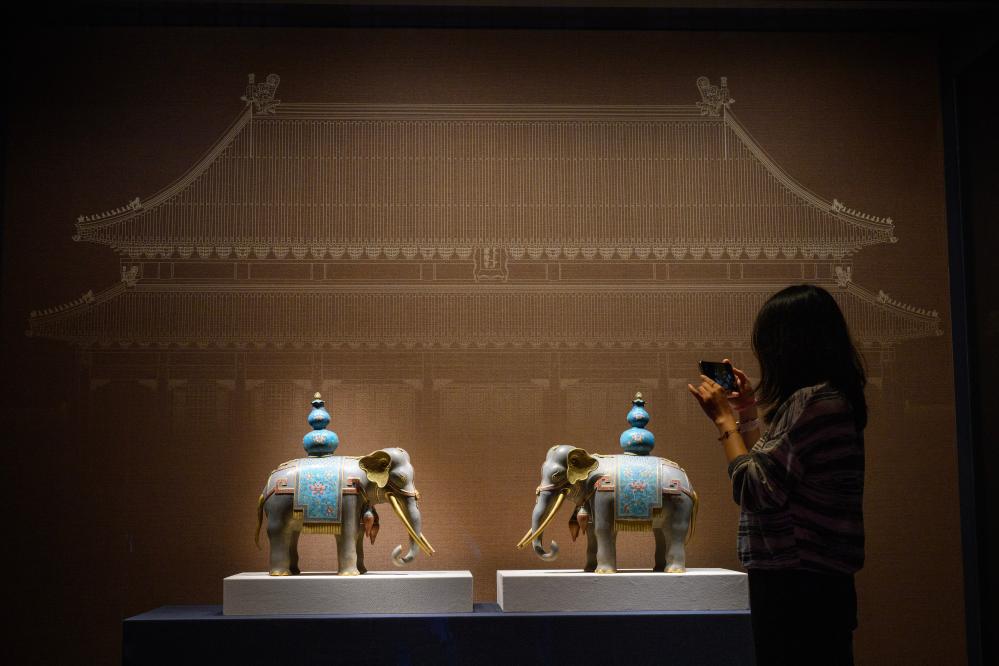
掐丝珐琅太平有象

Search documents
文化新观察|不止是打卡!从展览读懂故宫博物院百年新篇
Xin Hua She· 2025-11-25 18:41
Core Insights - The article highlights the significance of the Palace Museum's centenary exhibition, showcasing the evolution from the Forbidden City to a cultural institution, emphasizing the importance of cultural rights and public access to heritage [1][3][11] Group 1: Historical Significance - The Palace Museum's establishment marked a milestone in China's museum history, with the relocation of artifacts during the Japanese invasion being a remarkable event in global cultural preservation [3][11] - The museum's collection has grown from over 1.17 million items to more than 1.95 million since the founding of New China, reflecting the contributions of numerous donors [6][11] Group 2: Exhibitions and Artifacts - The "Guardianship of a Century" exhibition features over a hundred artifacts, including the "Cloisonné Enamel of Peace," which is one of the first items to receive an identification number [1][3] - The "Memorial Exhibition of the Relocation of Palace Museum Artifacts" illustrates the dramatic journey of nearly 20,000 boxes of artifacts during wartime, highlighting the resilience of cultural preservation efforts [3][6] Group 3: Cultural and Technical Preservation - The "Craftsmanship of the Garden of Ning Shou Palace" exhibition showcases the historical and cultural value of the garden, emphasizing the principles of minimal intervention in artifact restoration [7][11] - The "Archaeological Achievements of the Former Site of the Palace Workshop" exhibition reveals the continuous evolution of the Forbidden City from the Yuan to the Qing dynasties, providing new archaeological evidence of its architectural history [9][11]

百年传承 万千气象
Ren Min Ri Bao· 2025-10-11 21:53
Group 1: Historical Significance of Artifacts - The article highlights the historical importance of various artifacts in the Palace Museum, including the Qing Dynasty cloisonné enamel piece, which is among the first items to receive an identification number [2] - The museum's collection has been meticulously cataloged over the years, with the most recent comprehensive inventory completed in 2011, revealing a total of 1,807,558 items, including 1,684,490 precious artifacts [2] - The narrative of the artifacts' journey during the war, particularly the southward migration of cultural relics, reflects a significant period in Chinese history and the efforts to preserve cultural heritage [6] Group 2: Restoration and Preservation Efforts - The restoration of the "Dashing Sound" guqin is presented as a notable success story, showcasing the dedication to preserving ancient musical instruments and their cultural significance [10] - The article discusses the collaborative efforts in the restoration of artifacts, emphasizing the integration of traditional techniques with modern technology to ensure the longevity of the items [19][20] - The museum's commitment to not only restoring artifacts but also reviving traditional craftsmanship is highlighted, aiming to bring ancient art forms back into contemporary life [20] Group 3: Cultural Heritage and Public Engagement - The Palace Museum has evolved from a royal palace to a public museum, significantly increasing its accessibility to the general public since its establishment in 1925 [14] - The museum plays a crucial role in educating the public about Chinese history and culture, with ongoing efforts to enhance visitor experience and engagement through various initiatives [14][22] - The digitalization projects, such as the "Panoramic Palace" initiative, aim to provide virtual access to the museum's treasures, allowing a broader audience to appreciate its cultural heritage [22]
