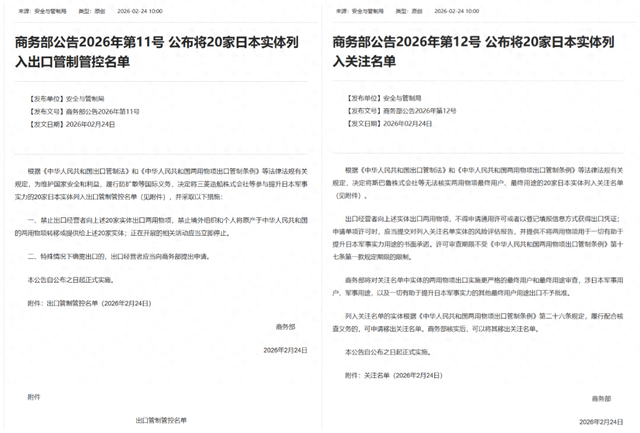
摩耶级宙斯盾驱逐舰

Search documents
被中国管制的日本实体什么来头
Xin Lang Cai Jing· 2026-02-26 06:16
Core Viewpoint - Japan is increasingly moving towards reviving militarism by developing offensive weapons, attempting to amend its pacifist constitution, and expanding the export of defense equipment, which has led to China imposing export controls on 20 Japanese entities involved in enhancing Japan's military capabilities [1]. Group 1: Key Companies Involved - Mitsubishi Heavy Industries is highlighted as Japan's largest defense contractor, with projected arms revenue of $5 billion in 2024, marking a 37% year-on-year increase, primarily from aircraft and missile system sales [1][2]. - Kawasaki Heavy Industries, ranked 55th in the 2025 Global Defense Industry Rankings, is a major defense contractor in Japan, covering various sectors including aviation, aerospace, and naval systems [6]. - IHI Corporation, involved in multiple defense sectors, is responsible for producing engines for Japan's active fighter jets and is a key player in the development of next-generation fighter projects [8][9]. Group 2: Military Developments and Projects - The Japanese Self-Defense Forces are deploying Type 12 anti-ship missiles near the southwestern islands close to Taiwan, with plans to upgrade to improved versions, all developed by Mitsubishi Heavy Industries [2]. - Japan's Ministry of Defense is developing a domestic hypersonic missile, with Mitsubishi Heavy Industries as the main contractor, set to be deployed by the fiscal year 2026 [2]. - The Japanese government is moving to expand the export of defense equipment, allowing the export of combat aircraft and warships, with Mitsubishi Heavy Industries being a key manufacturer of the "Maya" class Aegis destroyers [3]. Group 3: Export Control Measures - The Chinese Ministry of Commerce has placed Mitsubishi Heavy Industries and other related companies on an export control list due to their roles in enhancing Japan's military capabilities [1][4]. - Other companies on the export control list include NEC, which develops military radar and communication systems, and Fujitsu, which is involved in software and hardware development for the Self-Defense Forces [6][8]. - JAXA, Japan's national space agency, is also included in the export control list, reflecting its increasing involvement in military space development [11][12].

20家实体为日本的野心递刀子
Xin Lang Cai Jing· 2026-02-25 00:30
Core Viewpoint - The Chinese government has placed 20 Japanese entities, including Mitsubishi Heavy Industries, on an export control list due to their involvement in enhancing Japan's military capabilities, marking a significant response to Japan's military ambitions [1] Group 1: Entities Involved - Mitsubishi Heavy Industries is identified as Japan's largest military contractor, responsible for the delivery of advanced Aegis destroyers and the development of next-generation frigates [1] - Mitsubishi Aircraft Engine Corporation plays a crucial role in Japan's military aviation, being involved in the assembly of the US F-35 stealth fighter [1] - Kawasaki Heavy Industries and IHI Aerospace are also highlighted, with Kawasaki producing aircraft that possess significant reconnaissance and military deployment capabilities, while IHI is involved in hypersonic technology development [1] Group 2: Implications of the Export Control - The inclusion of these entities in the export control list signifies a direct response to Japan's military expansion and its reliance on Chinese materials for military production [1] - The actions of these companies, which profit from Chinese resources while simultaneously promoting military agendas against China, have crossed a critical line [1] - The involvement of academic institutions like the National Defense Medical College and JAXA in military-related research further underscores the depth of Japan's military ambitions [1]
关注+管制!商务部重拳出击,日本右翼彻底慌了
Xin Lang Cai Jing· 2026-02-24 13:11
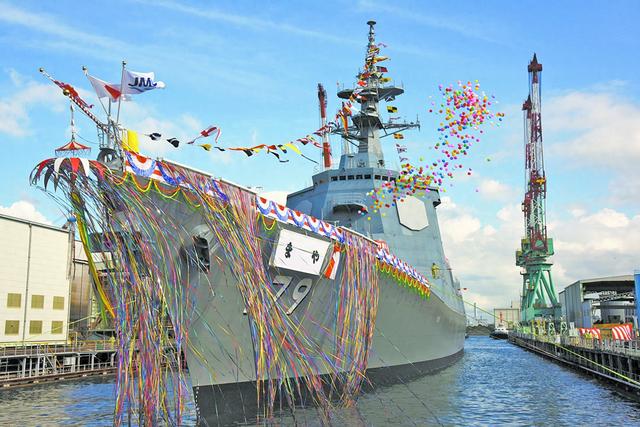
Group 1 - The Chinese government has placed 40 Japanese entities under export control, with 20 on a "control list" for enhancing Japan's military capabilities and threatening China's national security, and another 20 on a "watch list" due to serious military dual-use risks [1][2][3] - The announcement has caused significant concern within the Japanese government and media, indicating a strong response from China against Japan's military ambitions [3][4] - The entities on the control list are primarily key players in Japan's military-industrial complex, including major companies like Mitsubishi Heavy Industries, which is involved in the production of advanced naval vessels and military aircraft [5][7][9] Group 2 - Companies like Subaru, traditionally known for consumer vehicles, are revealed to be involved in military production, including vehicles for the Japanese Self-Defense Forces, highlighting the dual-use nature of their operations [12][14] - The entities on the watch list are described as "hidden" players in the military sector, with companies like ENEOS supplying critical fuels for military operations while disguising their activities as civilian [12][16] - The timing of these export controls is linked to Japan's increasing militarization under the current government, which has significantly raised defense budgets and ambitions for offensive military capabilities [18][19][21] Group 3 - The U.S. is seen as a catalyst for Japan's military resurgence, having relaxed restrictions on military technology transfers to Japan, which raises concerns about a potential return to militarism [22][23] - China's export controls are positioned as a necessary measure to protect national security, reflecting its growing confidence in its industrial capabilities and supply chain leverage [25][26] - The potential for further sanctions against Japan's military-industrial complex is indicated, should Japan continue its provocative actions against China [27][28]