擎天柱(特斯拉人形机器人)

Search documents
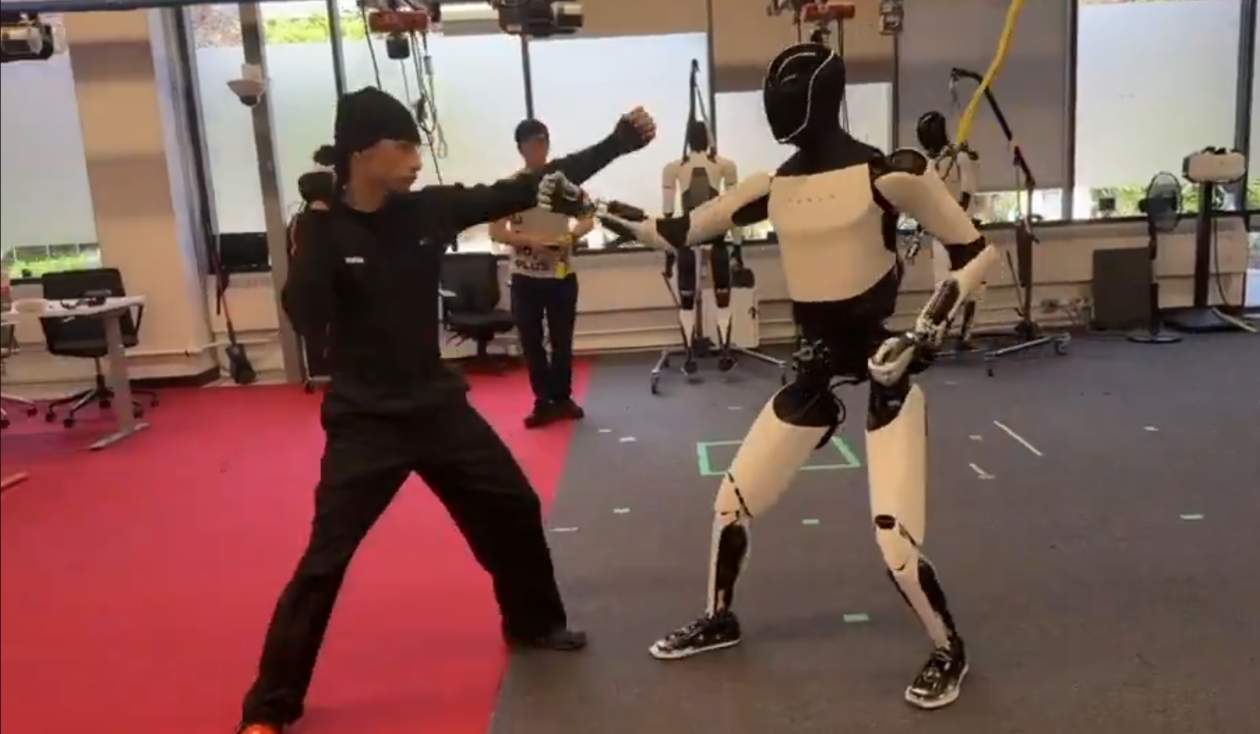
马斯克晒特斯拉人形机器人练功夫:对每个招式精准应对、逐招反击
Huan Qiu Wang· 2025-10-04 10:12
Core Viewpoint - Tesla's CEO Elon Musk shared a video on social media showcasing the company's humanoid robot, Optimus, learning martial arts, specifically Kung Fu, highlighting its advanced AI capabilities [4][6]. Group 1: Robot Development - The video demonstrates Optimus learning self-defense techniques and accurately responding to martial arts moves rather than merely mimicking them [6]. - Musk clarified in the comments that the robot is driven by AI, not remote control, indicating a significant advancement in autonomous capabilities [6]. Group 2: Public Reaction - The video garnered significant attention, with many viewers expressing excitement and admiration, with comments like "Wow, that's amazing" and "This is pretty cool" [6]. - However, some viewers questioned the robot's ability to master the intricacies of martial arts, suggesting that the finesse of martial arts may be beyond the current capabilities of AI robots [7].


车企进军人形机器人,只是表面热闹?
Xin Lang Cai Jing· 2025-05-21 11:06
Core Insights - The automotive industry is increasingly investing in humanoid robots, with 19 major car manufacturers entering this field, driven by advancements in AI and the need for automation [1][2][3] Group 1: Industry Trends - The first wave of interest in humanoid robots was sparked by Elon Musk's initiatives with Tesla and the acquisition of Boston Dynamics by Hyundai in 2021 [1][4] - The second wave, influenced by the rise of generative AI like ChatGPT, has seen traditional automakers become more proactive in developing humanoid robots through self-research, partnerships, and investments [2][3] Group 2: Company Strategies - Companies are categorized into three groups based on their motivations for developing humanoid robots: strategic considerations, real-world pressures, and narrative-driven approaches [3][4] - Notable examples include Tesla's self-developed Optimus robot, BYD's plans for a humanoid robot project, and Xiaomi's CyberOne, which aims to serve as a smart assistant [4][5][6] Group 3: Challenges and Opportunities - The automotive sector possesses inherent advantages in the humanoid robot supply chain and application scenarios, which boosts their confidence in developing these technologies [7][10] - However, challenges remain, particularly in achieving mass production and overcoming the limitations of humanoid robots in complex environments [10][11][12]