数字减影血管造影系统

Search documents
2025-2031年数字减影血管造影系统行业深度调研及投资前景可行性预测报告-中金企信发布
Sou Hu Cai Jing· 2025-09-10 06:45
Industry Overview - The digital subtraction angiography (DSA) system is an advanced medical imaging system that combines X-ray imaging and computer processing technology to clearly display vascular structures and diagnose vascular diseases. The global DSA market is projected to reach USD 7.974 billion by 2031, with a compound annual growth rate (CAGR) of 7.18% in the coming years [3]. Key Driving Factors - **Aging Population and Disease Burden**: The acceleration of aging in China and the rising incidence of cardiovascular diseases (such as coronary heart disease and stroke) are driving the demand for DSA in interventional surgeries. DSA applications are expanding from cardiology to neurosurgery and oncology, with neurosurgical procedures becoming the fastest-growing segment [5]. - **Policy Support for Domestic Substitution**: The Chinese government is encouraging the localization of high-end medical equipment through policies like the "Healthy China 2030" plan, which includes special funds and tax incentives. Domestic technology breakthroughs and cost optimization are leading to increased market share for local DSA devices [5]. - **Technological Integration and Smart Upgrades**: The integration of artificial intelligence (AI) and 3D reconstruction technology is enhancing diagnostic efficiency, enabling automatic vessel recognition and low-dose imaging, thus promoting the development of DSA towards precision and minimally invasive procedures [5]. - **Global Market Expansion**: Domestic companies are accelerating technology exports to emerging markets in Asia-Pacific and the Middle East through EU CE certification and international cooperation models [6]. Major Obstacles - **Dependence on Core Components**: High-end DSA devices rely on key components such as flat detectors and high-pressure generators. Although domestic companies have made progress in detectors, they still lag behind international giants in critical technologies [7]. - **Patent Barriers**: Domestic companies may encounter patent infringement lawsuits during R&D, and the uncertainty of technological innovation poses risks [8]. - **Rapid Product Updates by International Brands**: International brands release new products every 2-3 years, leading to potential obsolescence of domestic devices [8]. - **High Maintenance Costs**: The maintenance costs for DSA equipment are high, and domestic companies have insufficient service network coverage compared to international brands [8]. Industry Development Opportunities - **Government Support for Localization**: The National Health Commission's guidance on promoting the localization of high-end medical equipment includes funding and tax incentives for domestic technology R&D [9]. - **Expansion of DSA Equipment in County Hospitals**: The "Thousand County Project" aims for 90% of county-level hospitals to be equipped with DSA devices by 2027, with central government subsidies covering 30%-40% of procurement costs [9]. - **Accelerated Approval for Innovative Devices**: The introduction of special approval procedures for innovative medical devices with integrated AI functions is expected to shorten approval times by 30% [9]. - **Mandatory Radiation Safety Certification**: New regulations require reduced radiation doses, prompting upgrades to low-radiation technologies [9].


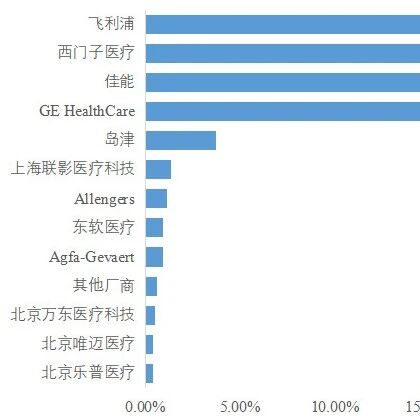
全球数字减影血管造影系统市场前10强生产商排名及市场占有率
QYResearch· 2025-09-01 09:42
Core Viewpoint - The digital subtraction angiography (DSA) system market is projected to reach $7.974 billion by 2031, with a compound annual growth rate (CAGR) of 7.18% in the coming years [1][4]. Market Overview - Major manufacturers of DSA systems globally include Philips, Siemens Healthineers, and Canon, with the top five companies holding approximately 92.90% of the market share [4]. - The primary product type is the floor-mounted C-arm system, which accounts for about 51.50% of the market [5]. - Cardiovascular diseases represent the largest demand source, capturing around 67.60% of the market [10]. Key Drivers - **Aging Population and Disease Burden**: The acceleration of aging in China and the rising incidence of cardiovascular diseases are driving the demand for DSA in interventional surgeries [14]. - **Policy Support**: The Chinese government is encouraging domestic production of high-end medical equipment through policies like the "Healthy China 2030" plan, which includes funding and tax incentives [14]. - **Technological Integration and Upgrades**: The integration of AI and 3D reconstruction technologies is enhancing diagnostic efficiency and promoting the development of DSA towards precision and minimally invasive procedures [14]. Challenges - **Dependence on Core Components**: High-end DSA equipment relies on advanced components, and while domestic companies have made progress, they still lag behind international giants in key technologies [16]. - **Patent Barriers**: Domestic companies face potential patent infringement issues during R&D, which can hinder innovation [16]. - **Service and Maintenance Costs**: High maintenance costs and insufficient service network coverage for domestic companies compared to international brands pose challenges [17]. Industry Opportunities - **Government Initiatives**: The National Health Commission's guidance on promoting domestic high-end medical equipment development is expected to support local companies [18]. - **Market Expansion in Rural Areas**: The "Thousand County Project" aims for 90% of county-level hospitals to be equipped with DSA devices by 2027, with financial support covering 30%-40% of procurement costs [18]. - **Regulatory Support for Innovation**: The introduction of expedited approval processes for DSA devices with integrated AI functionalities is likely to enhance market entry for innovative products [18].