
数字化管控平台

Search documents
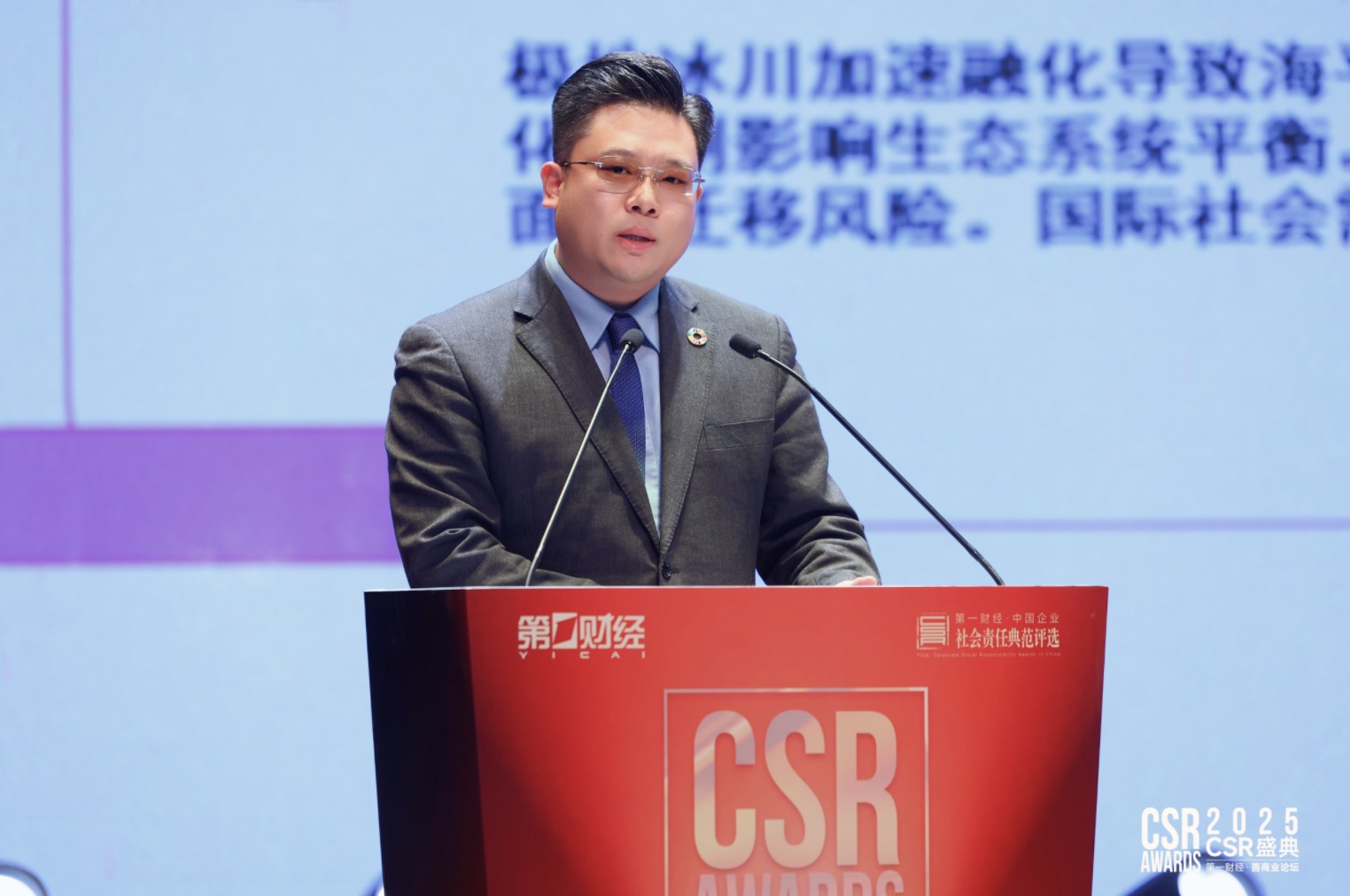
柳云虎:用“过去的经验”无法应对未来,可持续发展需全球破局
Di Yi Cai Jing· 2025-12-11 15:44
Core Insights - Sustainable management has evolved beyond traditional corporate social responsibility to become a core strategy for business survival and individual development in the context of harmonious coexistence with nature [1][3]. Group 1: Global Challenges and Trends - The current global sustainable development landscape faces severe challenges, including climate crises, resource depletion, and widening wealth gaps, necessitating a shift in management paradigms [3][4]. - Four major trends in global sustainable development have been identified: climate change driving policy-induced industrial restructuring, ESG investment becoming mainstream, the rise of new green markets, and the necessity for global technology sharing [3][4]. Group 2: Principles of Sustainable Management - Sustainable management is defined as actions that ensure long-term development without compromising future resources, focusing on environmental, social, and economic dimensions [4][5]. - The practice of sustainable management requires balancing the three dimensions, enhancing transparency and accountability, and fostering adaptive innovation rather than one-size-fits-all solutions [4][5]. Group 3: Pathways to Sustainable Development - The emphasis on environmental sustainability must take precedence, focusing on ecological protection, energy conservation, and circular economy practices [5][6]. - Social responsibility should prioritize a human-centered approach, ensuring employee welfare and community engagement while promoting fair trade to reduce poverty and inequality [5][6]. Group 4: Policy and Technological Opportunities - Policy frameworks such as the Paris Agreement and the UN Sustainable Development Goals are crucial for driving sustainable development, with China establishing comprehensive regulations in carbon reduction and green finance [6][7]. - The integration of digital and green technologies is enhancing monitoring capabilities, with numerous local governments in China implementing digital control platforms for environmental oversight [6][7]. Group 5: Supply Chain and Talent Development - The restructuring of supply chains is vital for achieving green transformation, requiring collaboration across the supply chain to meet sustainability goals [7][8]. - The strategic upgrade of talent is essential, with top Chinese universities increasingly focusing on interdisciplinary education to cultivate skills necessary for sustainable leadership and digital literacy [7][8]. Group 6: Key Trends in Corporate Sustainability - Ten key trends in corporate sustainability have been identified, including biodiversity protection, climate change response, ESG information disclosure, food security, and the application of artificial intelligence, which have remained stable focal points for two to three years [8][9].

迈向智能化 港口更“聪明”
Da Zhong Ri Bao· 2025-08-28 02:47
Core Insights - The article highlights the technological advancements and automation initiatives at Yantai Port, showcasing its transformation into a smart port with enhanced operational efficiency and customer service. Group 1: Automation and Efficiency - Yantai Port has implemented AGV (Automated Guided Vehicle) technology for vehicle handling, significantly increasing operational efficiency and alleviating driver shortages, with efficiency improvements measured in multiples [1] - The introduction of multi-thread radar on AGVs has improved vehicle retrieval efficiency by 5 seconds per vehicle, translating to nearly 2 additional hours of operational time daily [1] - The port's dry bulk terminal has adopted a fully automated system, resulting in a 21.9% increase in unloading efficiency and a 22.6% increase in loading efficiency [2] Group 2: Digital Transformation - The Yantai Port Supply Chain Comprehensive Service Platform allows customers to upload data via an app, increasing document processing efficiency by 300% and achieving a 98% online processing rate [3] - The platform has optimized inspection and customs release services, enhancing efficiency by 400% through direct data flow to the terminal for verification [3] - A partnership with Huawei has led to the development of a leading digital management platform, facilitating data assetization and operational digitization [3] Group 3: Innovation and Recognition - In 2024, Yantai Port received 144 patents, a 20-fold increase compared to five years ago, and has achieved significant recognition with 52 provincial-level honors, a more than fivefold increase since 2019 [4] - The port has established six provincial-level research innovation platforms, marking a breakthrough in provincial-level scientific research capabilities [4]