智慧港口

Search documents
秦港股份(03369) - 海外监管公告
2026-03-27 12:41
香港交易及結算所有限公司及香港聯合交易所有限公司對本公告的內容概不負責,對其準確性 或完整性亦不發表任何聲明,並明確表示,概不對因本公告全部或任何部份內容而産生或因倚 賴該等內容而引致的任何損失承擔任何責任。 海外監管公告 本公告乃由秦皇島港股份有限公司(「本公司」)根據香港聯合交易所有限公司證券上市規則第 13.10B 條作出。 以下為本公司於上海證券交易所網站刊發之《秦皇島港股份有限公司 2025 年年度報告摘要》《秦 皇島港股份有限公司 2025 年年度報告》《秦皇島港股份有限公司 2025 年度審計報告》,僅供參 閱。 承董事會命 秦皇島港股份有限公司 董事長 張志輝 中華人民共和國,河北省秦皇島市 2026 年 3 月 27 日 於本公告日期,本公司執行董事爲張志輝先生、聶玉中先生、丁曉平先生及高峰先生;非執行 董事爲劉巳莽先生、肖湘女士及劉文鵬先生;獨立非執行董事爲趙金廣先生、朱清香女士、劉 力先生及周慶先生;及職工董事為李玉峰先生。 * 僅供識別 秦皇岛港股份有限公司2025 年年度报告摘要 公司代码:A 股:601326 公司简称:秦港股份 (於中華人民共和國註册成立的股份有限公司) (股份代 ...
“码”力全开 港口上市公司策马扬鞭启新局
Shang Hai Zheng Quan Bao· 2026-02-26 17:59
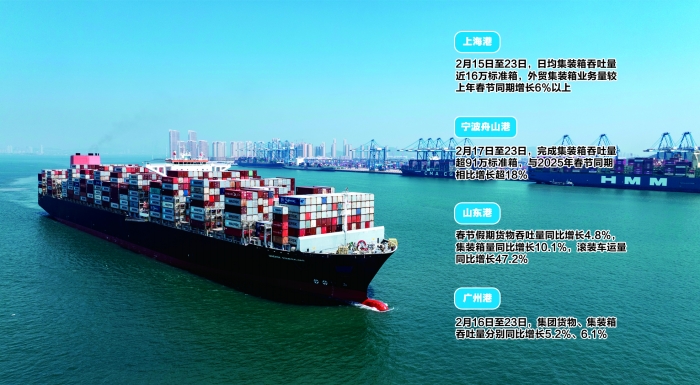
Core Insights - The article highlights the robust performance of China's port industry during the Spring Festival holiday, showcasing the effective operation of logistics services that ensure the stability of supply chains [3][4][5]. Group 1: Port Performance - During the Spring Festival, Ningbo-Zhoushan Port achieved a container throughput of over 910,000 TEUs, marking an increase of over 18% compared to the same period in 2025 [3]. - Shanghai Port reported a daily average container throughput of nearly 160,000 TEUs, with a growth of over 6% in foreign trade container business compared to the previous year [3]. - Shandong Port experienced a year-on-year increase of 4.8% in cargo throughput and a 10.1% rise in container volume during the holiday [4]. - Guangzhou Port recorded a 5.2% increase in cargo throughput and a 6.1% rise in container throughput from February 16 to 23 [5]. Group 2: Technological Advancements - The implementation of smart port technologies has significantly enhanced operational efficiency, with companies utilizing intelligent scheduling and control systems to manage high volumes of incoming vessels [5][6]. - The "Zhi Fei" vessel, China's first commercially operated intelligent navigation container ship, successfully docked at Qingdao Port's automated terminal, showcasing the full-process automation in container ship operations [6]. - In Chongqing's Guoyuan Port, the deployment of AI and unmanned driving technology is being utilized for efficient container transport, with plans to expand the fleet of unmanned vehicles in Guangzhou Port [6]. Group 3: Strategic Development - Experts suggest that ports should focus on intelligent development and competitive positioning, aiming to enhance the value of cargo transport and align with local economic trends [7]. - There is a call for the integration of regional and global port networks, leveraging capital and multimodal transport to improve the overall transportation system [7].

节日能源供应“不断线”
Ren Min Wang· 2026-02-26 05:55
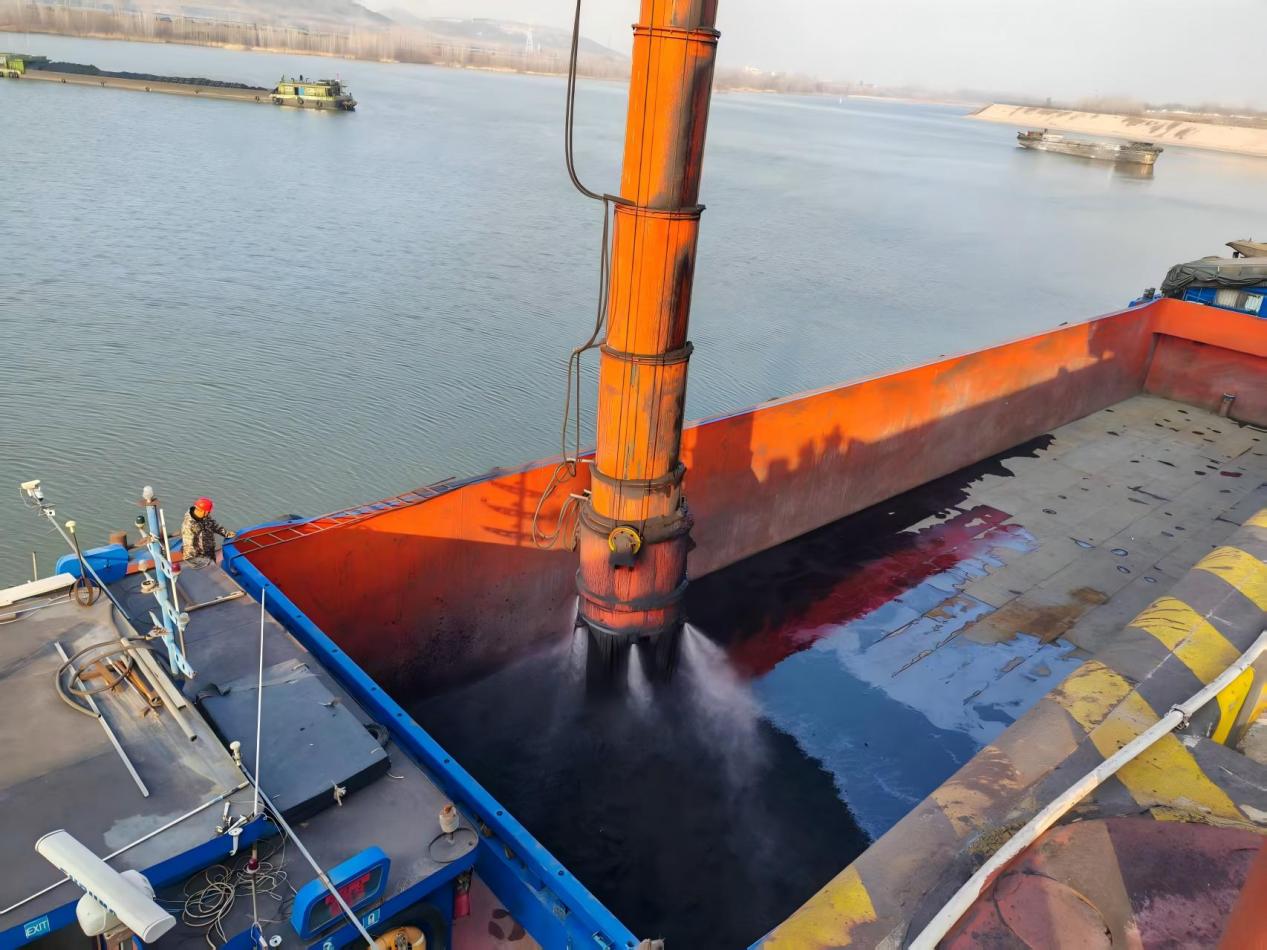
Core Insights - The article highlights the efficient and automated operations at the Yanzhou Coal Mining Group's Dongping Lu Port, showcasing its advanced technology and logistics capabilities during the Spring Festival period [1][6]. Group 1: Operational Efficiency - The Dongping Lu Port utilizes automated loading equipment, allowing for a single ship loading capacity of approximately 2,000 tons to be completed in just one hour, ensuring timely delivery to the Jiujiang Power Plant [3][6]. - The port plans to handle around 70,000 tons of coal during the Spring Festival holiday, with a monthly stable shipment of over 20,000 tons to support downstream power generation [3][6]. Group 2: Logistics and Transportation - The port has optimized its multi-modal transportation system, focusing on the urgent needs for electricity and coal during the Spring Festival, with a dual transport plan for efficient coal distribution [6][7]. - The port's daily maximum loading capacity can exceed 40,000 tons during peak periods, demonstrating its robust operational capabilities [6][7]. Group 3: Technological Advancements - The port's static coal storage capacity has been enhanced to 2 million tons, and key equipment operates without human supervision, increasing production efficiency by 60% and reducing labor by 300 workers compared to similar ports [7]. - The implementation of a real-time matching mechanism for vehicles, ships, and cargo has halved waiting times for vessels, while the new "direct loading" model has reduced coal turnover cycles to under 48 hours [7]. Group 4: Environmental Initiatives - The port has achieved a green energy usage rate of 45%, resulting in a carbon reduction of 5,000 tons annually, and has been recognized as a "provincial zero-carbon park" candidate [7].
春节假期后首个工作日掠影
Ren Min Ri Bao· 2026-02-25 05:38
Group 1: Development Speed - The Jianghuai Automobile Group's Zunji Super Factory in Anhui has resumed operations with over 1,800 robots working together, processing 300,000 production line data points per second [2] - The factory's production capacity has recovered to over 90% of its pre-holiday peak level [2] - In Tanghe County, Henan, agricultural machinery such as tractors and drones are actively engaged in spring farming, with plans to allocate 20 million yuan for agricultural support [4] Group 2: Open Economy - The Hainan Free Trade Port is showing significant vitality post-closure, with the Yangpu International Container Terminal improving its efficiency, reducing the average container waiting time from 7 hours to 18 minutes [7][8] - During the Spring Festival, Yangpu Port handled 89,000 standard containers [8] - The Zhejiang Free Trade Zone is enhancing its capacity for bulk commodity resource allocation, with Zhoushan completing 172 ship fuel supply operations during the holiday, totaling 154,800 tons [12] Group 3: Governance Precision - In Shenyang, Liaoning, the administrative service center processed 511 cases in one day, achieving a 99.2% on-the-spot completion rate [14] - The center has opened all 32 service windows and added 4 "tide windows" to reduce waiting times for citizens [14] Group 4: Poverty Alleviation and Environmental Protection - In Ningxia, efforts to consolidate poverty alleviation results are ongoing, with 800 village cadres actively engaging with impoverished households [15][16] - The Dawa Mountain National Nature Reserve has implemented a smart management system with 180 infrared cameras and 32 drones for better environmental protection [17]
港口“智能管家”,让码头“更聪明”
Xin Hua She· 2026-02-25 01:28
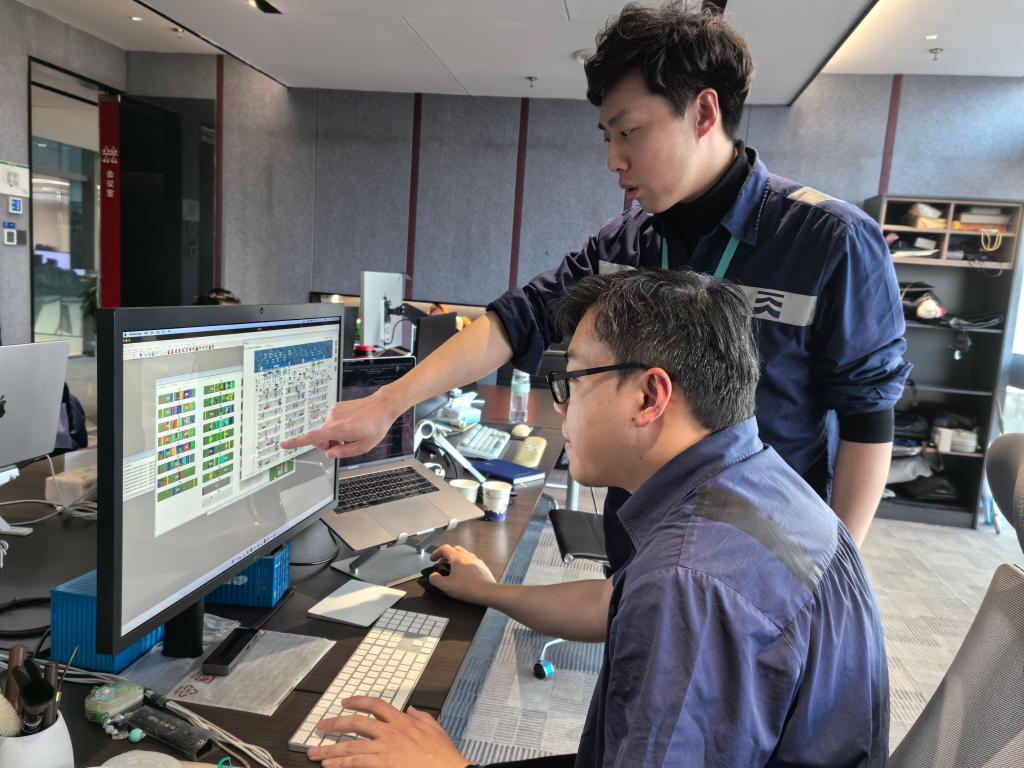
Core Insights - The article highlights the advancements in automation and smart technology at Tianjin Port, particularly focusing on the implementation of an intelligent yard management system that enhances operational efficiency and productivity. Group 1: Automation and Technology Implementation - Tianjin Port has recently launched an intelligent yard management system that utilizes "digital employees" for autonomous scheduling and collaborative operations [1] - The yard can accommodate over 50,000 containers, and the new system aims to maximize transportation efficiency by scientifically classifying and arranging containers [1] - The port's cargo throughput consistently ranks among the top ten globally, with a target of exceeding 24 million TEUs by 2025 and expanding to 150 shipping routes [1] Group 2: Operational Efficiency Improvements - The implementation of the intelligent control system has undergone 12 iterations and has completed nearly 230,000 real-machine tests, officially launching in January [2] - The utilization rate of the yard cranes has increased by 12.3%, peak pressure on yard capacity has decreased by 7.1%, energy consumption of equipment has dropped by 4.3%, and the average cycle time for ART operations has been reduced by 6.7% [2] - The automation of crane operations has shifted the decision-making process to the system, allowing human operators to save time and focus on other tasks [2] Group 3: Future Goals and Challenges - The team is currently addressing congestion issues with the ART vehicles, which utilize L4-level autonomous driving technology, aiming to enhance overall system efficiency rather than just speed [3] - Continuous improvement and innovation are essential for establishing Tianjin Port as a world-class smart and green port [3] - The port is committed to leveraging digital and intelligent technologies to achieve its goal of becoming a leading global smart port [3]
港口“智能管家”,让码头“更聪明”|2026新春走基层
Xin Hua Wang· 2026-02-25 01:20
Core Insights - The article highlights the advancements in automation and digitalization at Tianjin Port's second container terminal, emphasizing the implementation of an intelligent yard management system to enhance operational efficiency [1][4]. Group 1: Automation and Technology Implementation - The terminal has recently launched an intelligent yard management system, referred to as "digital employees," which aids in autonomous scheduling and collaborative operations of quay cranes [1][4]. - The yard can accommodate over 50,000 containers, and the operations involve the handling of thousands of containers per voyage, necessitating scientific classification and arrangement to maximize transportation efficiency [3][4]. - The terminal aims to increase its container throughput to over 24 million TEUs by 2025, with the number of shipping routes expanding to 150, thereby raising the demand for operational efficiency [3][4]. Group 2: Performance Improvements - The implementation of new technologies has led to a 12.3% increase in quay crane utilization, a 7.1% reduction in peak yard capacity pressure, a 4.3% decrease in equipment energy consumption, and a 6.7% reduction in average cycle time for Automated Rail Transport (ART) [4][5]. - The intelligent control system underwent 12 iterations and completed nearly 230,000 real-machine tests before its official launch in January [4]. Group 3: Future Developments and Goals - The team is currently focused on addressing congestion issues related to ART, utilizing L4-level autonomous driving technology to enhance overall system transportation efficiency [4][5]. - The company aims to continuously improve loading and unloading efficiency while reducing repetitive manual labor, striving to establish a new benchmark for safety, intelligence, and efficiency in port operations [5].
(新春走基层)“机器人家族”值守青岛港 护航“中国年”物流动脉
Zhong Guo Xin Wen Wang· 2026-02-19 07:29
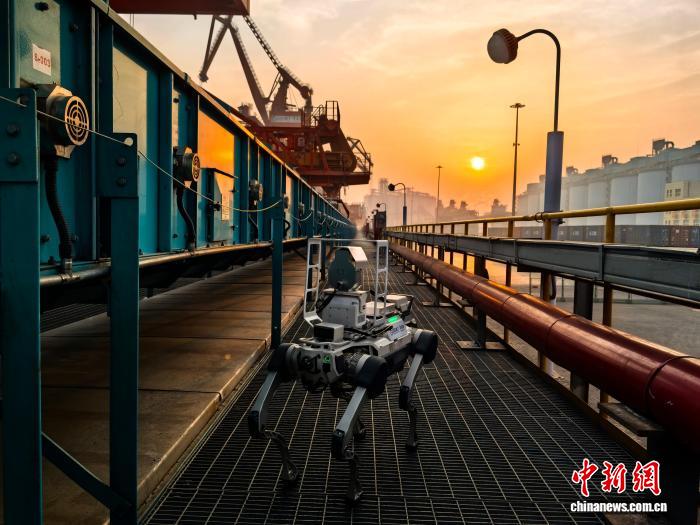
Core Viewpoint - The article highlights the significant role of intelligent robots at Qingdao Port during the Spring Festival, showcasing their contribution to ensuring the smooth operation of the logistics supply chain and enhancing operational efficiency in the port industry [1][3]. Group 1: Robot Applications - At Qingdao Port, a family of nearly 20 types of intelligent robots is deployed to assist in various operational scenarios, ensuring the safety and efficiency of the supply chain during the holiday season [1][4]. - The grain process inspection robot operates autonomously, performing inspections that previously required manual labor, significantly reducing the physical strain on workers and enhancing safety [3][4]. Group 2: Efficiency and Performance - The grain process inspection robot has an accuracy rate of over 98% for fault warnings and improves inspection efficiency by more than three times compared to traditional manual methods [3]. - The intelligent robots are capable of performing tasks such as high-voltage shore power connection and safety inspections in hazardous areas, demonstrating their versatility and effectiveness in enhancing port operations [4]. Group 3: Industry Transformation - The widespread use of intelligent robots at Qingdao Port represents a profound transformation in productivity, shifting the industry from labor-intensive methods to technology-driven operations [4]. - Qingdao Port is recognized as a national pilot base for artificial intelligence applications in the transportation sector, facilitating the integration of industry resources and fostering innovation in technology and production [4].

京唐港区实现首月“开门红”
Xin Lang Cai Jing· 2026-02-16 01:30
Core Insights - In January, Tangshan Port's Jing-Tang Port Area achieved a throughput of 27.597 million tons, marking a year-on-year increase of 5.9%, indicating a strong start to the year [1] - Coal transportation saw a robust growth, reaching 7.43 million tons, up 8.6% year-on-year, while steel transportation also experienced significant growth [1] - The company is focusing on market development, quality improvement, and safety management to enhance operational efficiency and drive growth [1] Group 1: Operational Efficiency - The implementation of refined management practices has significantly boosted operational efficiency, with specialized berth operation efficiency increasing by 3% and mineral construction material operation efficiency rising by 17.4% year-on-year [2] - The company is enhancing service levels through strategic marketing and collaboration with core customers, leading to the successful onboarding of new clients in January [2] Group 2: Equipment and Infrastructure - The upgrade of equipment, including the addition of three new 25-ton gantry cranes, is expected to enhance both throughput and safety in operations, with a projected annual capacity of 3.5 million tons for the new berth [3] - The new cranes are equipped with advanced intelligent control systems and safety features, ensuring efficient handling of various cargo types [3]

铸就蓝色引擎,广东6个亿吨级大港撑起“一核两极”格局
Nan Fang Du Shi Bao· 2026-02-11 09:24
Core Insights - Guangdong's port construction is transforming from rapid development to quality enhancement during the 14th Five-Year Plan, aiming for a cargo throughput of 2.325 billion tons and a container throughput of 80.97 million TEUs by 2025, ranking third and first nationally respectively [1][2] - The province is investing nearly 100 billion yuan in water transport infrastructure, a 63% increase from the previous five-year plan, to support the development of a world-class port cluster [2] - The integration of port, industry, and city is driving economic growth, with significant increases in container throughput for major ports like Guangzhou and Shenzhen, which are expected to reach 28.05 million TEUs and 35.41 million TEUs respectively by 2025 [4][5] Infrastructure Development - Guangdong's port infrastructure has seen a leap in development, with the completion of automated terminals and deep-water channel projects, enhancing operational efficiency and capacity [2][3] - By 2025, the province will have 2,111 productive berths, with 429 being 10,000 tons or more, supporting the "one core, two poles" development pattern [3] Transportation Network - The province has established a multi-dimensional transportation network centered around ports, with 9 out of 14 coastal ports achieving rail access, and a significant increase in intermodal transport volumes [3] - The coastal highway network connects all ports and major port areas, facilitating logistics and trade [3] Economic Impact - The ports are crucial for economic development, with Guangzhou and Shenzhen ports enhancing their roles in international trade and logistics, contributing to local economic growth [4][5] - The integration of port operations with local industries is creating a closed-loop ecosystem that improves efficiency and competitiveness in exports [5] Smart and Green Port Initiatives - Guangdong is advancing smart and green port construction, with initiatives like the first mobile shore power supply system and extensive use of automation and AI technologies [6] - By 2025, the province aims to have 1,294 shore power facilities covering 94% of berths, significantly reducing fuel consumption and carbon emissions [6] Pollution Management - The province has implemented comprehensive measures for managing ship pollution, achieving full coverage of storage facilities and improving waste management processes [7] Innovative Logistics Models - The "combination port" and "parallel port" models are being developed to enhance operational efficiency and streamline customs processes, with significant increases in container volumes handled [8][9] - These models are expected to improve loading rates and reduce operational costs significantly [9]

首批混行IGV试跑!这个码头按下智慧港口加速键!
Xin Lang Cai Jing· 2026-02-10 12:41
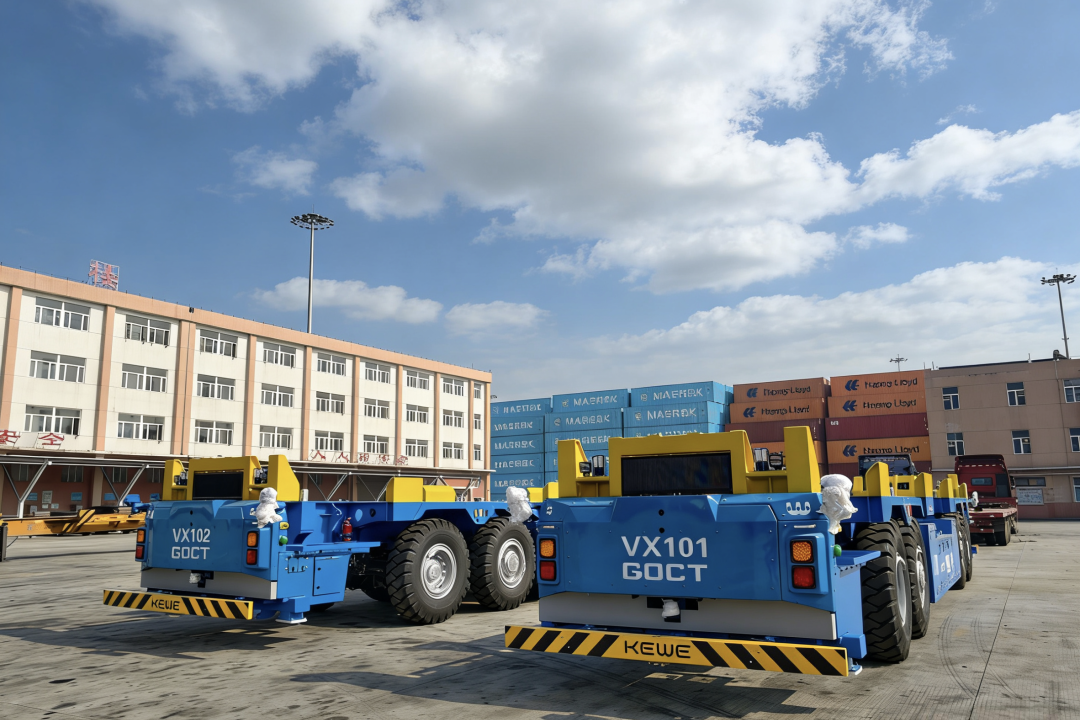
Core Viewpoint - The Nansha Phase II project has successfully implemented autonomous driving technology in container transportation, marking a significant step towards smart and unmanned operations in the port industry [1][5]. Group 1: Autonomous Vehicle Implementation - Two autonomous guided vehicles (IGVs), VX101 and VX102, have been deployed in the Nansha Phase II project, demonstrating the ability to navigate container yards autonomously and safely alongside traditional manned vehicles [1][5]. - The IGVs operate in an open environment, overcoming the limitations of traditional closed operations, allowing for mixed operations with manned vehicles in complex port traffic [3][7]. Group 2: Technological Innovations - The project utilizes a "vehicle-road-cloud" integrated architecture, incorporating 5G networks, Beidou high-precision positioning, AI vision, and multi-modal perception for real-time monitoring and dynamic scheduling in high-risk scenarios [3][7]. - The first batch of IGVs features advanced four-axis, eight-wheel dual-drive design, enabling flexible movement and significantly reducing turning radius, addressing the challenges of maneuvering heavy vehicles in narrow port spaces [3][7]. Group 3: Safety and Efficiency Features - The IGVs are equipped with multiple safety systems, including electronic collision avoidance laser radar and mechanical collision protection devices, enhancing operational safety [3][7]. - The vehicles employ four "smart engines" for enhanced functionality: high-precision environmental perception, global scheduling and path planning, human-machine collaborative operation systems, and a zero-carbon energy system [4][8]. Group 4: Environmental Impact and Sustainability - The IGVs are powered by a pure electric drive platform with an efficient energy recovery system, significantly reducing energy consumption; it is estimated that each vehicle can reduce carbon emissions by approximately 55 tons annually when fully utilizing green electricity [9]. - The Nansha Phase II project aligns with national "dual carbon" strategies, focusing on the smart transformation of traditional ports and integrating digital technology with green development [9].