
数字孪生工程

Search documents
李国英大年初一看望慰问坚守一线的水利干部职工并检查水利安全风险防控工作
Shui Li Bu Wang Zhan· 2026-02-17 15:36
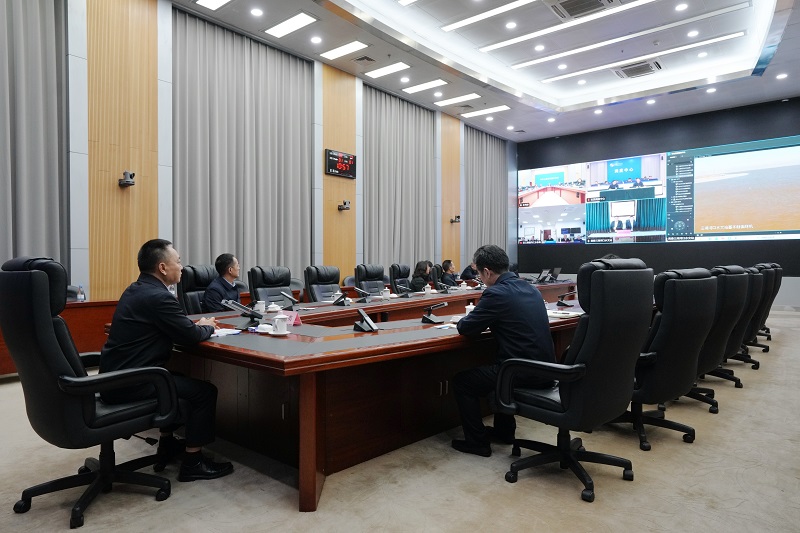
Group 1 - The core message emphasizes the importance of water safety and disaster prevention, particularly during the Spring Festival, highlighting the need for vigilance and effective management in water resources [2][3]. - The Minister of Water Resources, Li Guoying, conducted inspections and expressed gratitude to frontline water management staff for their dedication during the holiday period, reinforcing the commitment to ensuring public safety and water supply security [2][3][5]. - Li Guoying stressed the significance of utilizing advanced technologies, such as digital twin technology, for monitoring and managing water conditions, ice situations, and engineering operations to enhance safety measures [3][4]. Group 2 - The Minister highlighted the critical phase of ice prevention in the Yellow River, urging a proactive approach to risk management and the implementation of comprehensive safety protocols [3][6]. - There is a focus on the construction quality of the Guxian Water Conservancy Project, aiming to set a new benchmark for water conservancy projects in the Yellow River basin [3][6]. - The 12314 supervision and reporting service platform was underscored as a vital communication channel for addressing public concerns and ensuring efficient service delivery in water management [3][5].

系统谋划推进数字孪生水利体系建设
Ren Min Ri Bao· 2025-12-25 22:27
Core Viewpoint - The construction of a digital twin water conservancy system is essential for enhancing water safety and quality development in China, driven by the need to address increasing risks in water security and leverage advancements in technology [1][2]. Group 1: Digital Twin Water Conservancy System - The digital twin water conservancy system integrates physical water objects, spatial-temporal data, mathematical models, and water management knowledge to create a comprehensive system that allows for real-time interaction and optimization [2]. - This system consists of three components: digital twin basins, digital twin water networks, and digital twin projects, each focusing on different aspects of water management while ensuring connectivity and information sharing [2]. Group 2: Implementation Principles - The construction of the digital twin water conservancy system should follow principles of demand-driven application, intelligence empowerment, and capability enhancement, focusing on practical needs in flood prevention, water resource management, and rural water supply [3]. Group 3: Monitoring and Data Collection - A comprehensive "sky-ground-water-engine" integrated monitoring system is necessary to ensure precise, synchronous, and timely data collection from all water management objects [4]. - The system aims for full coverage of all water management entities, ensuring continuous and accurate data acquisition regardless of environmental conditions [4]. Group 4: Data Sharing and Standards - There is a need to revise monitoring standards to meet the requirements of the digital twin water conservancy system, ensuring high-frequency and online operation of data collection [5]. - Strengthening data sharing across regions and departments is crucial for effective management and utilization of water-related data [5]. Group 5: Technological Advancements - Accelerating the development and application of monitoring technologies, including satellite remote sensing and new equipment like drones and underwater robots, is vital for real-time monitoring of water-related parameters [6]. Group 6: Mathematical Modeling - High-fidelity mathematical models are critical for accurately mapping physical processes and enabling predictive capabilities within the digital twin water conservancy system [7]. - The focus should be on developing hybrid models that integrate mechanistic and statistical approaches to enhance predictive accuracy [8]. Group 7: Continuous Improvement - The digital twin water conservancy system must evolve through practical application and real-time upgrades to meet the changing demands of water governance and management [8].