数字孪生流域

Search documents
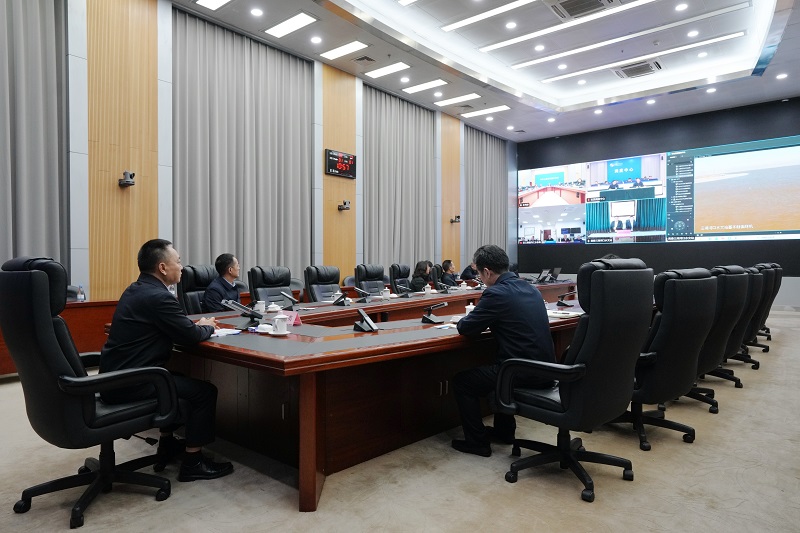
李国英大年初一看望慰问坚守一线的水利干部职工并检查水利安全风险防控工作
Shui Li Bu Wang Zhan· 2026-02-17 15:36
Group 1 - The core message emphasizes the importance of water safety and disaster prevention, particularly during the Spring Festival, highlighting the need for vigilance and effective management in water resources [2][3]. - The Minister of Water Resources, Li Guoying, conducted inspections and expressed gratitude to frontline water management staff for their dedication during the holiday period, reinforcing the commitment to ensuring public safety and water supply security [2][3][5]. - Li Guoying stressed the significance of utilizing advanced technologies, such as digital twin technology, for monitoring and managing water conditions, ice situations, and engineering operations to enhance safety measures [3][4]. Group 2 - The Minister highlighted the critical phase of ice prevention in the Yellow River, urging a proactive approach to risk management and the implementation of comprehensive safety protocols [3][6]. - There is a focus on the construction quality of the Guxian Water Conservancy Project, aiming to set a new benchmark for water conservancy projects in the Yellow River basin [3][6]. - The 12314 supervision and reporting service platform was underscored as a vital communication channel for addressing public concerns and ensuring efficient service delivery in water management [3][5].

从“抢救文物”到“激活生命”:北京如何重新定义“一河一长城”的保护?
Zhong Guo Huan Jing Bao· 2026-01-19 01:56
Core Viewpoint - The implementation of the "Beijing Yongding River Protection Regulations" and the "Beijing Great Wall Protection Regulations" marks a legislative response to complex urban governance issues in Beijing, focusing on the protection of both natural and cultural heritage [1] Group 1: Systematic Governance - The introduction of these regulations indicates a shift in Beijing's urban governance from "fragmented management" to "systematic co-governance," integrating various elements such as water resources, ecological restoration, and cultural heritage [2] - The Yongding River Protection Regulations establish a comprehensive governance framework for the entire river basin, emphasizing unified planning, management, and coordination [2] Group 2: Cultural Heritage Protection - The Great Wall Protection Regulations adopt a "big protection" philosophy, expanding the protection scope beyond the wall itself to include the surrounding natural and cultural landscapes [3] - Both regulations aim to transition from reactive to proactive protection methods, emphasizing the importance of maintaining the cultural and ecological networks associated with these heritage sites [3][4] Group 3: Cultural Transmission - The regulations focus not only on preserving physical entities but also on activating and transmitting the cultural heritage associated with the Yongding River and the Great Wall [4] - The Yongding River Protection Regulations specifically include provisions for cultural protection and transmission, encouraging the integration of historical resources with modern development [4] Group 4: Technological Integration - Both regulations highlight the role of technology in enhancing the modern management of heritage protection, with the Yongding River initiative aiming to create a "digital twin" of the river using advanced technologies [6] - The Great Wall Protection employs an integrated monitoring network to create a digital archive for the wall, facilitating preventive measures and immersive public experiences [6][7] Group 5: Sustainable Development - The regulations advocate for a harmonious coexistence of nature and culture, aiming for sustainable utilization and minimal intervention in the protection of ecological and cultural resources [5][7]
系统谋划推进数字孪生水利体系建设
Ren Min Ri Bao· 2025-12-25 22:27
Core Viewpoint - The construction of a digital twin water conservancy system is essential for enhancing water safety and quality development in China, driven by the need to address increasing risks in water security and leverage advancements in technology [1][2]. Group 1: Digital Twin Water Conservancy System - The digital twin water conservancy system integrates physical water objects, spatial-temporal data, mathematical models, and water management knowledge to create a comprehensive system that allows for real-time interaction and optimization [2]. - This system consists of three components: digital twin basins, digital twin water networks, and digital twin projects, each focusing on different aspects of water management while ensuring connectivity and information sharing [2]. Group 2: Implementation Principles - The construction of the digital twin water conservancy system should follow principles of demand-driven application, intelligence empowerment, and capability enhancement, focusing on practical needs in flood prevention, water resource management, and rural water supply [3]. Group 3: Monitoring and Data Collection - A comprehensive "sky-ground-water-engine" integrated monitoring system is necessary to ensure precise, synchronous, and timely data collection from all water management objects [4]. - The system aims for full coverage of all water management entities, ensuring continuous and accurate data acquisition regardless of environmental conditions [4]. Group 4: Data Sharing and Standards - There is a need to revise monitoring standards to meet the requirements of the digital twin water conservancy system, ensuring high-frequency and online operation of data collection [5]. - Strengthening data sharing across regions and departments is crucial for effective management and utilization of water-related data [5]. Group 5: Technological Advancements - Accelerating the development and application of monitoring technologies, including satellite remote sensing and new equipment like drones and underwater robots, is vital for real-time monitoring of water-related parameters [6]. Group 6: Mathematical Modeling - High-fidelity mathematical models are critical for accurately mapping physical processes and enabling predictive capabilities within the digital twin water conservancy system [7]. - The focus should be on developing hybrid models that integrate mechanistic and statistical approaches to enhance predictive accuracy [8]. Group 7: Continuous Improvement - The digital twin water conservancy system must evolve through practical application and real-time upgrades to meet the changing demands of water governance and management [8].
人民网:为何要将水利工程“搬进”数字世界?
Shui Li Bu Wang Zhan· 2025-12-22 01:08
Core Insights - The digital twin water conservancy system integrates big data, cloud computing, and artificial intelligence with water conservancy operations to create intelligent simulations and management for water resource allocation and disaster prevention [1][2] Group 1: Digital Twin Water System Components - The digital twin water conservancy system consists of three components: digital twin river basins, digital twin water networks, and digital twin water conservancy projects, each with distinct focuses but interconnected for information sharing [1][2] Group 2: Digital Twin River Basin - The digital twin river basin aims for unified planning, governance, scheduling, and management to enhance flood and drought disaster prevention, optimize water resource allocation, and protect water ecology, achieving a "Pareto optimal" management of multiple factors and objectives [1] - For instance, the Pearl River Commission utilized the digital twin of the Pearl River to strengthen unified governance, successfully managing 25 heavy rain events and 7 typhoon defenses during the flood season [1] Group 3: Digital Twin Water Network - The digital twin water network supports the construction of a comprehensive, safe, efficient, and green water network, enabling real-time information exchange between physical and digital water networks [2] - An example includes the South-to-North Water Diversion Project, which improved traditional scheduling methods, allowing for the generation of over a hundred gate scheduling command sequences with a single click [2] Group 4: Digital Twin Water Conservancy Projects - The digital twin water conservancy projects focus on ensuring the safety and efficiency of water conservancy infrastructure throughout its lifecycle, providing real-time analysis and risk identification [2] - For example, the Xiaolangdi project uses digital twin technology to monitor dam conditions and predict water level changes, significantly enhancing scheduling efficiency and decision-making accuracy [2]

我国数字孪生水利体系框架基本形成
Xin Lang Cai Jing· 2025-12-20 20:03
Core Insights - The article discusses the implementation and progress of the Digital Twin Water Conservancy System in China, which integrates big data, cloud computing, and artificial intelligence to enhance water resource management and disaster prevention [1][2]. Group 1: Digital Twin Water Conservancy System Development - The framework for the Digital Twin Water Conservancy System has been largely established during the 14th Five-Year Plan period, with 94 pilot projects completed and 14 provincial digital water network areas initiated [1]. - Key projects such as the Three Gorges, South-to-North Water Diversion, and others have been put into practical application, with 49 digital twin irrigation areas and 230 rural water supply projects achieving significant results [1]. Group 2: Flood Management and Prevention - The "smart brain" has effectively supported flood management, successfully aiding in the defense against significant floods in the Haihe and Pearl River basins, with a record high water storage of 1,081 billion cubic meters in 58 reservoirs during the low water period [2]. - The Ministry of Water Resources has enhanced flood forecasting capabilities, extending the forecast period from 3 days to 10 days, achieving a 90% accuracy rate for key river flood forecasts [2]. Group 3: Water Resource Management - The Digital Twin Water Conservancy System has improved water resource management, achieving full coverage of water measurement in major irrigation areas and a 93% monitoring coverage for ecological flow in key rivers and lakes [3]. - The system has facilitated the identification of 185,000 issues related to water usage, significantly enhancing regulatory efficiency, with a 98.6% compliance rate for ecological flow standards in 2024 [3]. Group 4: Future Directions - The Ministry of Water Resources aims to continue enhancing the Digital Twin Water Conservancy System during the 15th Five-Year Plan, focusing on demand-driven applications and improving intelligent governance capabilities [4].
水利部答一财:推进数字孪生水利体系建设
Di Yi Cai Jing· 2025-09-29 02:54
Core Insights - The flood forecasting period for major rivers in China has been extended from 3 days to 10 days, enhancing the country's flood management capabilities [1][3] - The Ministry of Water Resources is focusing on the construction of a digital twin water conservancy system, which includes digital twin basins, water networks, and engineering projects, to improve flood prevention and water resource management [1][3] Group 1: Digital Twin Water Conservancy System - The digital twin system aims to enhance monitoring, mathematical modeling, and business applications within the water conservancy sector [3] - A comprehensive "sky-ground-water-engine" integrated monitoring system has been established to improve the perception of physical water objects, providing real-time information for risk monitoring and control [3] - The development of high-fidelity digital flow field simulation models supports decision-making for flood and drought disaster prevention and unified scheduling of water projects [3] Group 2: Practical Applications and Achievements - The digital twin platform has successfully supported the management of significant floods, including the largest flood in the Beijiang River since 1915 and the major flood in the Haihe River basin [3] - Monitoring and early warning systems have been implemented for 268 key river and lake ecological flow control sections across the country [3] - The digital twin system for the South-to-North Water Diversion Project provides real-time reflections of project conditions, optimizing scheduling and ensuring safety in water supply and quality [3]