
数字服务法案

Search documents
美欧数字监管冲突升级,进一步加深跨大西洋关系裂痕
Xin Lang Cai Jing· 2026-01-03 03:47
Core Viewpoint - The EU's enforcement of the Digital Services Act has escalated tensions between the US and Europe, with the US imposing travel restrictions on EU officials in response to a significant fine levied against Musk's platform X [1][3][5]. Group 1: Regulatory Context - The EU's Digital Services Act, passed in 2022, mandates large internet platforms to prevent the spread of illegal content and hate speech, impacting major US tech companies like Apple, Google, and X [3][5]. - The first fine under this act was imposed on X, amounting to €120 million (approximately $130 million), which has drawn strong discontent from the US [3][5]. Group 2: Political Implications - The US sanctions against EU officials are seen as a challenge to the EU's digital governance authority, indicating a shift from mere policy disagreements to a deeper political conflict [3][6]. - The US government has previously threatened retaliation against the EU's digital regulations, using them as leverage in trade negotiations [6][7]. Group 3: Internal Pressures - Both the US and EU face internal pressures to adopt more aggressive stances in their digital regulatory disputes, with US lawmakers advocating for harsher measures against EU officials [7][10]. - The EU Commission's cautious response to US sanctions has sparked debate within Europe, with some leaders calling for a stronger stance against US actions [10][12]. Group 4: Future Outlook - The ongoing digital dispute reflects fundamental differences in governance philosophies between the US and EU, with potential for further escalation as both sides prepare for future regulatory actions [15][16]. - The EU's ability to assert its digital sovereignty and respond effectively to US pressures will be critical in shaping the future of transatlantic relations [16].


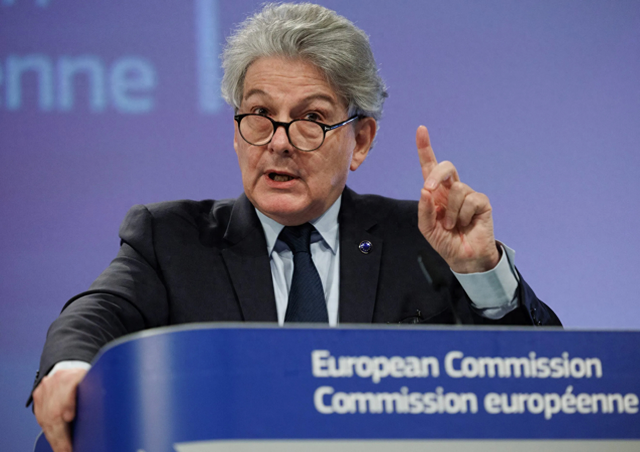
美国下手,欧盟怒了
Xin Lang Cai Jing· 2025-12-24 16:47
Group 1 - The U.S. State Department announced a ban on five European individuals, accusing them of pressuring tech companies to censor American viewpoints, marking a significant attack on Europe's regulations against hate speech and misinformation [1][3] - The individuals sanctioned include former EU Commissioner Thierry Breton and leaders of organizations focused on combating digital hate and misinformation [1][3] - U.S. Secretary of State Rubio stated that these individuals led organized efforts to coerce American platforms into censoring opposing viewpoints, emphasizing that the Trump administration will not tolerate such extraterritorial censorship [1][3] Group 2 - The U.S. government has instructed diplomats to oppose the EU's landmark Digital Services Act, which aims to combat hate speech and misinformation, claiming it stifles free speech and increases costs for American tech companies [3] - Thierry Breton, identified as the "architect" of the Digital Services Act, criticized the U.S. for denying visas, labeling it political persecution and invoking McCarthyism [3][4] - The European Commission condemned the U.S. visa restrictions, asserting that it would respond decisively to defend its regulatory autonomy against unreasonable measures [4]
