言论自由

Search documents
美媒:特朗普政府欲惩罚呼吁美国军人拒绝执行非法命令的退伍老兵,被法官阻止,美防长上诉
Huan Qiu Wang· 2026-02-26 08:21
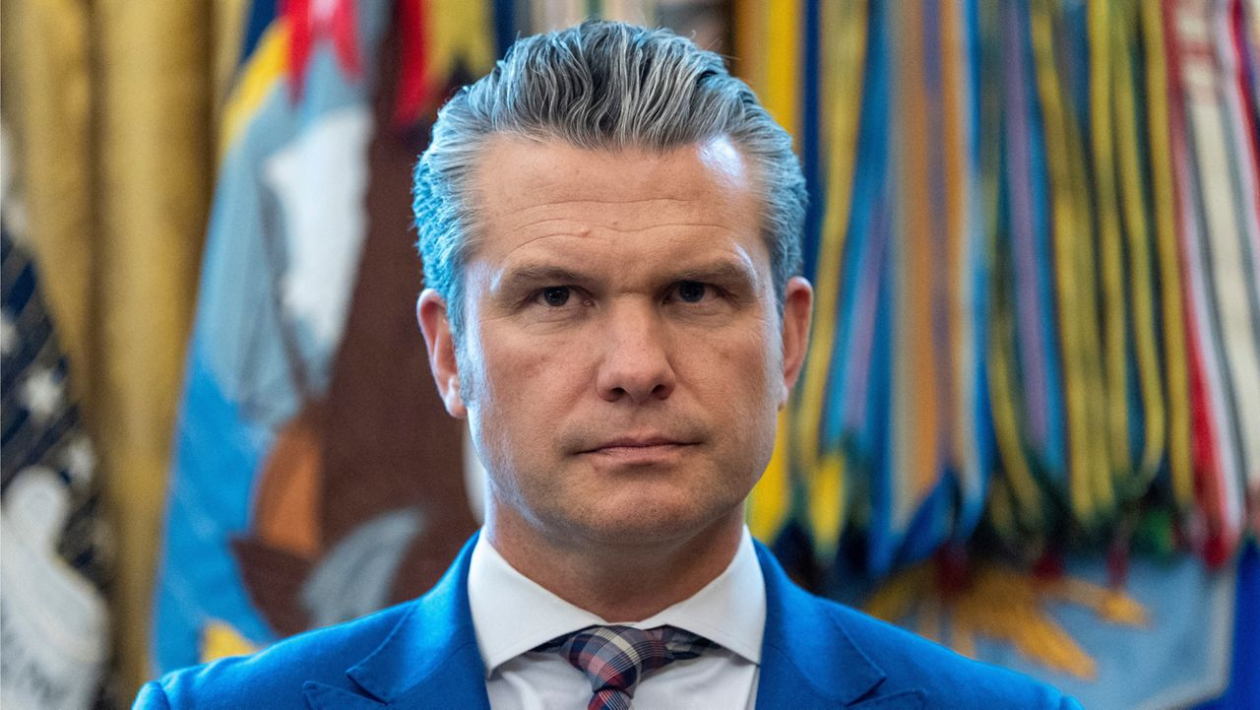
Core Viewpoint - The article discusses the legal battle involving Senator Mark Kelly, who called on military personnel to refuse illegal orders from the Trump administration, which led to accusations of "inciting rebellion" against him. A court ruling has prevented the Trump administration from punishing Kelly, and the Secretary of Defense has appealed this decision [1][3]. Group 1 - Senator Mark Kelly, a former Navy pilot, along with five other Democratic lawmakers, urged the military to uphold the Constitution and reject illegal military orders from the Trump administration [3]. - President Trump accused these lawmakers of committing "treasonous" acts that could be punishable by death, leading to actions against Kelly's military rank [3]. - A grand jury in Washington declined to indict the Democratic lawmakers on charges of inciting rebellion, rejecting the prosecutor's claims [3]. Group 2 - Kelly filed a lawsuit against the federal government, naming Secretary of Defense Peter Hegseth as a defendant, claiming that Hegseth's attempt to demote him was retaliatory for his criticism of the Trump administration [3]. - A federal district court judge ruled that Hegseth's actions to demote Kelly violated the Constitution and constituted retaliation, emphasizing the need for respect towards veterans and their constitutional rights [3]. - Hegseth has since appealed the ruling, asserting that "inciting rebellion is inciting rebellion" [3].

扎克伯格称曾与库克讨论青少年和儿童福祉问题
Xin Lang Cai Jing· 2026-02-19 02:56
Core Viewpoint - Meta CEO Mark Zuckerberg testified in a landmark trial regarding social media and safety issues, emphasizing his concern for the welfare of young users on Instagram and his proactive approach in discussing these issues with Apple CEO Tim Cook [1][9]. Group 1: Communication with Apple - Zuckerberg reached out to Tim Cook in February 2018 to discuss the welfare of teenagers and children, suggesting a potential collaboration between Meta and Apple [1][8]. - The defense presented emails showing Zuckerberg's proactive communication with young Instagram users, countering claims that he was not concerned about their safety [1][8]. Group 2: Filters and User Safety - The trial focused on the impact of digital filters, particularly beauty filters, which have been accused of promoting cosmetic surgery among young users [1][9]. - Zuckerberg acknowledged that the company consulted various stakeholders regarding the use of beauty filters but did not specify who they were [2][9]. - He defended the decision to lift a temporary ban on cosmetic filters, citing freedom of expression, despite acknowledging expert concerns about their negative impact on young girls [3][10]. Group 3: Internal Disagreements and Evidence - Internal disagreements were noted, with some Meta employees expressing concerns about the decision to allow beauty filters, including a vice president who felt it was not the right choice given the risks [4][10]. - Zuckerberg stated that there was insufficient causal evidence to support claims of harm from external experts, despite acknowledging the feedback received [4][10]. Group 4: User Engagement and Company Goals - Zuckerberg denied that increasing user time on Instagram was a company goal, clarifying that discussions about user engagement metrics were part of the company's vision rather than explicit targets [5][12]. - Evidence was presented indicating plans to increase daily active user time to 40 minutes in 2023 and 46 minutes by 2026, which Zuckerberg framed as milestones for competitive comparison [6][12]. Group 5: Age Verification and User Removal - Concerns were raised about the effectiveness of age verification on Instagram, with reports indicating that 4 million children under the age of 13 were using the platform [13]. - Zuckerberg stated that the company would remove identified underage users and emphasized the importance of age restrictions during the registration process [13][14]. - The defense questioned the practicality of expecting young children to understand the terms of service, highlighting the challenges of enforcing age restrictions [7][13].


美国总统权力存在脱轨风险
Guo Ji Jin Rong Bao· 2026-02-08 03:54
Group 1: Economic and Monetary Policy - Trump's administration has challenged the independence of the Federal Reserve, criticizing Chairman Jerome Powell and threatening to dismiss him, although legal constraints make such actions difficult [3][4]. - The Federal Reserve's structure, designed to ensure independence from political influence, includes long-term appointments for its board members, which limits presidential interference [4]. - Despite Trump's attempts to influence monetary policy, the Federal Reserve's decision to potentially lower interest rates in 2025 is based on economic conditions rather than presidential pressure [4][5]. Group 2: Legislative Authority and Tariffs - Trump's use of the International Emergency Economic Powers Act (IEEPA) to impose tariffs has faced legal challenges, with courts ruling that such actions may exceed presidential authority [7][8]. - The Supreme Court's deliberations on the legality of tariffs reveal significant concerns among justices regarding the erosion of congressional power by executive actions [9][10]. - The potential outcome of the Supreme Court's ruling may limit presidential powers while still allowing for some tariff measures, reflecting a compromise between executive authority and legislative oversight [10]. Group 3: Higher Education and Political Influence - The Trump administration's "academic accountability plan" aims to reshape university governance and curriculum, particularly targeting institutions like Harvard for their admissions policies [11][12]. - Federal funding cuts have pressured universities to comply with government demands, leading to significant financial strain and asset liquidation [12]. - The conflict between academic autonomy and governmental authority highlights the broader political polarization in the U.S., with implications for the future of academic freedom and innovation [13].
英媒:美国政府要在欧洲资助亲MAGA智库
Xin Hua She· 2026-02-06 08:38
Group 1 - The U.S. State Department plans to fund think tanks and charitable organizations in Europe that align with the "Make America Great Again" (MAGA) ideology to promote U.S. policy views and challenge European regulations perceived as threats to "freedom of speech" [1][2] - The funding initiative may focus on institutions in the UK, France, Germany, and Belgium, led by Deputy Secretary of State for Public Diplomacy Sarah Rogers, who previously met with influential right-wing think tank leaders and key figures from the UK’s right-wing populist party [2] - The Trump administration views European regulations on online content as attacks on "freedom of speech," particularly targeting U.S. social media giants, with the UK and EU having enacted laws like the Online Safety Act and the Digital Services Act [2] Group 2 - The funding initiative may surprise U.S. allies, who are concerned that the U.S. government intends to undermine their policies, as the UK government previously stated that the Online Safety Act is crucial for protecting children from harmful online content [2] - Some members of the UK Reform Party are wary of involvement in any MAGA activities within the UK, as the Trump administration is unpopular in the country, with only 16% of the British public holding a favorable view of Trump and 81% having an unfavorable impression [2] - The White House's national security strategy report released in December 2025 sharply criticizes Europe, warning of a "serious prospect of civilizational decline" due to immigration policies, economic stagnation, and excessive regulation, asserting that the U.S. aims to help Europe correct its current development trajectory [2]
特朗普总统权力越界 扭曲美国社会经济秩序
Sou Hu Cai Jing· 2026-02-01 16:09
Group 1: Economic Policy and Trade - The removal of IEEPA-related tariffs is projected to lower the actual tariff rate in the U.S. by 10 percentage points to 6% [1] - Trump's administration has implemented "reciprocal tariffs" against all trading partners, generating significant trade revenue but increasing costs for U.S. importers [5] - The International Trade Court and Federal District Court ruled that Trump's use of IEEPA to impose tariffs was unconstitutional, leading to a legal battle in the Supreme Court [5][6] Group 2: Federal Reserve and Monetary Policy - Trump has openly challenged the independence of the Federal Reserve, criticizing Chairman Powell and threatening to dismiss him due to perceived conservative monetary policies [2][3] - Trump's influence over the Federal Open Market Committee (FOMC) has increased, with his appointees holding a majority of the voting positions [4] - The potential appointment of Kevin Walsh as the new Fed Chair could further compromise the Fed's independence and alter the landscape of modern monetary policy [4] Group 3: Higher Education and Academic Freedom - Trump's "Academic Accountability Plan" mandates universities to align with government-defined values, leading to significant pushback from institutions like Harvard [9][10] - Federal funding has been threatened or frozen for universities that resist Trump's directives, forcing some to liquidate assets to maintain operations [10] - The conflict represents a broader struggle between academic autonomy and governmental authority, reflecting the polarized political climate in the U.S. [11]
美明尼苏达州抗议示威活动持续
Xin Lang Cai Jing· 2026-01-18 07:06
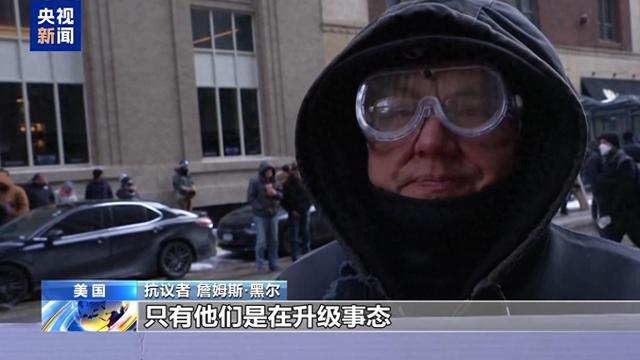
Core Viewpoint - Protests in Minneapolis, Minnesota, have escalated due to tensions between pro-immigration and anti-immigration groups, particularly following a controversial incident involving U.S. Immigration and Customs Enforcement (ICE) [1][9]. Group 1: Protests and Incidents - On the 17th, a conservative influencer, who participated in the January 6 Capitol riot and was later pardoned by former President Trump, organized an anti-immigration rally that led to clashes with opposing groups [1]. - Protester James Hale stated that the conservative influencer incited the crowd, escalating tensions, while his group aimed for a peaceful demonstration [3]. - Local resident Josh Drummond expressed a desire for a peaceful resolution, advocating for the withdrawal of ICE from Minnesota and the protection of constitutional rights [5]. Group 2: Government Response - The Minnesota Department of Public Safety announced that the National Guard has been mobilized under Governor Tim Walz's directive but has not yet been deployed to the streets [7]. - The National Guard is prepared to support public safety, protect lives, and uphold the rights of peaceful demonstrators [7]. - U.S. Army officials indicated that two battalions are on standby for potential deployment to Minnesota in response to the escalating situation [9].
升级!美国向英国发出严厉威胁
Xin Lang Cai Jing· 2026-01-14 07:19
Core Viewpoint - The potential blocking of the social media platform X by the UK government has led to significant tensions between the US and UK, with US officials warning of severe repercussions if such actions are taken [1][4]. Group 1: UK Government Actions - The UK's communications regulator has initiated a formal investigation into X, focusing on the misuse of its AI chatbot Grok for generating and spreading fake pornographic content involving real individuals [3]. - The UK government has stated that any potential blocking of X is not aimed at curbing free speech but is a necessary measure to combat illegal content targeting children, women, and girls [4]. Group 2: US Government Response - US Deputy Secretary of State Sarah Rogers has indicated that if the UK proceeds with blocking X, "anything is possible" from the US perspective regarding free speech [1][3]. - The US is considering a subpoena plan to question UK officials involved in the review of X if they enter US territory, and there are warnings of travel bans for UK officials if the blocking occurs [4]. Group 3: Legislative Actions - US Republicans are drafting legislation to respond to any potential UK ban on X, with Representative Anna Paulina Luna threatening to impose sanctions not only on UK Prime Minister Starmer but on the entire UK [2][4].
马斯克旗下AI涉色情内容遭印尼封禁马斯克指责英国打压言论自由
Xin Lang Cai Jing· 2026-01-11 10:02
Core Viewpoint - The AI chatbot "Grok," developed by Elon Musk's company xAI, is facing regulatory scrutiny in multiple countries due to its capability to generate deepfake pornographic content, leading to its temporary ban in Indonesia and potential actions in the UK [1] Group 1: Regulatory Actions - Indonesia has become the first country to temporarily ban the use of "Grok" due to concerns over its content generation capabilities [1] - The UK government, represented by Science, Innovation and Technology Secretary Liz Kendall, is expected to take action against the X platform, with the potential for significant fines or service access restrictions [1] Group 2: Company Response - Elon Musk publicly criticized the UK government on the X platform, claiming that their actions aim to suppress freedom of speech [1]
美欧“言论自由”之争升级:美国禁止5名欧洲数字监管人士入境
Xin Lang Cai Jing· 2025-12-25 05:02
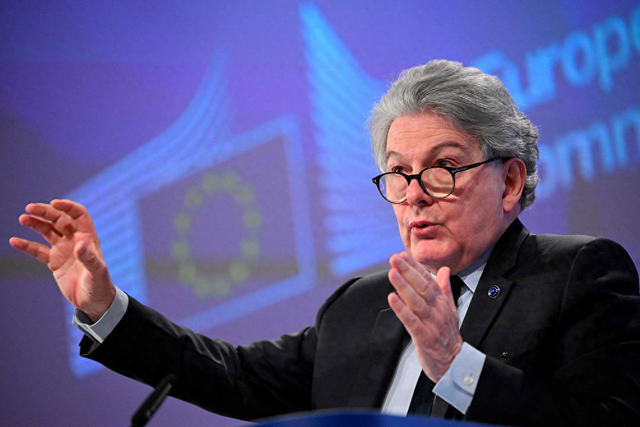
Core Viewpoint - The U.S. government has imposed visa restrictions on five European individuals, including Thierry Breton, a key figure in regulating internet misinformation and abuse, marking an escalation in tensions between the U.S. and Europe regarding content moderation and free speech [1][3][4]. Group 1: Visa Restrictions - The U.S. announced visa restrictions on five individuals involved in regulating misinformation, including Thierry Breton, who is a designer of the EU's Digital Services Act (DSA) [1][3]. - U.S. Secretary of State Marco Rubio labeled these individuals as "radical activists" who have coerced American platforms into content moderation, claiming this undermines free speech [3][4]. - The visa ban reflects escalating disputes between the Trump administration and Europe over content moderation laws and free speech [3][4]. Group 2: European Response - French President Emmanuel Macron condemned the U.S. visa restrictions, equating them to intimidation and coercion [3][6]. - The EU's Digital Services Act and the UK's Online Safety Act have faced significant backlash from tech companies, as they impose strict requirements on social media platforms to protect users or face hefty fines [4][6]. - European officials, including Macron, emphasized the need to protect European digital sovereignty and criticized U.S. attempts to dictate regulations [6][8]. Group 3: Broader Implications - The tensions over the visa restrictions are indicative of a larger cultural and political conflict between the U.S. and Europe, particularly in the realm of artificial intelligence and digital technology [8]. - Disagreements over the Ukraine crisis further complicate U.S.-European relations, with the U.S. criticizing European leaders for their handling of the situation [8][9]. - A warning from a former French diplomat suggests that the U.S. is increasingly viewing Europe not as an ally but as a client, highlighting a shift in geopolitical dynamics [9].
现在,欧洲情绪很不稳定
Sou Hu Cai Jing· 2025-12-25 00:45
Group 1 - The core issue revolves around the United States imposing sanctions on European officials involved in the formulation of the EU's Digital Services Act, which is considered the strictest internet regulation globally [2][4] - The first individual sanctioned is Thierry Breton, the former French finance minister, accused by the US of being a key architect of the Digital Services Act, which holds large social media platforms accountable for illegal content and misinformation [2][4] - The sanctions are a response to claims that these individuals pressured US platforms to censor and suppress dissenting American viewpoints, marking a significant escalation in transatlantic tensions [4][6] Group 2 - The US sanctions also target four other individuals, including members of organizations focused on combating online hate and misinformation, indicating a broader strategy against perceived threats to American digital platforms [3][4] - The US Trade Representative's office has warned that if the EU continues to undermine the competitiveness of American service providers, it will have to take retaliatory measures [6][8] - The sanctions have sparked outrage in Europe, with officials claiming that the US is interfering in European sovereignty and governance, highlighting a growing divide between the two regions [10][11] Group 3 - The sanctions are seen as a reaction to the EU's recent fine of €120 million imposed on Elon Musk's X (formerly Twitter) for violating content regulations, which has further inflamed US-EU relations [6][8] - European leaders, including French President Macron, have condemned the US actions as intimidation against European digital sovereignty, emphasizing the need for a secure digital space for democracy [10][11] - The situation reflects a broader ideological and economic conflict, where the US prioritizes free speech while Europe seeks to enforce stricter regulations on digital platforms [18][20]