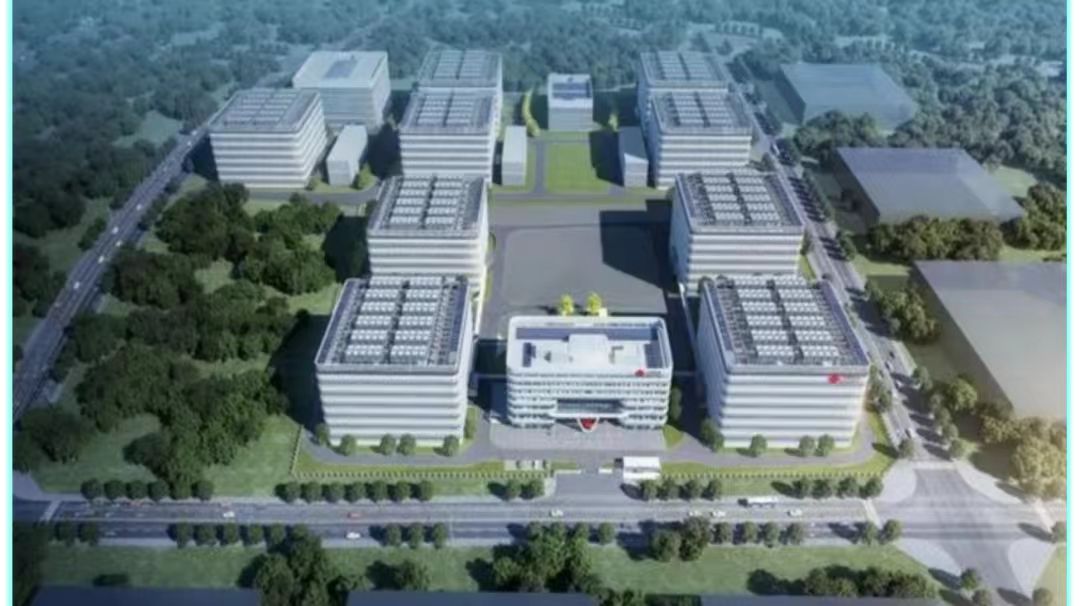
数据中心制冷设备

Search documents
Carrier (CARR) - 2025 Q4 - Earnings Call Transcript
2026-02-05 13:32
Financial Data and Key Metrics Changes - For Q4 2025, reported sales were $4.8 billion, adjusted operating profit was $455 million, and adjusted EPS was $0.34, reflecting a year-over-year decline largely due to lower volumes in higher-margin CSA residential and light commercial businesses, leading to a 9% decline in organic growth, partially offset by a 3% tailwind from foreign currency translation [15][16] - Total company orders were up over 15% in the quarter, driven by strength in CSA commercial, indicating continued strong demand for products in this market [16][21] - Free cash flow in Q4 was approximately $900 million, with full-year free cash flow of about $2.1 billion, aligning with expectations [16] Business Line Data and Key Metrics Changes - CSA segment had a challenging quarter with organic sales down 17%, while commercial sales were up 12%, but this was offset by a nearly 40% decline in residential sales and a 20% decline in light commercial sales [17] - The CSE segment saw organic sales down 2%, with commercial up mid-single digits, offset by declines in residential and light commercial [18] - The transportation segment experienced a strong quarter with 10% organic sales growth, driven by exceptional growth in container business [20] Market Data and Key Metrics Changes - In the Climate Solutions Asia Pacific segment, strength in India and Australia was offset by weakness in residential and light commercial in China, leading to an overall 9% sales decline [19] - The residential heating market in Europe, particularly in Germany, continues to be challenging, with expectations of mid- to high-single-digit declines in the overall market [18][46] Company Strategy and Development Direction - The company aims to focus on outsized growth in products, aftermarket, and system offerings, with significant investments in data centers and HVAC solutions [4][6] - The company is positioned to outgrow the commercial HVAC market, with expectations of double-digit revenue growth, including a 50% increase in data centers [6] - The company plans to continue investing in technology differentiation and maintaining a strong balance sheet while returning cash to shareholders [4] Management's Comments on Operating Environment and Future Outlook - Management noted that the short cycle residential and light commercial market softened more than expected in the second half of 2025, but they are positioned for stronger incrementals when these markets recover [3][14] - The company expects flat to low mid-single-digit organic growth for 2026, with continued double-digit growth in commercial and aftermarket globally, offset by expected softness in shorter cycle businesses [22][24] - Management emphasized the importance of operational excellence and controlling costs while preparing for a potential recovery in demand [26] Other Important Information - The company distributed $3.7 billion to shareholders through buybacks and dividends [4] - The company expects to repurchase about $1.5 billion in shares in 2026 [24] Q&A Session Summary Question: Can you discuss the expected margins in CSA for Q1? - Management expects CSA margins in Q1 to be close to about 15%, with higher sales compared to Q4 2025 [32] Question: What is the full-year guidance for the CSA residential business? - Management anticipates industry units to be down 10%-15%, with their sales expected to be down high single digits year-over-year, benefiting from low single-digit pricing [44] Question: How are channel inventories in CSA residential? - Management reported that channel inventories are down about 32% year-over-year, aligning with their targets [53] Question: What are the implications of recent comments from NVIDIA regarding chiller demand? - Management stated that data centers will require a combination of liquid cooling and traditional cooling, and they are working closely with NVIDIA on future cooling requirements [80]

传统空调需求承压,格力、美的切入AI数据中心制冷领域
Di Yi Cai Jing· 2026-02-04 08:50
Core Insights - The data center cooling business is a significant growth point for the central air conditioning industry during its consolidation phase, but competition is intensifying, presenting both opportunities and challenges [1] Industry Overview - The central air conditioning industry is currently in an adjustment period due to weakening traditional engineering demand. Companies like Gree Electric Appliances (000651.SZ) and Midea Group (000333.SZ) are reallocating resources towards AI data center cooling and high-computing infrastructure to seek structural growth [3] - The data center temperature control market has high requirements for system design capabilities, project experience, and long-term operation and maintenance, posing challenges for traditional HVAC companies [3] Market Dynamics - Air conditioning still accounts for approximately 70% of Gree's revenue, with central air conditioning being a core segment. However, the industry faces pressure from a downturn in real estate, weak traditional engineering demand, and intensified price competition [4] - The Chinese central air conditioning market is projected to reach a sales scale of 138.68 billion yuan by 2025, with a year-on-year decline of 7.4% in the domestic market, while the export market is expected to grow by 12.7% [4] - Data centers are viewed as one of the few remaining sources of certain demand in the central air conditioning industry, although their contribution to Gree and Midea's central air conditioning revenue remains limited [4] Technological Trends - As AI computing power increases, the power density of server cabinets is rising rapidly, revealing limitations in traditional air-cooled solutions regarding efficiency and heat dissipation. Liquid cooling is becoming an important technology route for high-computing data centers [4] - Liquid cooling is not merely an equipment upgrade but involves comprehensive changes in system architecture, core components, and operational modes, requiring higher system integration and project experience [4] Competitive Landscape - The data center cooling market is primarily dominated by two types of companies: specialized temperature control manufacturers and foreign brands. Specialized firms have accumulated substantial project experience and customer loyalty, while central air conditioning manufacturers like Gree and Midea have advantages in manufacturing and global service networks but face competition in specialized cooling solutions [6] - Domestic central air conditioning companies see opportunities in the data center market due to incremental space and localization trends, but they also face challenges such as technology maturity and complex project delivery capabilities [6] Strategic Outlook - Overall, AI data center cooling presents a rare structural growth opportunity for the central air conditioning industry, but its scale, pace, and profit model differ significantly from traditional engineering markets. In the short term, data center business acts more as a buffer against the decline of traditional business rather than a decisive replacement [7] - The ability of Gree and Midea to establish stable engineering capabilities and long-term customer relationships in high-barrier technologies like liquid cooling will be crucial for their positioning in the computing infrastructure cycle [7]