
新能源组件

Search documents
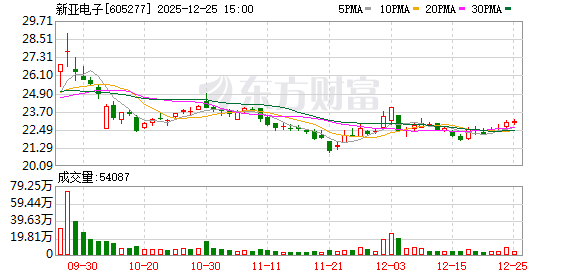
新亚电子:公司新能源系列线缆及组件包括新能源光伏线缆和新能源组件等
Zheng Quan Ri Bao· 2025-12-25 12:44
(文章来源:证券日报) 证券日报网12月25日讯 ,新亚电子在接受投资者提问时表示,公司新能源系列线缆及组件包括新能源 光伏线缆和新能源组件等,其应用领域广泛,主要覆盖光伏、储能、逆变器等新能源终端场景,以及储 能设备、锂电池检测设备等新能源生产制造设备领域。2025年上半年,该业务版块实现营业收入40, 311.98万元,占总营收比例为20.72%,同比增长81.23%。公司结合市场环境变化,灵活调整营销策略, 注重提升服务质量,扩大优质客户市场份额,通过持续拓展新能源用线的应用场景,满足了下游客户在 光伏、储能、新能源汽车充电等领域的多元化需求,为该板块业绩增长提供持续动力。 ...


报告:我国跨境电商B2B出口增速将持续高于传统外贸
Zheng Quan Shi Bao Wang· 2025-04-28 08:40
Core Insights - The report indicates that the global cross-border e-commerce B2B market is entering a phase of structural expansion, with continuous growth in transaction scale. China's cross-border e-commerce B2B export growth is expected to outpace traditional foreign trade [1][2] - By 2025, China's cross-border e-commerce B2B export scale is projected to reach 6.9 trillion yuan, driven by advancements in digital capabilities and improved supporting services [1][2] Group 1: Market Trends - The distribution of product categories in China's cross-border e-commerce B2B shows a stable presence of traditional manufacturing products and a continuous development of emerging categories. In 2023, tools and equipment accounted for 27.6% of total exports, followed by textiles at 17.2% [1] - The top ten countries for China's cross-border e-commerce B2B exports reflect a mix of stable mature markets and emerging markets, with Southeast Asia and the Middle East becoming new growth engines due to policy benefits and logistics upgrades [2] Group 2: Strategic Shifts - Traditional manufacturing enterprises are restructuring the "factory to consumer" chain through cross-border e-commerce, transitioning from a "manufacturing advantage" to a "channel advantage" [2] - The proportion of factories directly connecting with end buyers is expected to rise from 18% in 2023 to 45% by 2030, with factory sellers experiencing a 60% year-on-year increase in 2023 [2] Group 3: Challenges and Recommendations - The report highlights challenges such as low global economic growth, tightening regulations, and the need for stronger support conditions for cross-border e-commerce development. It suggests six areas for support, including optimizing tax policies and promoting international cooperation [2][3] - Recommendations for tax policy include expanding the scope of tax exemptions and simplifying tax refund processes to enhance cash flow efficiency for high-credit enterprises [3]