
数字化能力

Search documents
重磅发布 | 亚洲本土快消品牌市场份额升至79%十年增长5个百分点
凯度消费者指数· 2026-03-06 03:59
Core Insights - The report titled "Made Local, Played Global" indicates that by 2025, local brands will account for nearly 79% of the sales share in the fast-moving consumer goods (FMCG) market in the Asia-Pacific region, up from 74% a decade ago [1][3]. Transformation of Asian Brand Operations - Asian brands have undergone a fundamental transformation in their operational methods, shifting from passive market responses to proactive demand forecasting through data and consumer insights, enhancing innovation and decision-making efficiency [3]. - Leading brands are focusing on product quality and brand building to strengthen consumer trust, which drives long-term growth [3]. - By integrating local insights with global strategies, many local brands have evolved from domestic leaders to global competitors, maintaining their local advantages and consumer trust through continuous innovation and clear strategies [3]. Key Capabilities of Successful Asian Brands - The report identifies five core capabilities that leading brands possess, with three particularly notable: - Agility as a core competitive advantage, enabled by a flat organizational structure and efficient decision-making processes, allowing quick responses to consumer needs and market changes [5]. - Digital capabilities are essential, with more companies utilizing predictive analytics and data systems to guide strategic direction, optimize market predictions, and deepen consumer interactions, thereby enhancing operational efficiency [5]. - Long-term brand building remains a strategic focus, with companies concentrating on product quality, brand mission, and consumer trust to solidify market positions for sustainable growth [5]. Future Development Trends for Asian Brands - Asian brands are poised for a new wave of growth opportunities, with ongoing advancements in data and technology aiding brands in accurately discerning consumer trends and accelerating market response times [6]. - Cultural resonance and consumer trust remain critical, as brands must integrate modern technological capabilities, deep local consumer insights, and clear brand missions to expand their influence and achieve long-term stable development [6].


Avery Dennison(AVY) - 2025 Q4 - Earnings Call Transcript
2026-02-04 17:00
Financial Data and Key Metrics Changes - The company reported adjusted EPS of $9.53 and generated $707 million of adjusted free cash flow for the full year 2025, demonstrating the durability of its franchise [3][16] - Adjusted EBITDA margin was maintained at 16.4% for the year, despite headwinds from trade policy changes and softer consumer sentiment [3] - In Q4, adjusted EPS was $2.45, up 3% year-over-year, with reported sales increasing by 3.9% [15][16] Business Line Data and Key Metrics Changes - In the Materials Group, reported sales increased by 5%, although organic sales were slightly down due to deflation-related price reductions [4] - The Solutions Group saw sales increase by approximately 1.5%, with high-value categories now representing 60% of the portfolio [5] - Intelligent Labels within the Solutions Group grew mid-single digits, driven by strong performance in food and logistics categories [6][19] Market Data and Key Metrics Changes - In developed markets, North America experienced low single-digit volume mix declines, while Europe delivered mid-single-digit growth [17] - Emerging markets in Asia Pacific and Latin America saw low single-digit growth [17] - The apparel business was down approximately 7%, impacted by tariff-related uncertainties [5][19] Company Strategy and Development Direction - The company is focused on driving growth in high-value categories, which now represent 45% of total sales, and aims to expand this further [9] - There is a strategic shift towards innovation and digital capabilities to enhance operational productivity and customer solutions [10][11] - The company achieved its 2025 sustainability objectives and is making progress towards its 2030 goals [11] Management's Comments on Operating Environment and Future Outlook - Management expressed confidence in returning to stronger growth in 2026, anticipating organic sales growth of 0%-2% in Q1 2026 [12][23] - The company does not expect macroeconomic tailwinds in the near term, focusing instead on internal levers to drive performance [12][23] - Management acknowledged the need to improve organic revenue growth and is taking decisive actions to address this [9][12] Other Important Information - The company returned approximately $860 million to shareholders in 2025, including $572 million in buybacks and $288 million in dividends [16] - The net debt to adjusted EBITDA ratio at the end of the quarter was 2.4, indicating a strong balance sheet [16] Q&A Session Summary Question: Can you provide more details on the 40 basis point drop in margin? - Management explained that the drop was due to soft base volumes, wage inflation, and some one-time benefits in the prior year [28][30] Question: What are the growth expectations for Intelligent Labels in 2026? - Management anticipates growth above 2025 levels, driven by increased adoption in apparel and logistics sectors [36][38] Question: How has the Walmart partnership impacted inquiries from other grocery sellers? - The Walmart partnership has increased interest from other grocery sellers, leading to more inquiries and potential pilots [52][53] Question: What is the expected impact of temporary savings on 2026? - Temporary savings from incentive compensation will be a headwind in 2026, similar in magnitude to the $50 million restructuring actions [54] Question: What is the outlook for the apparel market in 2026? - Management noted ongoing tariff uncertainty but expects some growth in the apparel market as retailers adjust their strategies [60][62]

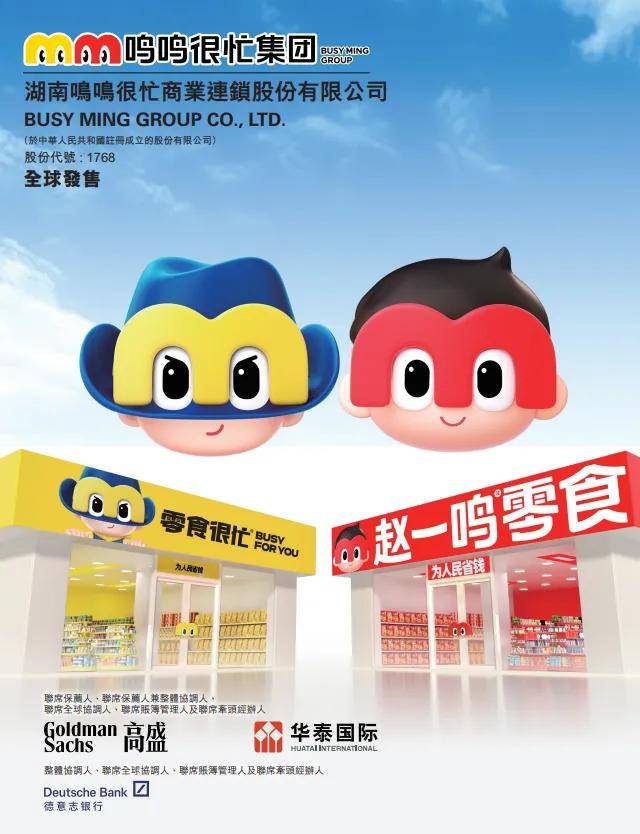
鸣鸣很忙今起招股,腾讯、淡马锡、贝莱德等基石认购超15亿港元,预计1月28日挂牌上市
Sou Hu Cai Jing· 2026-01-20 00:16
Core Viewpoint - The company, Ming Ming Hen Mang, is planning a global offering of 14.1011 million H-shares, with a pricing range of HKD 229.60 to HKD 236.60 per share, aiming to raise approximately HKD 31.24 billion to HKD 39.60 billion depending on the exercise of over-allotment options [2][11]. Group 1: Company Overview - Ming Ming Hen Mang is a mature and steadily growing retail chain in the food and beverage sector, focusing on providing a joyful and comfortable shopping experience with a wide range of high-quality products [3]. - The company operates a network of 19,517 stores across 28 provinces in China, with approximately 59% of its stores located in county towns and rural areas [3][8]. - The company has two brands: "Snacks Hen Mang" and "Zhao Yi Ming Snacks," which have been integrated to enhance operational efficiency and supply chain effectiveness [6]. Group 2: Financial Performance - The company recorded a GMV of RMB 555 billion in 2024, with a 74.5% year-on-year increase to RMB 661 billion for the nine months ending September 30, 2025 [3]. - Revenue grew from RMB 4.286 billion in 2022 to RMB 10.295 billion in 2023, and further to RMB 39.344 billion in 2024, reflecting a compound annual growth rate (CAGR) of 203% from 2022 to 2024 [10]. - Adjusted net profit increased from RMB 81.5 million in 2022 to RMB 913 million in 2024, with a CAGR of 234.6% [11]. Group 3: Market Position and Strategy - According to Frost & Sullivan, Ming Ming Hen Mang is the largest chain retailer in China by GMV in the leisure food and beverage sector and ranks fourth overall in the food and beverage category [4]. - The company employs a franchise model, allowing franchisees to operate stores under its brand, which has facilitated rapid expansion across the country [7]. - The company has established a comprehensive digital capability and support system for franchisees, enhancing operational efficiency and scalability [10]. Group 4: Use of Proceeds - The company plans to allocate approximately 25% of the net proceeds from the global offering to enhance supply chain capabilities and product development [12]. - About 20% will be used for upgrading the store network and ongoing support for franchisees, while another 20% will focus on brand building and promotional activities [12].
中国消费品牌出海迈向新周期:把爆款做成体系,把增长做成复利
3 6 Ke· 2026-01-16 11:17
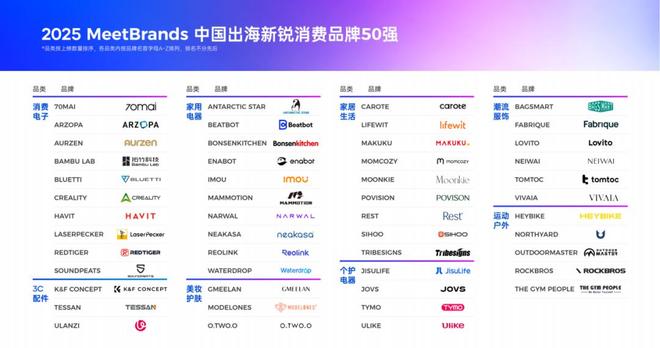
Core Insights - The rising cost structure for outbound consumer brands is significantly impacting their operations, with Google Ads CPC increasing by 10% and Meta CPL soaring by 20% year-on-year, indicating a shift from a growth model reliant on spending to one focused on brand value [1][2] - The "2025 MeetBrands Top 50" list reflects a structural upgrade in the outbound industry, with brands evolving not just through competition but also due to changing market rules [2] Group 1: Brand Evolution - Sixteen brands have graduated to become benchmarks, achieving annual overseas revenues of $500 million, global presence in over ten countries, and establishing themselves as category leaders [4] - The new entrants on the list are characterized as "category leaders," with revenues transitioning from millions to billions, emphasizing technology and scenario positioning over low-quality traffic competition [6] Group 2: Regional Dynamics - The Pearl River Delta remains the engine of outbound brands, contributing 62% of the listed brands, while the Yangtze River Delta has become a hub for brand operations, accounting for 26% of the list [8] - The industry is moving from isolated breakthroughs to regional collaboration, forming a more resilient ecosystem [8] Group 3: Hidden Barriers to Growth - Many mid-tier outbound brands face hidden capability barriers that hinder growth, such as over-reliance on low prices and traffic, lack of localized narratives, and disconnection between digital investments and business operations [10] - Overcoming these barriers is essential for brands to evolve from growth phases to becoming new leaders [10] Group 4: D-MES Model and Brand Capabilities - The D-MES model has been upgraded to better assess brands' long-term effectiveness, focusing on digital capabilities, consumer influence, product innovation, and commercial conversion [11][14] - Digital capabilities are crucial, with brands leveraging AI and digital tools to enhance decision-making and operational efficiency [15] Group 5: Consumer Trust and Localization - Brands must address the "high awareness, low trust" gap by deeply localizing their narratives and aligning with consumer values [17] - Successful examples include TESSAN, which tailored its messaging to different cultural preferences, enhancing local consumer engagement [17] Group 6: Product Innovation - The focus on product innovation should shift from merely competing on specifications to solving real consumer pain points through data-driven insights [19] - Brands like Rest have successfully identified and addressed specific consumer needs, leading to significant premium pricing and increased repurchase rates [19] Group 7: Commercial Conversion and Market Expansion - The emphasis on commercial conversion has shifted towards multi-regional expansion and omnichannel operations, with brands increasingly establishing independent online platforms and entering offline channels [21][22] - Emerging markets are becoming significant growth areas, with brands diversifying their strategies to tap into regions like Latin America, the Middle East, and Southeast Asia [22] Group 8: Long-term Strategy and Brand Resilience - The future of outbound brands is focused on stability and precision rather than speed, emphasizing profit margins and customer loyalty over rapid growth [24] - Brands are encouraged to enhance their operational efficiency and consumer experience to navigate the complexities of the market [26][28]
上海召开优化营商环境大会!提振市场信心和引导社会预期,陈吉宁划出这些重点
Di Yi Cai Jing· 2026-01-04 05:31
Core Viewpoint - Shanghai aims to enhance its business environment significantly through the implementation of the 9.0 version of the optimization plan, focusing on high-quality development and attracting top-tier enterprises and talent [1][8]. Group 1: Meeting Highlights - The Shanghai Municipal Committee emphasized the importance of optimizing the business environment as a key component of high-quality development and a foundation for deepening reforms [3][8]. - The meeting was attended by over 100 representatives from various domestic and foreign enterprises, business associations, and professional service organizations [5]. Group 2: Achievements and Goals - In the past year, Shanghai implemented the 8.0 version of the optimization plan, completing 58 reform tasks that improved business access, service efficiency, regulatory quality, and cost reduction [6]. - Shanghai ranked first globally in 22 categories in the World Bank's business environment survey, indicating significant improvements in its economic recovery and efficiency [6]. Group 3: Future Strategies - The city plans to adopt a systematic approach to enhance the business environment, focusing on proactive problem identification and resolution, and adapting to new technologies and business models [8][10]. - There will be an emphasis on improving service quality and efficiency among government officials, ensuring they are responsive to business needs and concerns [9][10]. Group 4: Implementation Mechanisms - The meeting outlined a "3+1" mechanism to coordinate economic operations, investment attraction, and enterprise services, addressing challenges faced by businesses [11]. - The city will implement 26 specific tasks from the 9.0 version of the optimization plan, ensuring accountability and timely execution to support high-quality development [11].

弘正储能 广东公司营销总监 王睛武:工商业储能在华南地区的应用趋势
起点锂电· 2025-12-20 07:04
Core Viewpoint - The article discusses the trends and challenges in commercial energy storage in South China, emphasizing the impact of recent policies on market dynamics and the necessity for diversified revenue models in the energy storage sector [6][9]. Group 1: Market and Policy Trends - The core drivers of trends in commercial energy storage are market dynamics and policy changes, particularly the introduction of the 136 document, which marks the beginning of a fully market-oriented pricing era for new energy [6]. - The 1192 document has elevated the necessity of energy storage from an optional to a mandatory component, presenting challenges for system integrators in the commercial energy storage sector [6]. Group 2: Challenges Faced - The end of the single-scenario era due to the 136 document requires diversified revenue assurance strategies for energy storage systems [6]. - There is a growing concern regarding the safety of energy storage systems, including the need for timely after-sales service and low operational costs [7]. - Increasing demands for interaction with electricity trading platforms and Virtual Power Plant (VPP) platforms present additional challenges for energy storage providers [8]. Group 3: Future Changes in Energy Storage - By 2026, commercial energy storage manufacturers are expected to focus on minimizing lifecycle costs while ensuring safety and accommodating multiple scenarios [9]. - The industry is shifting from a "two charge, two discharge" model to a "one charge, one discharge" model with longer storage durations, which will facilitate peak-valley arbitrage and other needs [9]. - The introduction of larger battery cells may lead to a rapid replacement of existing cells, potentially reducing system costs [9]. Group 4: Digitalization and System Integration - The future of energy storage will require a strong digital capability, aiming to provide a product-as-a-service model that integrates full lifecycle management through smart cloud platforms [11]. - Key characteristics for competitive energy storage players include high efficiency, lifecycle management capabilities, and the ability to handle multiple interactions and scenarios [18]. - The 5S system product view emphasizes simplicity, intelligence, speed, safety, and sustainability in energy storage solutions [21]. Group 5: Specific Applications and Innovations - The article highlights specific applications such as renewable energy consumption, voltage management, and user-side solutions, all driven by digitalization to achieve functions like peak-valley arbitrage and capacity management [28]. - The company emphasizes the importance of AI algorithms for battery state estimation and market trading strategies, which can enhance efficiency by 10% compared to fixed charging and discharging strategies [29].
洋快餐集体卖身中国资本,汉堡王交出控股权,新东家10年冲4000店
Sou Hu Cai Jing· 2025-11-13 02:35
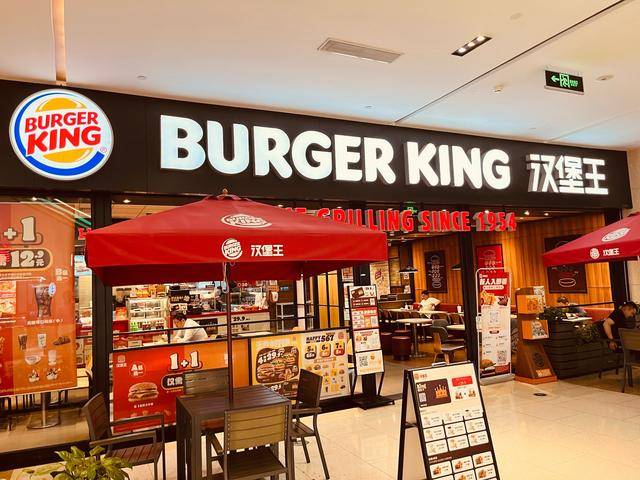
Core Insights - Burger King's presence in the Chinese market has been lackluster compared to competitors like KFC and McDonald's, with a significant gap in social media engagement and store count [1][5][8] - The company has announced a strategic partnership with CPE Yuanfeng, which will acquire approximately 83% of Burger King China, aiming to enhance its market position [1][17] - The fast-food landscape in China is becoming increasingly competitive, with local brands gaining traction and international brands needing to adapt to local tastes and preferences [20][25] Group 1: Market Position and Performance - As of September 2023, Burger King China has around 1,300 stores, significantly trailing behind KFC's 11,648 and McDonald's over 7,000 [5] - Burger King's average annual sales per store in China is approximately $40,000, starkly lower than $380,000 in France and $120,000 in South Korea [5] - The brand's late entry into the Chinese market in 2005, 15 years after KFC and McDonald's, has contributed to its struggles [3] Group 2: Consumer Trends and Preferences - The younger generation, particularly Gen Z, is shifting their fast-food preferences towards value and quality, with 85% of young consumers willing to spend no more than 30 yuan on fast food [9][10] - Burger King's traditional offerings have not resonated well with Chinese consumers, leading to a need for more localized menu options [10][12] Group 3: Strategic Moves and Future Plans - The partnership with CPE Yuanfeng will inject $350 million into Burger King China, with plans to expand the store count to over 4,000 by 2035 [17] - Other international brands, such as Starbucks and McDonald's, have also pursued similar strategies of local partnerships to enhance their market presence [16][14] - The competitive landscape is intensifying, with McDonald's and KFC planning to open hundreds of new stores, while local brands like Wallace and Tastin are rapidly expanding [20][25]
消费品行业正从“供给驱动”迈向“需求引领”,品牌竞争进入体验与认同的新阶段
QYResearch· 2025-11-13 02:07
Core Insights - The consumer goods industry is transitioning from a "supply-driven" model to a "demand-led" approach, reshaping market dynamics and prompting a comprehensive restructuring of brand strategies and product innovation logic [4][5] - The core competitiveness in the consumer goods market is shifting from "product-centric" to "experience and identity-centric," with consumers increasingly valuing emotional connections, environmental consciousness, and cultural expression [4] - Digital capabilities are becoming essential infrastructure for consumer brands, enabling precise insights into user behavior, preferences, and purchasing paths, which helps in trend identification, supply chain optimization, and accelerated product update cycles [4] Market Dynamics - The future distribution system for consumer goods will be more diverse and flexible, with blurred boundaries between online and offline channels, and the rise of brand-owned communities, private domain operations, and immersive retail experiences [5] - The importance of regional markets is significantly increasing, particularly in emerging consumer markets such as Southeast Asia, Latin America, and the Middle East, where local cultural adaptation and customized product strategies will be key for competition between foreign and local brands [5] Strategic Recommendations - Companies should adopt a long-term and structured perspective on industry fluctuations, focusing on "continuous understanding of people" rather than merely "chasing trends" [5] - The ability to achieve true differentiation through data insights, brand value reconstruction, and flexible supply chain adjustments will determine future growth potential for companies in the consumer goods sector [5]

海澜之家2025年前三季度实现营收超155亿元
Zheng Quan Shi Bao Wang· 2025-10-30 12:09
Core Insights - The company reported a revenue of 15.599 billion yuan for the first three quarters of 2025, representing a year-on-year growth of 2.23%, and a net profit of 1.816 billion yuan, up 3.86% year-on-year [1] Group 1: Business Performance - The company has been focusing on a multi-channel diversification strategy, enhancing its end-to-end digital capabilities across product development, supply chain management, logistics, and sales [1] - The total number of stores reached 7,241 by the end of the reporting period, with 2,220 being direct-operated stores, accounting for 30.66% of the total [1] Group 2: Online Business - The online business generated a main revenue of 3.093 billion yuan, driven by a comprehensive product matrix, content ecosystem, and precise marketing strategies [2] - The company achieved significant online sales during promotional events, ranking first in men's clothing on platforms like Douyin and Kuaishou [2] Group 3: International Expansion - The company is actively expanding its overseas presence, having opened its first store in Australia in September, while continuing to deepen its market in Southeast Asia [2] - A tailored product design strategy for overseas markets is being implemented to enhance the shopping experience for international consumers [2] Group 4: Strategic Partnerships - The collaboration with JD.com to create the "City Outlet" new business model focuses on high-quality, low-price offerings, targeting the discount retail market [3] - The company is leveraging technological innovation to enhance product offerings and deepen sports marketing efforts, including sponsorship of popular leagues [3]

东鹏饮料(605499):补水啦强势增长,销售费用率优化
Guotou Securities· 2025-10-27 15:07
Investment Rating - The report assigns a "Buy-A" investment rating to the company with a 6-month target price of 366.63 CNY, which corresponds to a dynamic P/E ratio of 33 times for 2026 [4][10]. Core Insights - The company has demonstrated strong growth in its hydration product line, with a cumulative revenue of 16.844 billion CNY for Q1-Q3 2025, reflecting a year-on-year increase of 34.13%. The net profit attributable to shareholders reached 3.761 billion CNY, up 38.91% year-on-year [1][3]. - In Q3 2025, the company's revenue was 6.107 billion CNY, marking a 30.36% increase year-on-year, while the net profit was 1.386 billion CNY, up 41.91% year-on-year. The net profit margin improved to 22.70%, an increase of 1.85 percentage points year-on-year [1][3]. - The report highlights the company's digital capabilities in the beverage industry, ongoing channel development, and product matrix enhancement as key drivers for long-term value growth [3][10]. Revenue and Profit Forecast - The company is expected to achieve revenue growth rates of 36.0%, 27.1%, and 13.4% for the years 2025 to 2027, with net profit growth rates of 38.3%, 24.9%, and 15.9% respectively, indicating strong growth potential [3][10]. - Revenue projections for 2025, 2026, and 2027 are estimated at 21.545 billion CNY, 27.375 billion CNY, and 31.051 billion CNY respectively, with net profits expected to be 4.601 billion CNY, 5.747 billion CNY, and 6.661 billion CNY [8][12]. Product Performance - In Q3 2025, the revenue breakdown by product shows that Dongpeng Special Drink generated 4.203 billion CNY, with a year-on-year growth of 15%, while the hydration product "Bushu La" saw a remarkable increase of 84% to 1.354 billion CNY [2][3]. - The report indicates that the electrolyte drink "Bushu La" is expected to continue its strong growth trajectory, with projected revenue growth rates of 135.37%, 40.22%, and 15.18% for the years 2025 to 2027 [9][10]. Financial Metrics - The report provides a detailed financial forecast, including expected gross profit margins of 45.42%, 45.98%, and 46.40% for the years 2025 to 2027, and net profit margins of 21.4%, 21.0%, and 21.5% respectively [8][12]. - The company's return on equity (ROE) is projected to be 47.8% in 2025, 47.7% in 2026, and 44.9% in 2027, indicating strong profitability [12].
